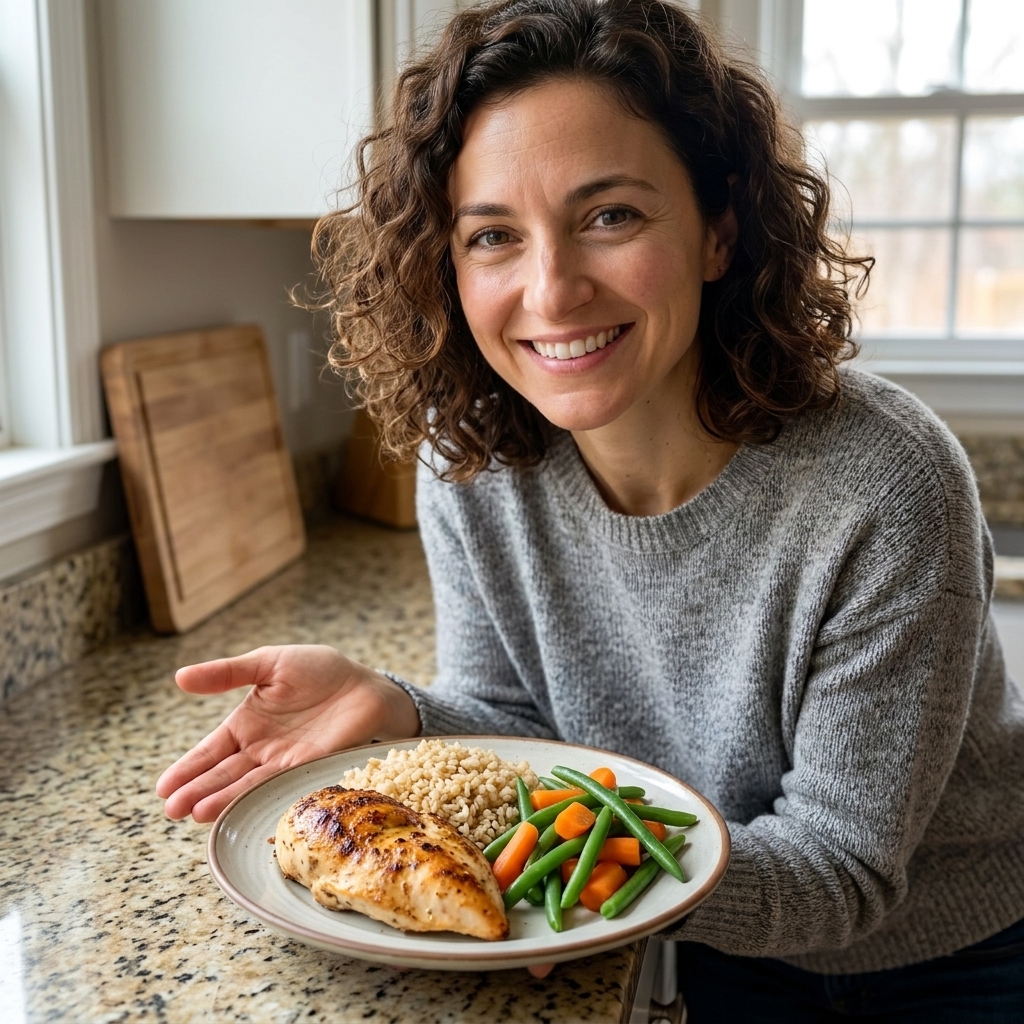
A no-math, no-stress guide to building balanced meals with half veggies, a quarter protein, and a quarter complex carbs, plus smart fats and flavor.
Platepathy
Macro-Balanced Power Bowls
Build a macro-balanced power bowl with a simple formula: protein + fiber-rich carbs + colorful veg + healthy fats. Includes portion guides, meal prep tips, and four mix-and-match recipes.

Elena Rossi
Elena Rossi is a Registered Dietitian and meal prep expert who believes that healthy eating shouldn't feel like a second job. Through Platepathy, she translates complex nutrition science into approachable, delicious meal plans designed for real, busy lives.
Published October 18, 2026
Last updated October 18, 2026
Power bowls are my favorite kind of “I have my life together” lunch, mostly because they are secretly a formula. Once you know the macro-balanced ratio, you can mix and match whatever is already in your fridge and build a lunch that often helps you stay steady and satisfied through the afternoon. (Bodies vary. So do days.)
Below you will find my go-to bowl formula, the portion guide I use in real life (no food scale required), and three recipe templates you can repeat on autopilot.
The macro-balanced bowl formula
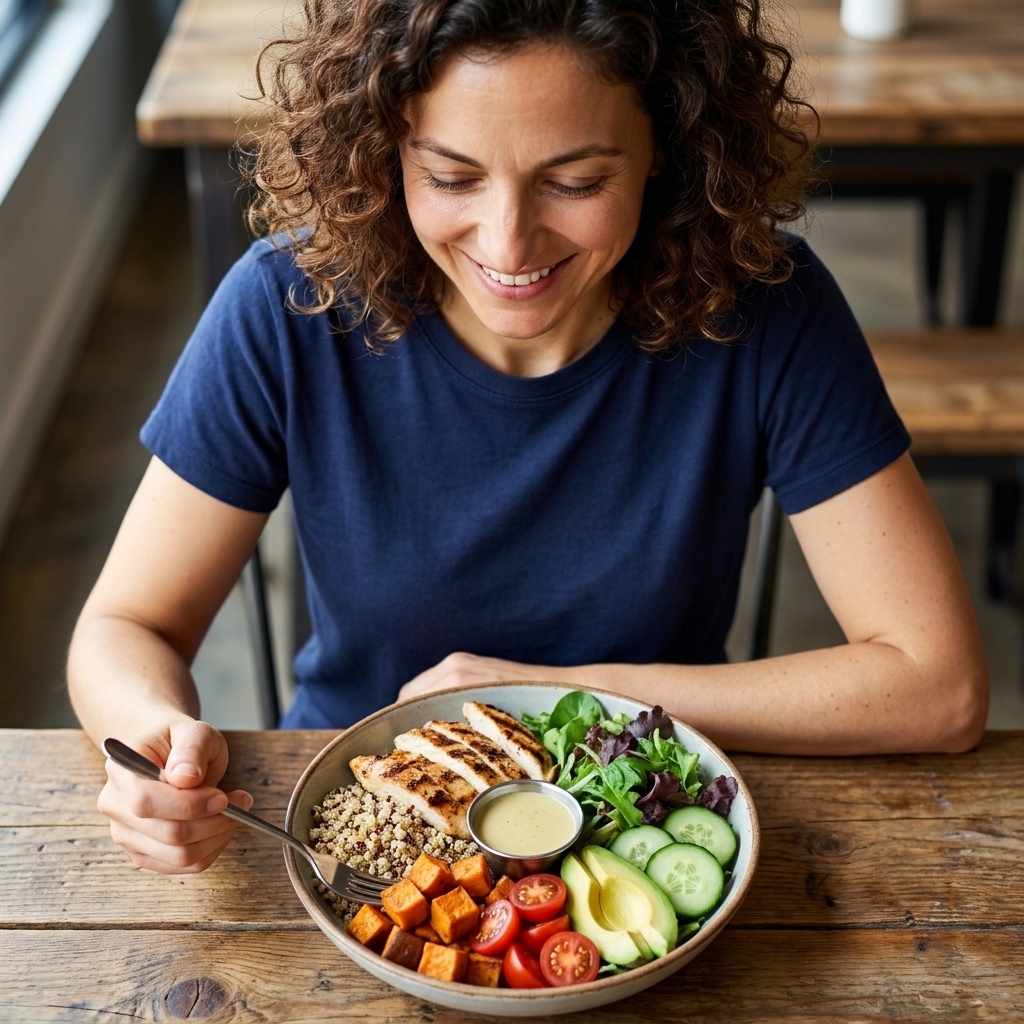
At Platepathy, “macro-balanced” means your bowl includes a solid protein source, a fiber-rich carb, plenty of non-starchy vegetables, and a satisfying fat. For many people, this combo is the sweet spot for steady energy, fullness, and meals that actually taste good.
Base ratio
- 1 part protein
- 1 part fiber-rich carbs
- 2 parts colorful vegetables
- 0.5 to 1 part healthy fat
What “part” means: Think visual proportions in your bowl, not a measuring cup situation. You are aiming for protein + carbs + double veg + a finishing fat. Then add a sauce or crunch if you want, because joy matters.
No-scale portion guide (hand method)
If you do not track macros (you do not have to), these portions get you reliably close for most adults. They are approximate, and your hand size matters. Adjust up or down based on hunger, training, and your day.
- Protein: 1 to 2 palms (roughly 3 to 6 oz cooked meat or fish; about 1/2 to 1.5 cups beans or lentils; or about 3 to 6 oz tofu, roughly 1/3 to 1/2 block)
- Carbs: 1 cupped handful (about 1/2 to 1 cup cooked grains or starchy veg like potatoes or corn)
- Non-starchy veggies: 2 fists (roughly 2 cups raw, or about 1 to 2 cups cooked depending on the vegetable and how it’s chopped)
- Fat: 1 to 2 thumbs (about 1 to 2 tbsp olive oil, tahini, nuts, seeds, pesto, or 1/4 to 1/2 avocado)
Plate-empathy reminder: If you are extra hungry (stress, sleep, workouts, breastfeeding, big day), it is not a willpower issue. It is a body information issue. Add another cupped handful of carbs or an extra palm of protein and move on with your life.
Choose-your-own components
Use these lists like a menu. Pick one from each category, then dress it up with a sauce or topping.
Proteins (pick 1)
- Chicken thighs or breasts (roasted, grilled, shredded)
- Salmon or canned salmon
- Tuna (canned, mixed with a little Greek yogurt and mustard)
- Lean ground turkey or beef
- Eggs (hard-boiled or jammy)
- Tofu or tempeh
- Edamame
- Chickpeas, black beans, lentils
- Greek yogurt or cottage cheese (works best in Mediterranean-style bowls)
Fiber-rich carbs (pick 1)
- Brown rice, white rice, or jasmine rice
- Quinoa
- Farro or barley
- Roasted sweet potato or regular potato
- Corn
- Whole wheat couscous
- Whole grain pasta (short shapes work well in bowls)
Non-starchy vegetables (pick 2 or more)
- Leafy greens: spinach, arugula, chopped romaine, kale (massage kale with a little olive oil and salt)
- Crunchy: cucumbers, bell peppers, shredded cabbage, carrots
- Roasted: broccoli, cauliflower, zucchini, Brussels sprouts
- Fresh: cherry tomatoes, radishes, snap peas
- Pickled: onions, jalapeños, beets (huge flavor payoff)
Healthy fats (pick 1)
- Avocado
- Olive oil-based dressing
- Tahini
- Nuts or seeds (pumpkin seeds, sunflower seeds, sliced almonds, sesame)
- Olives
- Pesto
- Cheese (feta, goat cheese, parmesan)
Flavor boosters (optional but highly recommended)
- Fresh herbs: cilantro, parsley, dill, basil
- Citrus: lemon or lime
- Crunch: roasted chickpeas, tortilla strips, crushed pita chips
- Heat: chili crisp, sriracha, harissa
- Fermented tang: kimchi, sauerkraut
Quick reality check: Store-bought shortcuts (rotisserie chicken, dressings, chili crisp, soy sauce) can run salty or sweet. If that matters for you, choose low-sodium beans and tamari, and taste your sauce before you pour.
Why this works
You do not need to memorize biochemistry to feel the difference a balanced bowl can make. Here is the quick, real-life reasoning:
- Protein supports fullness and helps many people stay satisfied between meals.
- Fiber-rich carbs provide energy you can actually use, plus fiber for digestion and staying power.
- Non-starchy veggies bring volume, micronutrients, and color without needing a ton of calories to feel like a real meal.
- Fats slow digestion a bit (hello, satiety) and make meals taste like something you would choose, not endure.
If your “healthy lunch” keeps turning into a 3 PM snack spiral, the fix is often as simple as adding more protein and a real fat source.
Three power bowl templates
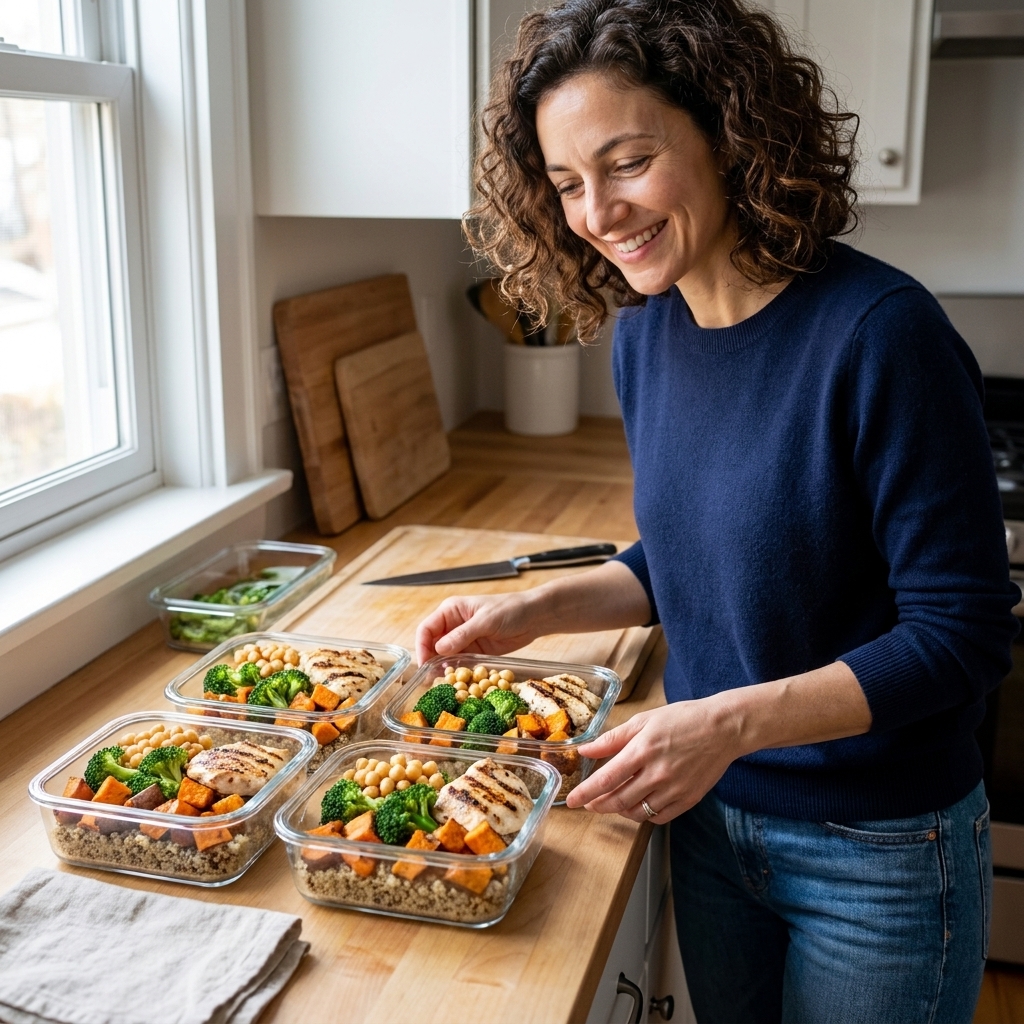
These are designed for repeatability. Make the components once, then assemble different bowls all week so lunch does not get boring.
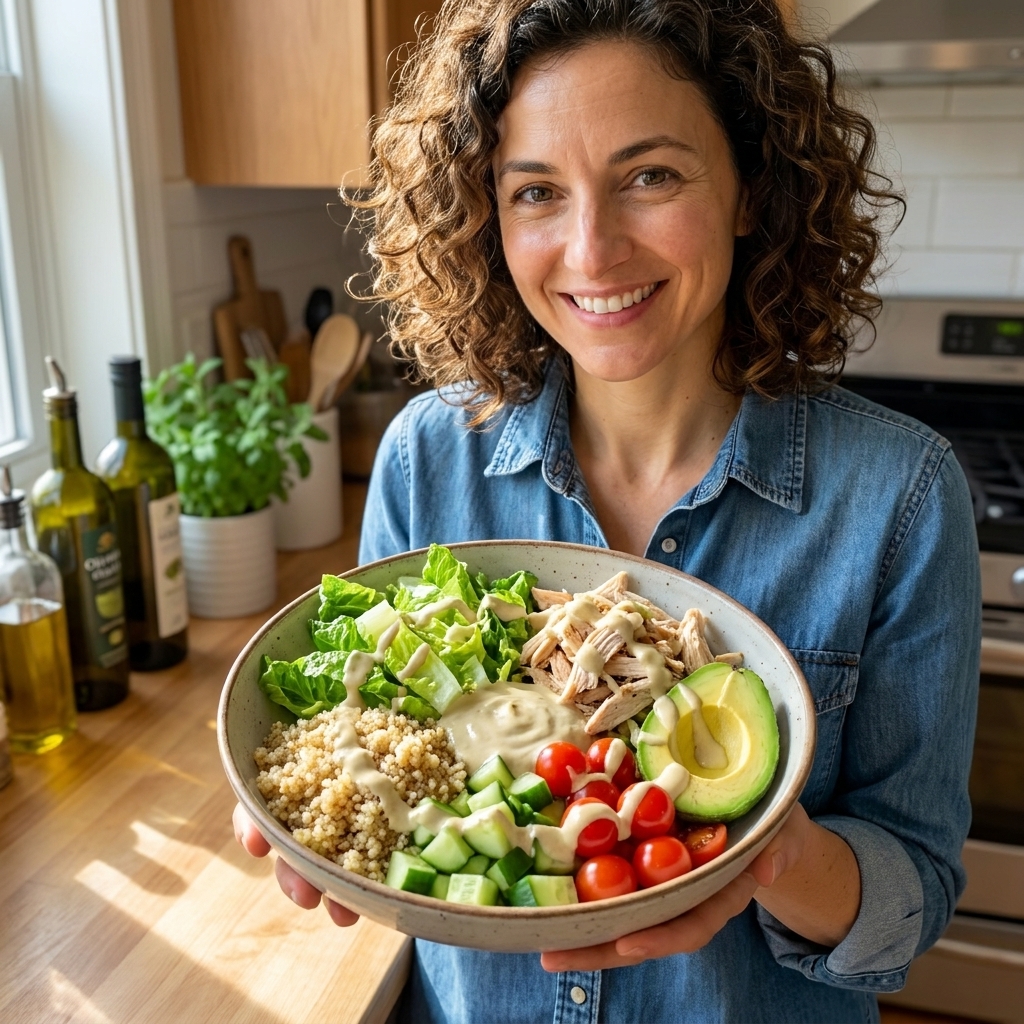
1) Lemon-Tahini Chicken and Quinoa Bowl
Vibe: bright, creamy, Mediterranean-inspired. Great warm or cold.
Makes: 4 bowls
Ingredients
- Protein: 1.25 to 1.5 lb cooked chicken (rotisserie works perfectly), chopped or shredded
- Carb: 2 cups cooked quinoa (about 2/3 cup dry)
- Veg: 6 to 8 cups chopped romaine or spinach
- Veg: 2 cups cherry tomatoes, halved
- Veg: 1 large cucumber, diced
- Fat: 1 avocado, sliced (or 1/3 cup crumbled feta)
- Optional: pickled red onion, parsley, pumpkin seeds
Lemon-tahini sauce
- 1/3 cup tahini
- 1 lemon, juiced
- 1 tbsp olive oil
- 1 to 2 tbsp water to thin
- 1 small garlic clove, grated (or 1/2 tsp garlic powder)
- 1/2 tsp salt, plus black pepper
How to assemble
- Whisk sauce ingredients until smooth. Add water until it drizzles easily.
- In each bowl: add 1 to 2 cups greens, 1/2 cup quinoa, 4 to 6 oz chicken, then cucumber and tomatoes.
- Add avocado right before eating (or use feta if you want it to hold better for meal prep).
- Dress when ready to eat.
Macro-balance tip: If this bowl does not keep you full, bump quinoa to 3/4 cup and add a tablespoon of seeds.
2) Spicy Salmon Sushi Bowl
Vibe: sushi-night energy, weekday effort. Works with cooked salmon or canned salmon.
Makes: 4 bowls
Ingredients
- Protein: 4 salmon fillets (4 to 5 oz each) baked, or 2 (5 oz) cans salmon
- Carb: 3 cups cooked rice (white or brown)
- Veg: 3 cups shredded cabbage or coleslaw mix
- Veg: 2 cups cucumber, diced
- Veg: 2 medium carrots, shredded
- Fat: 1 to 2 tbsp sesame seeds, plus 1/2 avocado or a drizzle of toasted sesame oil
- Optional: edamame, nori sheets (torn), pickled ginger
Spicy yogurt sauce
- 1/2 cup plain Greek yogurt (or mayo if preferred)
- 1 to 2 tbsp sriracha
- 1 tsp soy sauce or tamari (low-sodium if you like)
- 1 tsp rice vinegar or lime juice
- Optional: 1 tsp toasted sesame oil for extra richness
How to assemble
- Mix sauce ingredients.
- In each bowl: add 3/4 cup rice, top with salmon, then pile on cabbage, cucumber, and carrots.
- Finish with sesame seeds and drizzle sauce.
Macro-balance tip: If you are using canned salmon, mix it with the sauce first to keep it moist and evenly distributed.
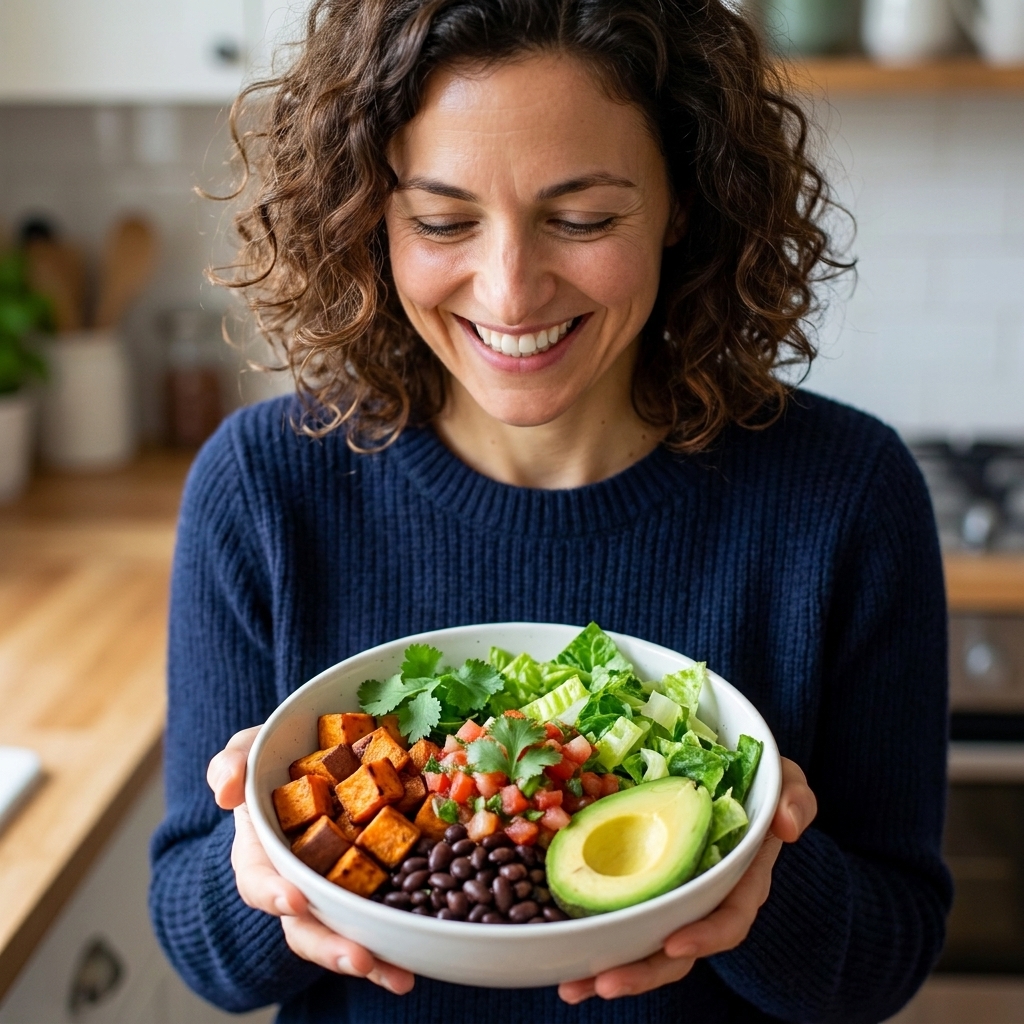
3) Smoky Black Bean and Sweet Potato Taco Bowl (Vegetarian)
Vibe: hearty, cozy, weeknight-friendly. Meal prep champion.
Makes: 4 bowls
Ingredients
- Protein: 2 cans black beans, rinsed and drained
- Carb: 2 large sweet potatoes, cubed
- Veg: 6 cups shredded romaine or chopped kale
- Veg: 2 cups bell peppers and onions, sliced (raw or sautéed)
- Veg: 1 cup salsa or pico de gallo
- Fat: 1 avocado (or 1/3 cup pepitas)
- Optional: corn, cilantro, jalapeños, lime wedges
Seasoning
- 2 tbsp olive oil (for roasting)
- 1 tsp smoked paprika
- 1 tsp cumin
- 1/2 tsp chili powder blend
- 1/2 tsp salt
How to make
- Roast sweet potatoes: toss with olive oil and seasoning. Roast at 425°F for 20 to 30 minutes, flipping once, until browned and tender.
- Warm black beans in a pan with a splash of water and a pinch of salt (optional: add cumin and garlic powder).
- Assemble: greens first, then sweet potatoes, black beans, peppers and onions, salsa, and avocado.
Macro-balance tip: Beans plus sweet potato is a very satisfying combo, but if you need more protein, add Greek yogurt as a crema or top with shredded cheese.
4) Ginger-Soy Tofu and Edamame Bowl (Vegan)
Vibe: high-protein plant-based, salty-sweet, weeknight fast.
Makes: 4 bowls
Ingredients
- Protein: 14 to 16 oz extra-firm tofu, pressed and cubed
- Protein: 2 cups shelled edamame (thawed if frozen)
- Carb: 3 cups cooked brown rice, quinoa, or farro
- Veg: 4 cups shredded cabbage or chopped kale
- Veg: 2 cups cucumber, sliced
- Veg: 2 cups shredded carrots
- Fat: 1 to 2 tbsp sesame oil or 1/2 avocado, plus sesame seeds if you want crunch
- Optional: scallions, cilantro, kimchi, lime wedges
Ginger-soy sauce
- 1/4 cup soy sauce or tamari (low-sodium if needed)
- 2 tbsp rice vinegar
- 1 tbsp maple syrup or honey (use maple to keep it vegan)
- 1 tbsp toasted sesame oil
- 1 tbsp grated fresh ginger
- 1 small garlic clove, grated
- 1 to 2 tbsp water to mellow, if desired
How to make
- Cook tofu: pan-sear in a little oil until golden, or bake at 425°F for 20 to 25 minutes, tossing once.
- Whisk sauce ingredients.
- Assemble each bowl with grains, cabbage, tofu, edamame, cucumber, and carrots. Drizzle sauce and finish with sesame seeds and herbs.
Macro-balance tip: This one is easy to under-sauce. If it tastes flat, add a squeeze of lime and another spoonful of sauce before you assume you did something wrong.
Meal prep in 60 minutes
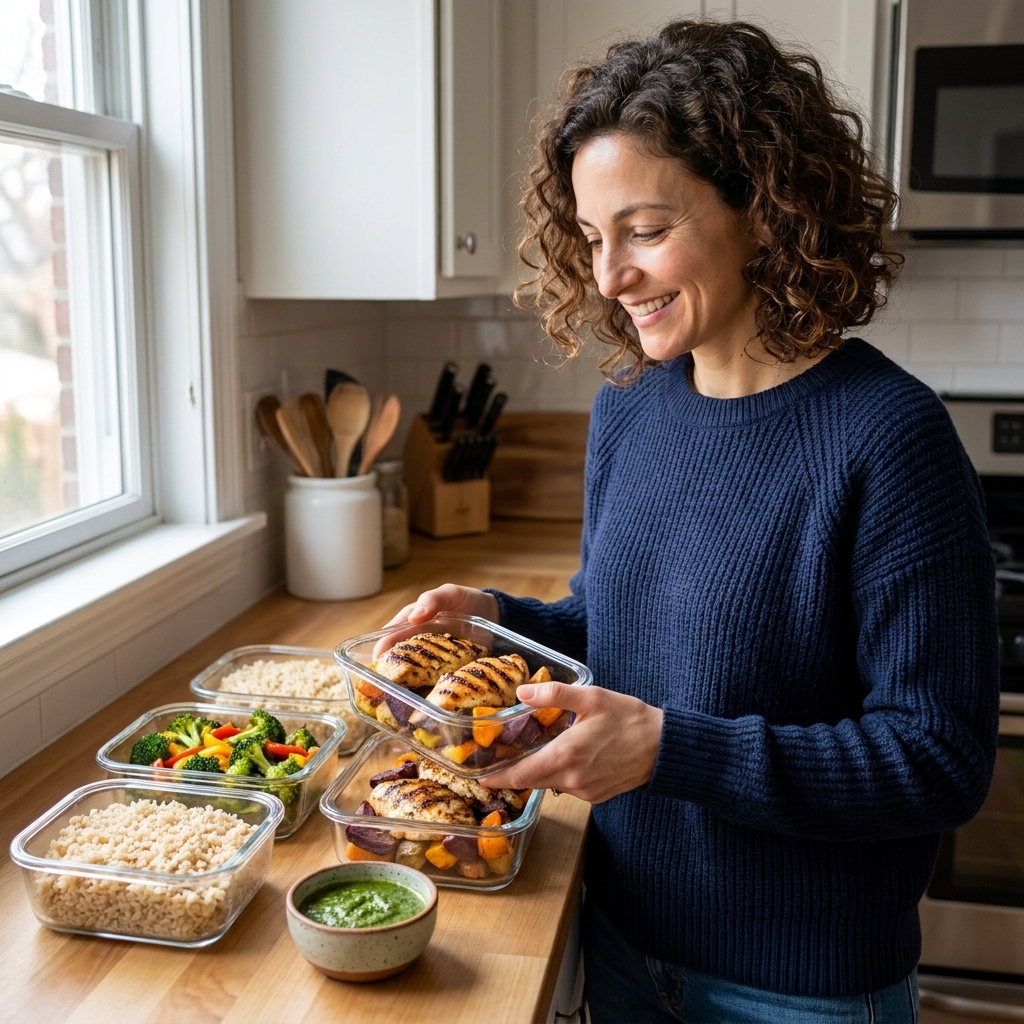
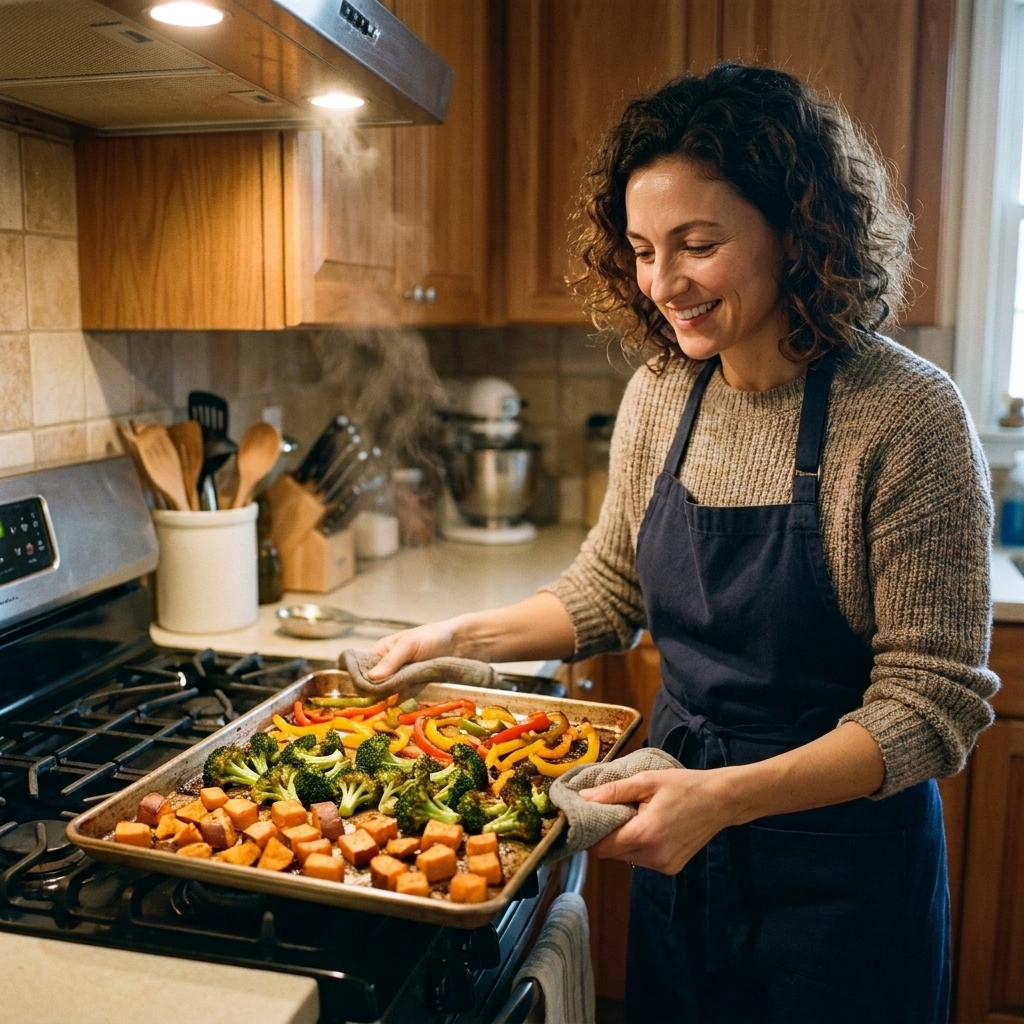
This is the Sunday rhythm I use when life is busy and I want lunches that feel like a gift to Future Me.
- Start grains first. Get rice or quinoa cooking immediately.
- Roast a sheet pan of vegetables. Sweet potatoes, broccoli, peppers, zucchini, or whatever you like. Use olive oil, salt, and one spice blend.
- Cook or prep protein. Bake salmon, sauté ground turkey, press and roast tofu, or simply shred rotisserie chicken.
- Make one sauce. Lemon-tahini, yogurt-sriracha, vinaigrette, or ginger-soy.
- Chop one crunchy veg. Cucumber, cabbage, carrots, or radishes for freshness.
Freshness tip: Let warm ingredients cool before sealing containers, and keep greens away from hot items. If your greens tend to wilt, tuck a paper towel into the container to absorb moisture.
Storage tip: Keep sauces separate. Add delicate items (avocado, herbs, crunchy toppings) right before eating.
Common problems
“My bowl is healthy but I am hungry an hour later.”
- Add another palm of protein or another thumb of fat.
- Choose higher-fiber carbs like quinoa, farro, beans, or sweet potato.
- Make sure you have enough total food. Under-eating at lunch often backfires later.
“It tastes boring.”
- Use a sauce with acid: lemon, lime, vinegar, pickled onions.
- Add crunch: seeds, nuts, roasted chickpeas, crispy onions.
- Pick a flavor theme: taco, Greek, sesame-ginger, curry.
“My veggies get soggy.”
- Keep wet items separate: salsa, tomatoes, dressing.
- Use hearty greens like kale or cabbage for meal prep bowls.
- Let roasted ingredients cool before sealing containers.
FAQ
Do I need to track macros to make a macro-balanced bowl?
No. The whole point of a power bowl formula is that it gives your body what it needs without turning lunch into math homework. Use the ratio and hand portions as your guide.
Can I make these low carb?
Absolutely. Swap the grain or starchy veg for more non-starchy vegetables (like cauliflower rice, extra greens, roasted broccoli) and keep protein and fat solid so it still feels like a meal.
What is the best protein for meal prep bowls?
Rotisserie chicken, roasted tofu, baked salmon, and beans tend to hold up well for 3 to 4 days. If you get bored easily, prep two proteins and alternate.
How long do power bowls last in the fridge?
Most cooked components keep well for 3 to 4 days in airtight containers. For fish, best quality and safety is usually closer to 2 to 3 days. Keep dressing separate and add avocado the day you eat it.
Make it yours
If you take one thing from this, let it be this: a satisfying, macro-balanced lunch is not about perfection. It is about a repeatable structure that supports your energy and your life.
Pick a protein, pick a carb, double down on veggies, finish with a fat and a sauce. That is it. You have a power bowl.