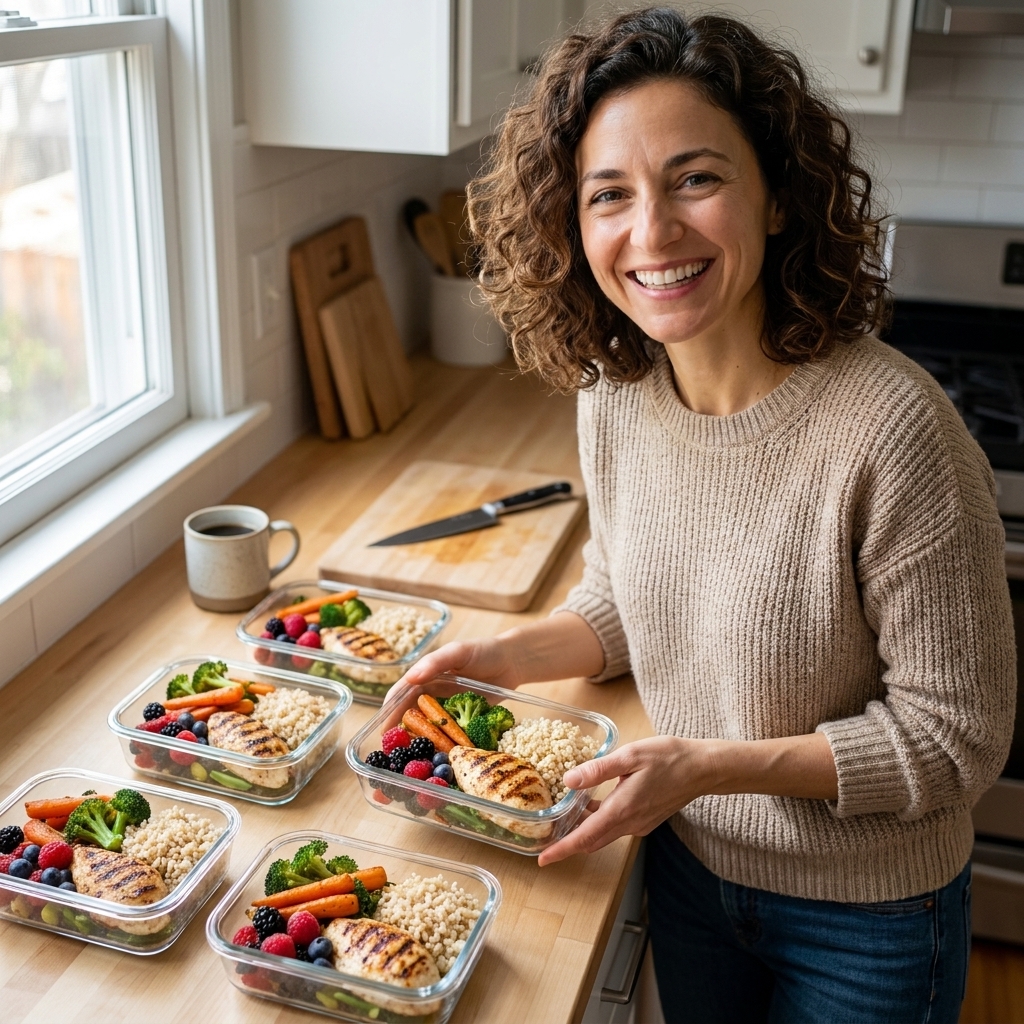
A beginner-friendly, no-stress guide to setting your macro targets and using them to plan breakfasts, lunches, dinners, and snacks for the week.
Platepathy
Calculate and Prep Macros Without Losing Your Mind
Learn how to set practical protein, carbs, and fat targets, then use a simple meal prep system to hit your macros with less stress and more flexibility.

Elena Rossi
Elena Rossi is a Registered Dietitian and meal prep expert who believes that healthy eating shouldn't feel like a second job. Through Platepathy, she translates complex nutrition science into approachable, delicious meal plans designed for real, busy lives.
Published October 18, 2026
Last updated October 18, 2026
Macros can feel like one more thing to manage in a life that is already full. I get it. I used to be the exhausted project manager living on takeout, convinced that “eating healthy” meant either tracking every crumb or giving up by Wednesday. These days, I am also a working mom, and I still want systems that work in real life.
Here is the Platepathy approach: use macros as a helpful structure, not a set of handcuffs. You will learn how to set a realistic protein, carbohydrate, and fat target, then prep a week of meals with a repeatable system that leaves room for actual weekends, busy nights, and eating with other humans.
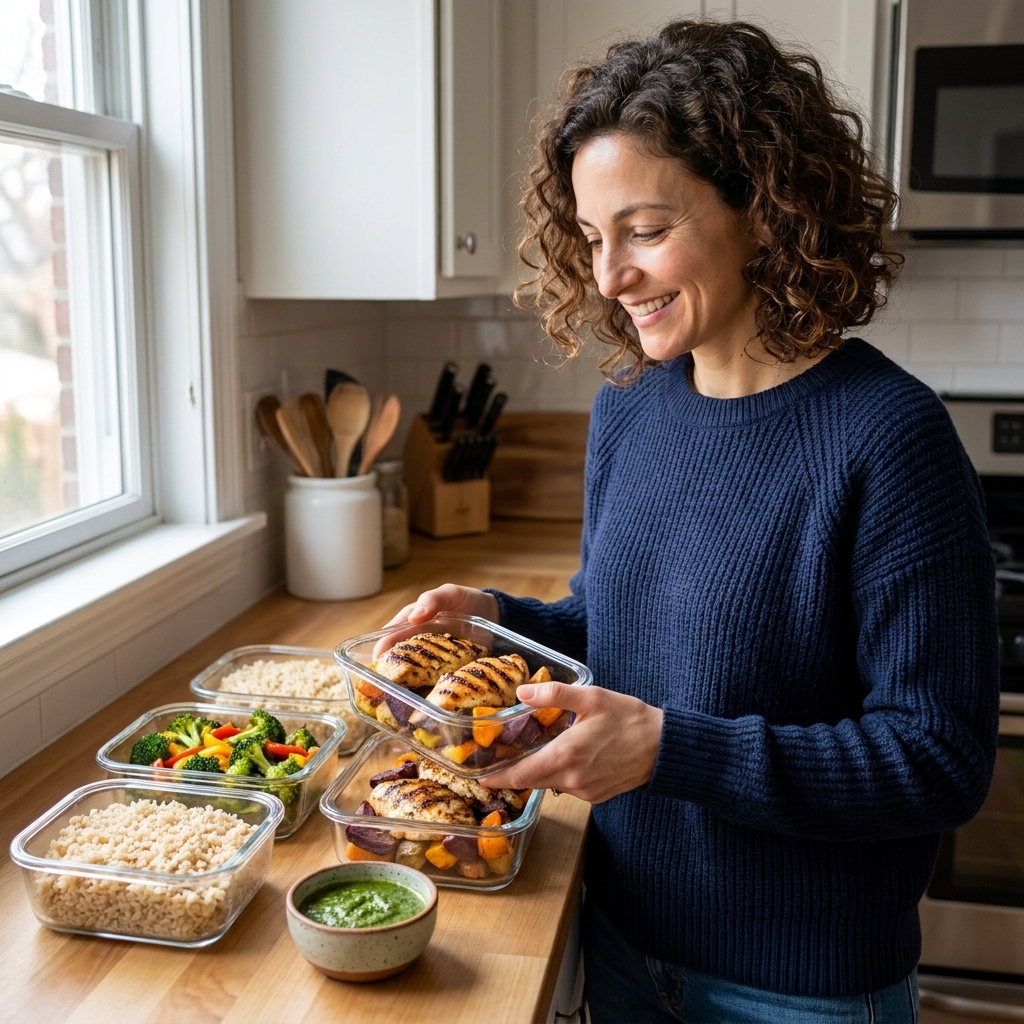
What macros are (and why they matter)
Macros are the three nutrients that provide energy (calories) and support essential functions:
- Protein: supports muscle repair, satiety, immune function, and more.
- Carbohydrates: your body’s primary fuel under a typical mixed diet, especially for the brain and for higher-intensity activity.
- Fat: supports hormones, cell membranes, nutrient absorption, and helps meals feel satisfying.
Calories matter, but macros help explain why two diets with the same calories can feel totally different in energy, hunger, and performance.
Plate empathy reminder: You do not need “perfect macros” to be healthy. You need patterns you can repeat most days without resentment.
Step 1: Set calories (quick and practical)
Macros sit inside your calorie target, so we start there. If you already have a calorie goal from a clinician, coach, or app you trust, you can use it.
Option A: Estimate, then adjust
A practical way is to use an online TDEE (total daily energy expenditure) calculator, pick an activity level that matches your average week, and treat the number as a starting point.
- Maintenance: start near your estimated TDEE.
- Fat loss: a modest deficit often feels most sustainable. Think small changes you can keep doing.
- Muscle gain: a modest surplus plus consistent training tends to work better than aggressive bulking.
Whichever direction you choose, give it 2 to 3 weeks before making big changes. Day-to-day scale fluctuations are normal.
Option B: Anchor protein first
If calorie tracking makes you spiral or quit, you can set protein first (more on that next), then build balanced meals around it. Many people naturally land in a reasonable calorie range that way.
Step 2: Set protein (my busy-person priority)
If I could pick only one macro to dial in for many healthy adults, it would be protein. It tends to make meal planning easier because it improves fullness and gives your plate a clear “starting point.”
A simple protein range
For healthy, resistance-training adults, a commonly used evidence-based ballpark is:
- 1.6 to 2.2 g protein per kg body weight per day, depending on training, goals, and appetite.
If you prefer pounds, that is roughly 0.7 to 1.0 g per lb.
Important: If you have kidney disease, are pregnant or postpartum, are managing diabetes with medication, are under 18, or have any medical condition that affects nutrition needs, get personalized guidance from a clinician or registered dietitian before using macro targets.
Gentle reality check: If that range feels intimidating, start with what you can do consistently. Even moving from “some protein sometimes” to “protein at most meals” can be a game-changer.
Spread it through the day
Aim for 25 to 40 g protein per meal for many adults, then use snacks as needed. Another way to think about it is roughly 0.3 to 0.5 g/kg per meal, depending on body size, appetite, and training. Spreading protein out is often more comfortable than trying to cram it into dinner.
Step 3: Set fat (do not go too low)
Fat is essential, and when people chase high protein and low calories, fat can quietly drop too low, leaving meals unsatisfying and hunger louder than it needs to be.
A common, workable range is:
- 20% to 35% of total calories from fat.
If you want a simple minimum to keep things feeling okay, some macro-coaching approaches use around 0.6 g/kg/day as a starting “floor,” then adjust based on preference and how you feel (energy, fullness, digestion).
Also: dietary fat is not a villain. We just want it in a range that supports your goals and appetite.
Step 4: Fill the rest with carbs
Once protein and fat are set, carbohydrates typically become the adjustable lever based on training, lifestyle, and preference.
- If you train hard or are on your feet a lot, you may feel better with more carbs.
- If you prefer higher-fat meals, have a lower training volume, or simply feel better that way, you may choose fewer carbs.
Carbs are not “earned.” They are fuel. Your plan should match your actual life, not your ideal life.
Step 5: Convert macros into grams
To calculate grams, you only need three numbers:
- Protein: 4 calories per gram
- Carbs: 4 calories per gram
- Fat: 9 calories per gram
Example calculation
Your numbers will likely be different, and that is the point. Copy the method, not the exact targets.
Let’s say you choose:
- Calories: 2,000
- Protein: 150 g (150 x 4 = 600 calories)
- Fat: 70 g (70 x 9 = 630 calories)
Calories used so far: 600 + 630 = 1,230
Calories remaining for carbs: 2,000 − 1,230 = 770
Carbs in grams: 770 ÷ 4 = 192 g
Your daily targets would be: 150 g protein, 192 g carbs, 70 g fat.
Use a range, not a bullseye
For most real humans, a flexible range keeps macros helpful instead of stressful:
- Protein: aim within 5 to 10 g
- Carbs and fat: aim within 10 to 20 g
If you consistently hit protein and are reasonably close on carbs and fats, you are doing it.
Step 6: Build a weekly plan
This is where macro plans either become sustainable or become a second job. The trick is to stop thinking in seven completely different days and start thinking in repeatable building blocks.
Use the Platepathy Macro Map
I like to build a week from three layers:
- Anchors (proteins): 2 to 3 main proteins for the week
- Carb bases: 2 to 3 options (rice, potatoes, pasta, oats, bread, tortillas, quinoa)
- Produce and fats: 2 to 4 vegetables and 2 to 3 fats (olive oil, avocado, nuts, cheese, tahini)
From those, you can mix and match bowls, salads, wraps, and plates without cooking a brand new recipe every night.
Pick your “reliable” meals
You do not have to prep every meal perfectly. For many people, it is enough to have:
- 2 macro-reliable meals per day (often breakfast and lunch)
- 1 flexible meal (often dinner with family, leftovers, or eating out)
This can significantly reduce tracking fatigue while still keeping your week on track.
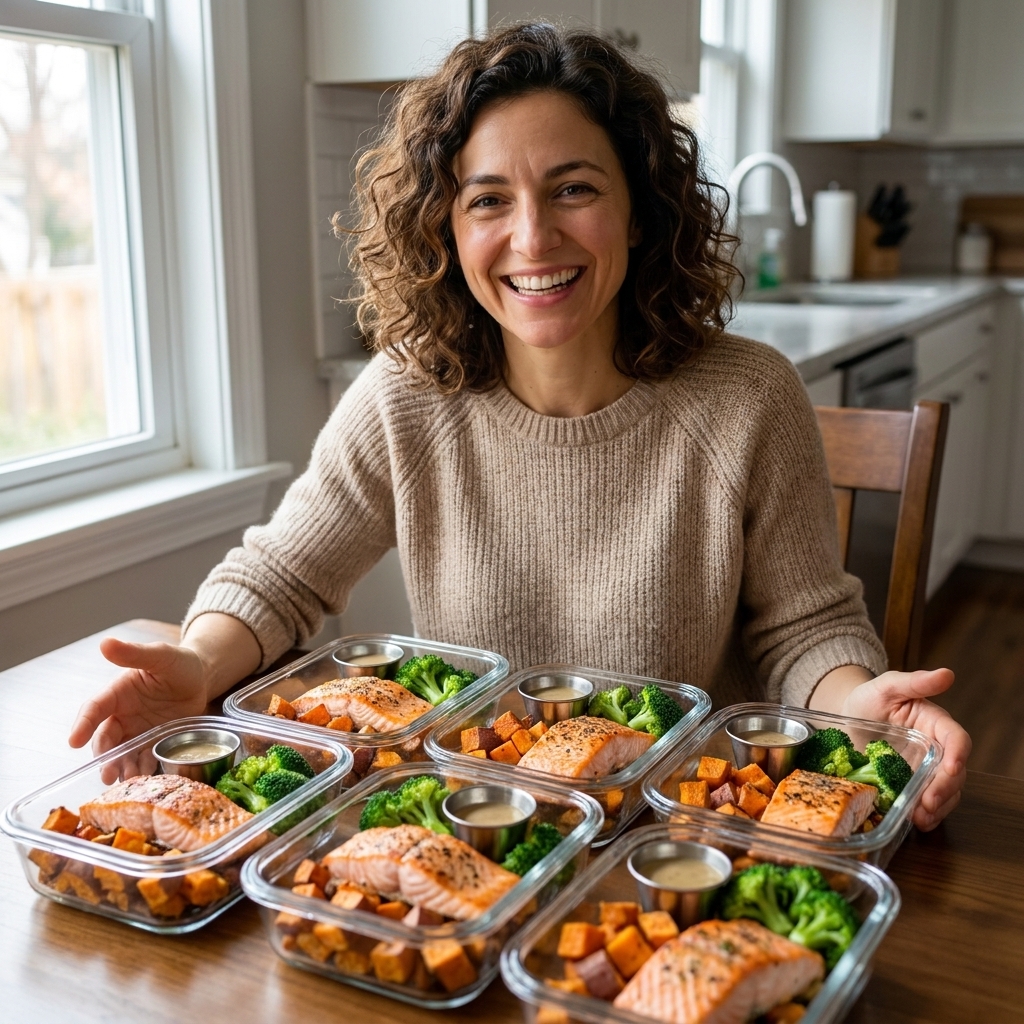
Step 7: Prep efficiently
Macro meal prep is less about cooking everything and more about making assembly fast. Here is a system I use as a working mom who needs dinner on the table without a meltdown.
1) Cook protein in bulk (then flavor it two ways)
- Chicken thighs or breast: roast a sheet pan, season half Italian-style and half taco-style.
- Lean ground turkey or beef: cook a big skillet, split into marinara and a stir-fry sauce.
- Tofu or tempeh: bake or pan-sear, then toss in two different sauces.
This prevents the dreaded “I cannot eat this again” feeling by midweek.
2) Prep one starch and one backup
Choose one main carb base and one quick backup:
- Main: rice, potatoes, pasta, quinoa
- Backup: bread, tortillas, microwave rice, oats, frozen potatoes
Backups are not “cheating.” They are planning.
3) Prep vegetables you actually eat
I love a farmer’s market fantasy as much as anyone, but choose vegetables you will realistically use:
- Roast: broccoli, carrots, zucchini, bell peppers, green beans
- Keep raw: cucumbers, cherry tomatoes, baby carrots, salad greens
4) Make one high-impact sauce
Sauce is the difference between “diet food” and “I would gladly eat this.” Try:
- Greek yogurt ranch-style dip
- Tahini lemon sauce
- Pesto (store-bought is fine)
- Peanut-lime sauce
- Salsa plus smashed avocado
5) Portion only what helps you
Some people love fully portioned containers. Others feel boxed in. You can also do “component prep” and assemble plates as you go. Both count.
Plate formulas (no calculator)
When you are tired, you need defaults. Here are easy formulas that tend to land close to balanced macros.
Protein bowl
- Protein: chicken, shrimp, tofu, tempeh, eggs, lean meat, beans, or lentils
- Carb: rice, quinoa, potatoes
- Vegetables: roasted or raw
- Fat: olive oil drizzle, avocado, nuts, or sauce
High-protein breakfast
- Greek yogurt or cottage cheese
- Fruit
- Granola or oats
- Chia or nut butter (optional)
Sandwich plate
- Sandwich or wrap with a clear protein (turkey, tuna, eggs, tofu)
- Crunchy produce (carrots, cucumbers, side salad)
- Optional add-on carb (fruit) or fat (cheese, mayo, hummus) depending on your targets

Fiber and micronutrients
Macros are not the whole story. To feel good and keep your plan health-forward, build in fiber and micronutrients on purpose.
- Include produce at most meals: fruit at breakfast or snacks, vegetables at lunch and dinner.
- Aim for a fiber-friendly pattern: beans, lentils, oats, whole grains, berries, and veggies.
- Typical targets: many guidelines land around 25 to 38 g fiber per day, but tolerance varies. If you are currently low, increase gradually and drink fluids.
How to track with less stress
If you choose to track, use it as a feedback tool, not a grade.
- Track in blocks: log breakfast and lunch first, then fill in dinner.
- Build a personal library: save 10 to 15 meals you enjoy that reliably hit your numbers.
- Prioritize protein: if you miss something, miss carbs or fats before you miss protein.
- Use averages: a slightly lower day and a slightly higher day can average out over the week.
If tracking makes you anxious or obsessive, that is not a willpower issue. It is a sign to simplify. You can still use the meal prep system and plate formulas without logging.
Adjust and iterate
Set your targets, run them for a couple of weeks, then adjust based on real feedback.
- Look at trends, not single days: body weight averages over 2 to 4 weeks, strength and workout performance, hunger, sleep, and how your clothes fit.
- Keep protein steady: it is usually the anchor.
- Adjust calories by moving carbs or fats: small changes work best. Think 100 to 200 calories per day up or down, then reassess.
- If you feel terrible: low energy, constant hunger, poor sleep, irritability, or stalled training are signals to revisit the plan, not “try harder.”
Common mistakes (and kinder fixes)
“I planned perfect weekdays and forgot weekends exist.”
Fix: Set a weekend plan on purpose. Even a simple rule like “protein at brunch, veggies at dinner” can keep you grounded.
“I made meals too low in fat and I’m starving.”
Fix: Add fat intentionally: olive oil, avocado, nuts, cheese, tahini, pesto. Satisfaction matters.
“I hit protein but my digestion is a mess.”
Fix: Spread protein across meals, add fiber gradually, drink fluids, and include carbs and produce. If symptoms persist, consider checking in with a registered dietitian.
“I’m tired of chicken by day three.”
Fix: Cook one protein, season it two ways, and keep one no-cook protein option on hand (rotisserie chicken, canned tuna or salmon, eggs, Greek yogurt, tofu).
A quick safety check
Macro targets can be useful, but they are not the right tool for everyone without guidance. Consider professional support before tracking or restricting if you:
- Have a current or past eating disorder, or tracking triggers anxiety or compulsive behaviors
- Are pregnant, postpartum, or breastfeeding
- Have diabetes and use insulin or glucose-lowering medication
- Have kidney disease or other medical conditions affecting protein or fluid needs
- Are an adolescent still growing
You can still use the meal prep framework and plate formulas in a non-tracking way.
A sample 3-day prep plan
This is an example of how the building blocks come together. Adjust portions to your targets and hunger.
Prep once
- Roasted chicken thighs (half taco seasoning, half Italian seasoning)
- Cooked rice
- Roasted broccoli and peppers
- Greek yogurt lime sauce
- Washed salad greens
Day 1
- Breakfast: Greek yogurt, berries, granola, chia
- Lunch: Taco chicken rice bowl, peppers, yogurt lime sauce
- Dinner: Big salad with Italian chicken, olive oil, bread on the side if needed
Day 2
- Breakfast: Eggs plus toast and fruit
- Lunch: Italian chicken, rice, broccoli, extra drizzle of olive oil
- Dinner: Quick tacos with chicken, bagged slaw, salsa, avocado
Day 3
- Breakfast: Cottage cheese bowl with fruit and nuts
- Lunch: Leftover taco bowl, add beans for extra carbs and fiber
- Dinner: Family meal, aim for a protein serving and add a carb or fat based on your day
FAQ
Do I need to hit macros exactly every day?
No. Consistency over time matters more than daily perfection. Most people do best treating macros as ranges and looking at weekly averages.
What if I do not know my activity level?
You can still set useful targets. Start with a reasonable calorie estimate, prioritize protein, choose a moderate fat intake, and let carbs fill in. Then adjust based on energy, hunger, training, and progress over a few weeks.
Can I do macros without giving up foods I love?
Yes. In fact, forbidding foods tends to backfire. Build your day around protein and produce, then budget room for foods you genuinely enjoy. This is exactly what sustainability looks like.
Is macro counting safe for everyone?
Not always. If tracking triggers anxiety, obsessive thoughts, or disordered eating patterns, choose a non-tracking approach and consider support from a registered dietitian or therapist experienced in eating concerns.
Bring it back to kindness
Macros are a tool, not a moral scorecard. If you want the simplest version of this whole guide, it is:
- Pick a protein target you can repeat.
- Build meals with a protein anchor, a carb you enjoy, and a fat that satisfies.
- Prep components so weeknights become assembly, not a second shift.
Your “perfectly balanced diet” is the one you can live with. I will take consistent and calm over flawless and frantic every single time.