
Master portions using visual cues, your hands, and simple plate strategies. No food scale, no calorie counting, just practical nutrition you can stick with.
Platepathy
How to Read Nutrition Labels
Learn how to read nutrition labels step by step so you can spot sneaky sugars, confusing serving sizes, and misleading claims, and shop for meals with more confidence.

Elena Rossi
Elena Rossi is a Registered Dietitian and meal prep expert who believes that healthy eating shouldn't feel like a second job. Through Platepathy, she translates complex nutrition science into approachable, delicious meal plans designed for real, busy lives.
Published October 18, 2026
Last updated October 18, 2026
Nutrition labels are supposed to make shopping easier. And yet somehow, I can stand in the cereal aisle and watch smart, capable adults get totally thrown by serving sizes, “zero sugar” claims, and ingredient lists that read like a chemistry quiz.
Here’s the good news: you do not need to be a dietitian to read labels well. You just need a simple order of operations, and a few red-flag patterns to recognize quickly. This is the exact label routine I use when I’m meal planning for a busy week and I want food that supports energy, satisfaction, and sanity.
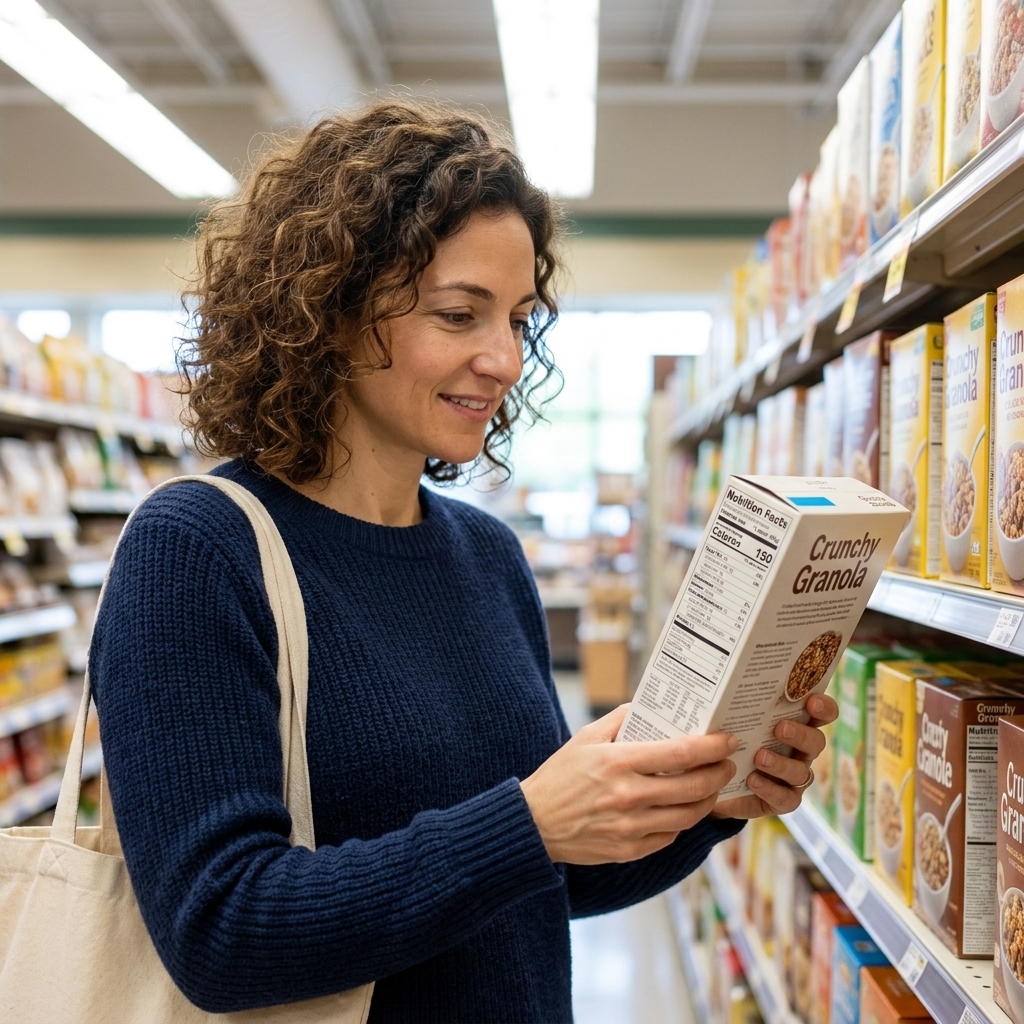
The label-reading mindset
Before we zoom into numbers, a quick dose of Platepathy: no single label tells you whether you are “good” or “bad” at eating. Labels are tools, not report cards.
- Use labels to compare two options, not to chase perfection.
- Zoom out to your whole day, not one snack.
- Look for what adds (protein, fiber, healthy fats, micronutrients) as much as what you may want to limit.
Step 1: Start with the serving size (always)
The fastest way to get tricked by a label is to skip the serving size. Everything on the Nutrition Facts panel is based on that amount.
What to check
- Serving size (for example: 1 cup, 2 cookies, 1 bar)
- Servings per container (this is where “sneaky” happens)
If a bottle says 2 servings per container and you drink the whole thing, you need to double calories, sodium, added sugar, and everything else.
Meal prep tip: If you routinely eat a different portion than the serving size, that is not a character flaw. It is data. Choose products with serving sizes that match real life, or portion them once at home so the label becomes meaningful.
Step 2: Check calories, but don’t stop there
Calories tell you how much energy is in one serving. They do not tell you whether that food will keep you full, support stable energy, or help you feel satisfied after a meal.
Use calories to answer one question
“Does this fit the role I need it to play?”
- If it’s a snack, I usually want some staying power: protein, fiber, or both.
- If it’s an ingredient (like a sauce), calories matter less than sodium, added sugar, and fats because portions can add up fast.
Step 3: Read the macros like a meal planner
This is the part of the label that can help you predict fullness and balance: carbs, fiber, sugar, protein, and fats.
Carbohydrates: focus on fiber and added sugar
Total carbohydrates include fiber and sugars. On most shopping trips, I’m looking at:
- Dietary fiber: Higher fiber generally supports fullness, digestion, and steadier energy. For many packaged foods, 3 grams or more per serving is a solid sign it will be more satisfying.
- Added sugars: This is the big one for “hidden sugar.” Added sugars are sweeteners added during processing, different from the natural sugar found in fruit or plain milk.
How much added sugar is “a lot”?
Context matters, but as a quick screen when comparing similar items: if a product has 10 grams or more of added sugar per serving, I pause. For everyday staples (yogurt, cereal, granola bars, sauces), lower is usually easier to work with.
Protein: the quiet hero of easier eating
Protein helps with fullness and supports muscle. I like to see protein show up in snacks and breakfast foods especially.
- For a snack, 7 to 10 grams is a helpful target.
- For a meal component, more is often better, depending on the food.
Not every food needs to be high-protein, but if you’re hungry an hour after breakfast, this line is often why.
Fat: look at type and context
Fat is not the villain. It helps with flavor, satisfaction, and absorption of fat-soluble vitamins.
- Saturated fat: It’s worth keeping an eye on, especially if it’s high in multiple foods you eat daily.
- Trans fat: Labels can say 0 grams if there is a small amount per serving. That’s why Step 5 (ingredients) matters.
Real-life example: A nut butter may have more calories and fat, but it also offers protein and satisfaction. A sweetened “low-fat” yogurt might be lower in fat but higher in added sugar. Labels help you choose what actually supports your day.
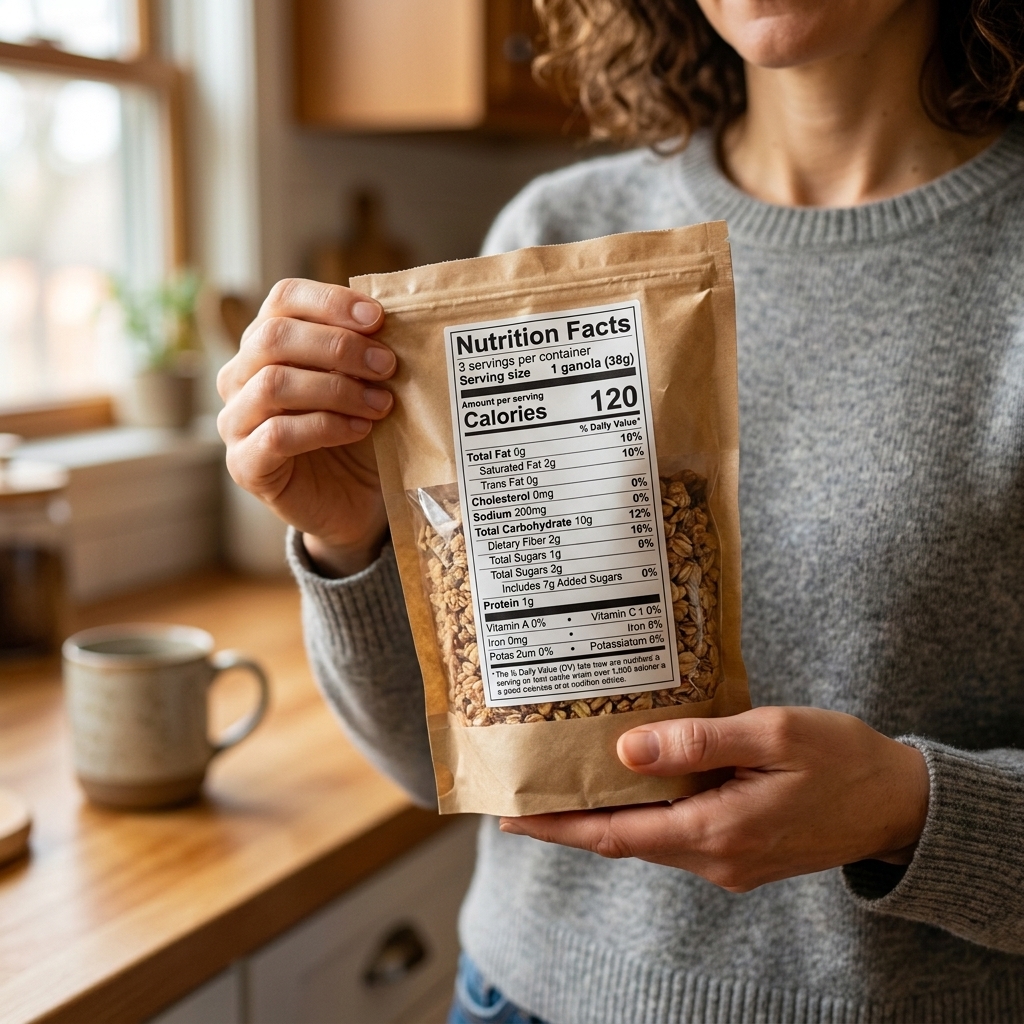
Step 4: Scan sodium like you scan your calendar
Sodium adds up quickly with packaged foods, sauces, frozen meals, deli meats, and snack foods. You do not need to eat “no sodium,” but it helps to notice when one item takes a big bite out of your day.
A quick sodium gut-check
- 5% Daily Value or less per serving is considered low.
- 20% Daily Value or more per serving is considered high.
If you rely on convenience foods during a busy season, aim to balance higher-sodium items with lower-sodium meals elsewhere, and use flavor boosters like citrus, herbs, garlic, vinegar, and salt-free seasoning blends at home.
Step 5: Flip to ingredients (this is where the truth lives)
The ingredients list is the simplest “detective tool” on the package. Ingredients are listed in order by weight, from most to least.
What I look for in 20 seconds
- Is a whole food first? Examples: oats, beans, tomatoes, chicken, milk, peanuts.
- How many sweeteners are used? Multiple forms can add up even if each seems small.
- Are there fats I’d rather minimize? Watch for “partially hydrogenated oils,” a sign of trans fats (less common now, but still worth spotting).
- Do I recognize most ingredients? You do not need a “clean” label to eat well, but a very long list can be a clue the product is heavily processed or engineered for hyper-palatability.
Common names for added sugar
You’ll see “added sugar” in the Nutrition Facts panel, but the ingredients list shows the forms. Some common ones:
- Cane sugar, brown sugar
- Corn syrup, high fructose corn syrup
- Honey, maple syrup, agave
- Dextrose, maltose, glucose
- Fruit juice concentrate
Again: you do not need to fear sugar. You just deserve to know when it’s doing the heavy lifting in a product marketed as “healthy.”
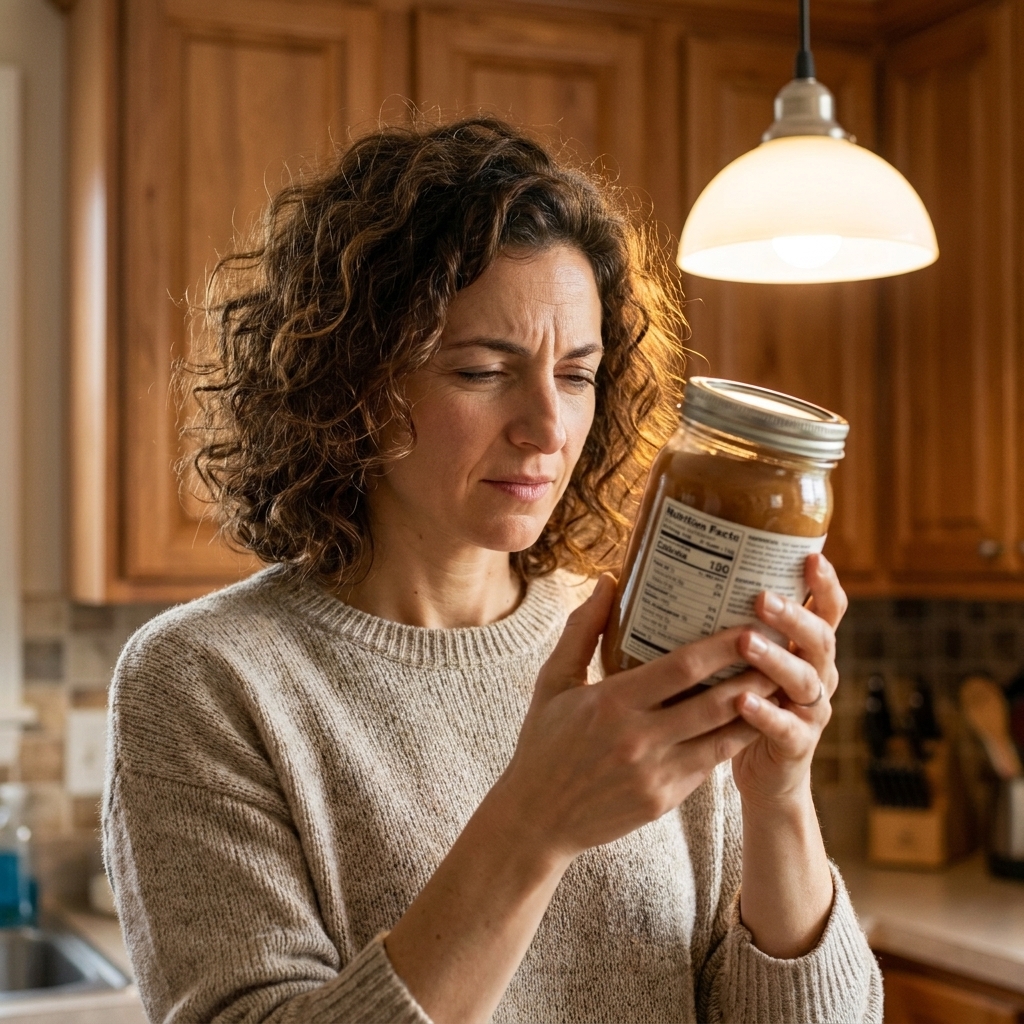
Step 6: Use % Daily Value as a shortcut
% Daily Value (DV) is based on a standard 2,000-calorie diet. It’s not personalized, but it is useful for quick comparison.
The simple rule
- 5% DV or less is low
- 20% DV or more is high
This is especially handy for sodium, saturated fat, and fiber when you’re comparing two brands fast.
Step 7: Don’t get played by front-of-package claims
The front of the box is marketing. The side and back are where you verify.
“Natural”
This term is loosely regulated and does not guarantee less sugar, fewer additives, or higher quality. Check ingredients and the Nutrition Facts panel.
“Multigrain” vs “Whole grain”
Multigrain just means more than one type of grain. They can still be refined. If you want more whole grains, look for whole in the ingredients: “whole wheat,” “whole oats,” “brown rice.”
“Low fat”
Sometimes “low fat” products compensate with more sugar or starch for taste. Compare added sugar and total carbohydrates.
“No added sugar”
This means no sugar was added during processing, but the product can still contain natural sugars, and it can still be calorie-dense. Check total carbs, fiber, and portion.
“0 grams trans fat”
A product can list 0 grams if it contains a small amount per serving. If you want to avoid trans fats, scan ingredients for partially hydrogenated oils.
Step 8: Practice with three common grocery aisle decisions
1) Yogurt
- Serving size: single-serve cup vs larger tub
- Protein: higher often helps breakfast stick
- Added sugar: compare flavors, some are basically dessert
- Ingredients: look for milk and cultures, then added items
2) Bread
- Serving size: usually 1 slice, but most sandwiches are 2
- Fiber: higher fiber tends to be more filling
- Sodium: can vary a lot between brands
- Ingredients: look for “whole wheat” or other whole grains near the top
3) Pasta sauce
- Serving size: often 1/2 cup, but many people use more
- Sodium: the biggest differentiator
- Added sugar: not always necessary, compare brands
- Ingredients: tomatoes should lead the list
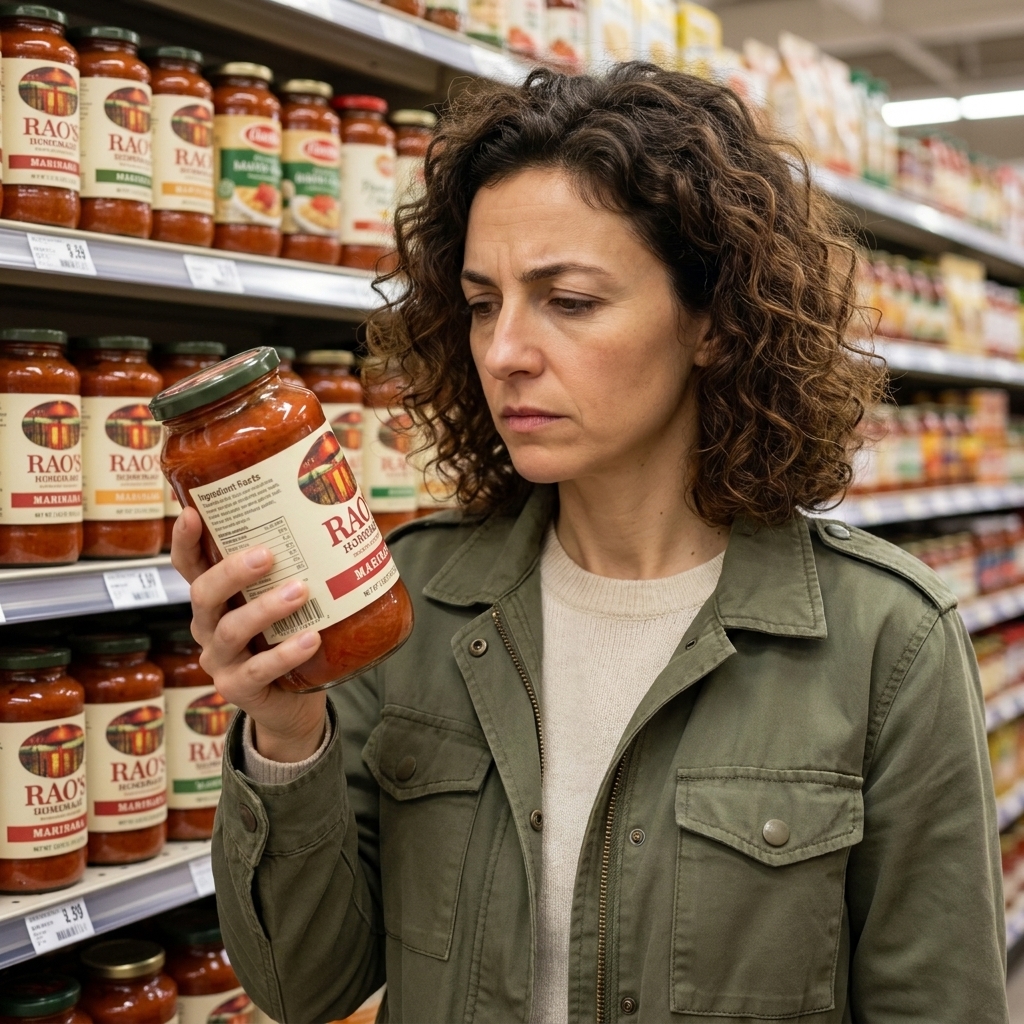
A 30-second label checklist (save this for your next trip)
- Serving size: Is it realistic for how I eat?
- Added sugar: Is it low enough to fit my day?
- Fiber: Will this actually fill me up?
- Protein: Does it help this snack or meal do its job?
- Sodium: Is this a “high sodium” item for me?
- Ingredients: What are the first 3 ingredients?
FAQ
Are nutrition labels accurate?
They are regulated, but values can vary a bit. Think of labels as a strong estimate, not a perfect measurement. They’re best for comparing products and building awareness of patterns.
Should I avoid foods with ingredients I can’t pronounce?
Not necessarily. Some perfectly safe ingredients have science-y names. Instead, use the ingredients list to understand what the food is mainly made of and whether added sugars, sodium, or certain fats are doing most of the work.
What does “net carbs” mean?
“Net carbs” is a marketing term, not a required line on the Nutrition Facts label. It usually means total carbs minus fiber (and sometimes minus sugar alcohols). If you’re focusing on blood sugar stability or fullness, fiber and added sugars are often more helpful than chasing a net carb number.
How do I spot hidden sugar quickly?
Check Added Sugars on the Nutrition Facts panel first, then scan the ingredients list for multiple sweeteners (sugar, syrups, juice concentrates). If several are listed, sugar likely plays a bigger role than the front-of-package vibe suggests.
Do I need to track everything I eat to shop well?
No. Label reading is a skill, not a tracking mandate. You can build a reliably healthy cart by comparing staples, choosing a few higher-fiber and higher-protein options you like, and keeping treats in the mix on purpose.
Bring it back to real life
If you take one thing from this, let it be this: the “best” product is the one you will actually eat, enjoy, and use in your routine. Labels help you pick options that make your week smoother and your meals more satisfying, not more stressful.
Next time you shop, choose one aisle to practice in, like cereal, bread, or snack bars. Give yourself five minutes to compare a few labels using the checklist above. That’s how this gets easy, one low-pressure rep at a time.