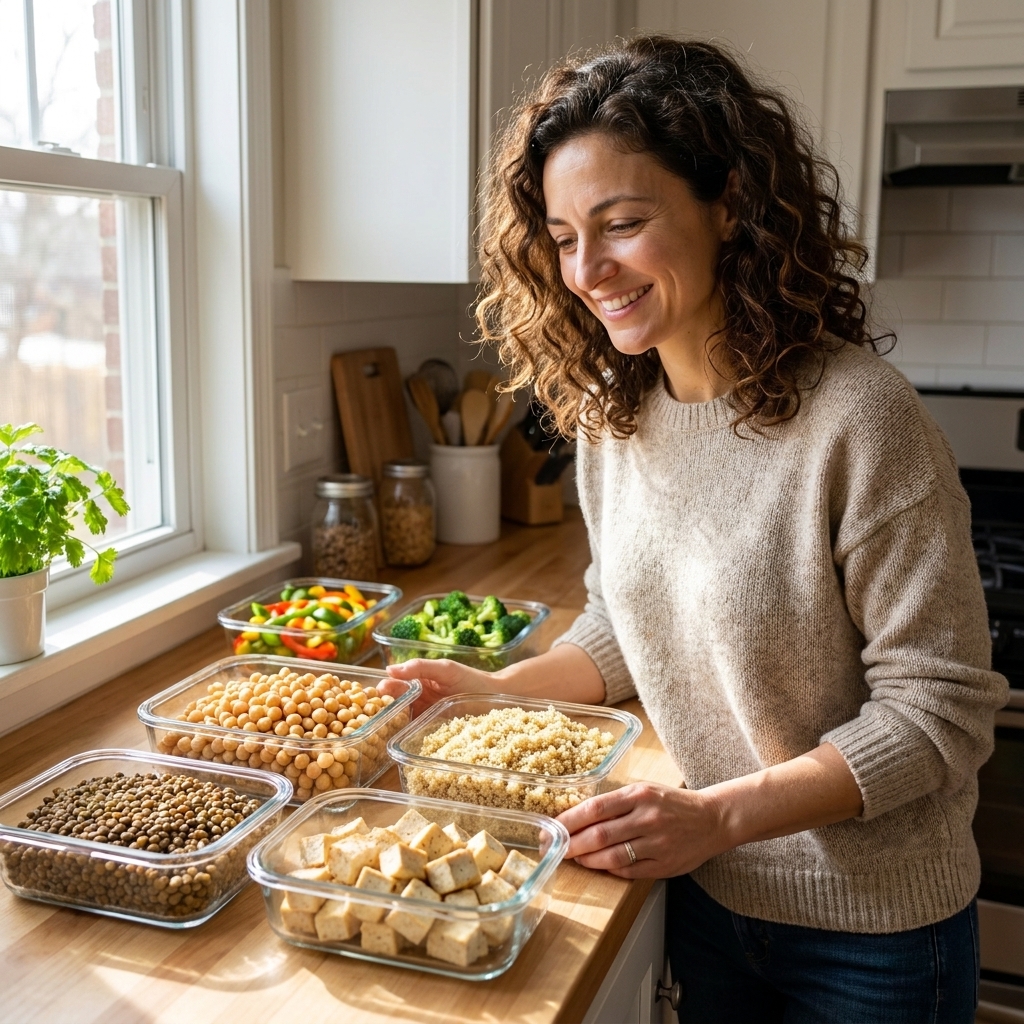
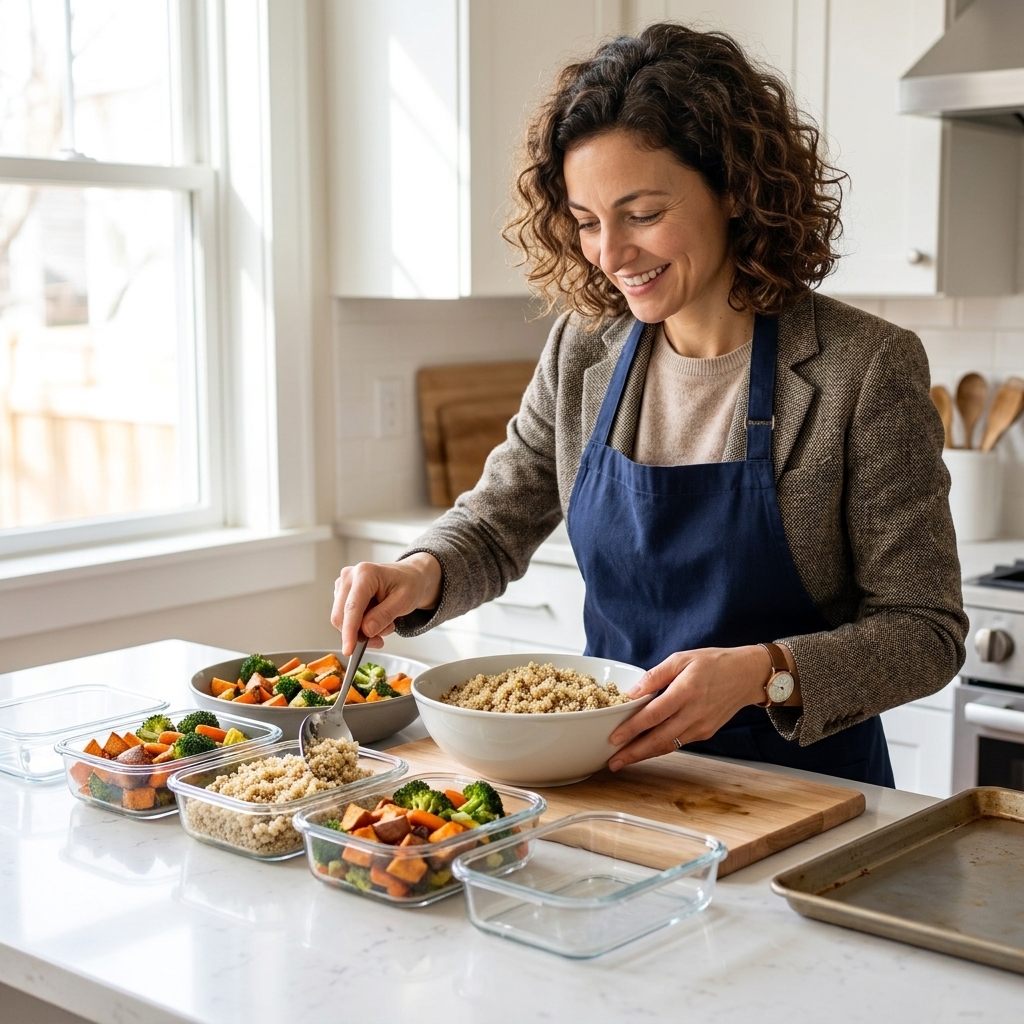
A no-math, no-stress guide to building balanced meals with half veggies, a quarter protein, and a quarter complex carbs, plus smart fats and flavor.
Platepathy
15 Essential Pantry Staples for Balanced Meals
Stock your kitchen with 15 versatile, long-lasting staples that support balanced, nutrient-dense meals on a busy schedule. Plus smart swaps and quick meal ideas.

Elena Rossi
Elena Rossi is a Registered Dietitian and meal prep expert who believes that healthy eating shouldn't feel like a second job. Through Platepathy, she translates complex nutrition science into approachable, delicious meal plans designed for real, busy lives.
Published October 18, 2026
Last updated October 18, 2026
If you have ever stared into the pantry at 5:42 PM and thought, “There is food here… but none of it is dinner,” you are not alone. I lived that life for years as a project manager running on takeout and good intentions. These days, as a dietitian and a mom, I still want meals that feel nourishing, but I need them to be realistic.
The good news is that balanced, nutrient-dense meals are less about perfection and more about having a few reliable building blocks on hand. When your pantry is stocked with versatile staples, healthy meals stop feeling like a special project and start feeling like your default.
What “balanced” means
At Platepathy, “balanced” is not a set of rigid rules. It is a gentle structure that helps you feel satisfied and fueled. When you can, aim for:
- Protein for staying power
- Fiber-rich carbs for energy and gut health
- Color from fruits or vegetables for vitamins, minerals, and antioxidants
- Healthy fats for flavor, satisfaction, and nutrient absorption
A well-stocked pantry makes it much easier to pull these together, even when the fridge is looking sparse.
15 pantry staples
These are my “always happy to see you” items. They last a long time, work across cuisines, and make meal planning simpler and more budget-friendly.
1) Canned beans (black, chickpeas, white beans)
Why they earn the space: Beans bring fiber, plant protein, iron, potassium, and a serious convenience factor.
- Fast meal ideas: chickpea salad wraps, white bean tomato soup, black bean tacos
- Platepathy tip: Rinse to reduce sodium and, for some people, reduce gas from the brine.
2) Lentils (brown or green)
Why they earn the space: Lentils cook faster than most dried beans and make hearty, budget-friendly meals.
- Fast meal ideas: lentil bolognese, lentil veggie soup, warm lentil salad with feta
- Reality check: Brown or green lentils usually cook in about 20 to 30 minutes. Red lentils break down faster for creamy dals and soups.
3) Canned fish (salmon, sardines, tuna)
Why they earn the space: Shelf-stable protein with omega-3 fats (especially salmon and sardines). Many options also provide vitamin D, and bone-in sardines can add calcium.
- Fast meal ideas: salmon rice bowls, tuna and white bean salad, sardines on toast with lemon
- Look for: lower-sodium options and tuna varieties lower in mercury more often (like skipjack “light”).
4) Eggs (yes, they count as a staple)
Why they earn the space: Affordable, quick-cooking protein that pairs with nearly anything.
- Fast meal ideas: veggie scramble, egg fried rice, shakshuka using canned tomatoes
- Food safety note: Keep eggs refrigerated, and cook until whites and yolks are set for most households.
5) Whole grains: brown rice or quinoa
Why they earn the space: Fiber-rich carbs that anchor bowls, stir-fries, and soups.
- Fast meal ideas: grain bowls with beans and salsa, quinoa salad with canned chickpeas
- Time saver: Quinoa often cooks in about 15 minutes. Consider quick-cooking brown rice or keep frozen cooked grains as backup.
6) Whole-wheat pasta
Why it earns the space: A weeknight hero that adds more fiber than refined pasta and pairs well with pantry sauces.
- Fast meal ideas: pasta with olive oil, garlic, and white beans; tuna pasta with peas
- Gentle note: If whole-wheat pasta is not your favorite, do regular pasta and add fiber through beans, veggies, and a side salad. Balance is flexible.
7) Rolled oats
Why it earns the space: Affordable soluble fiber for steady energy. Also surprisingly useful beyond breakfast.
- Fast meal ideas: overnight oats, oatmeal with peanut butter and banana, savory oats with an egg
- Bonus use: Blend into oat flour for quick pancakes or to thicken smoothies.
8) Nut butter (peanut, almond, sunflower seed)
Why it earns the space: Adds healthy fats and a bit of protein, plus it makes snacks and sauces instantly more satisfying.
- Fast meal ideas: peanut sauce noodles, apple and peanut butter, stir into oatmeal
- Look for: options with peanuts or nuts as the first ingredient and minimal added sugar.
9) Olive oil
Why it earns the space: A flavorful fat for roasting, sautéing, dressing, and finishing.
- Fast meal ideas: sheet pan veggies, lemony vinaigrette, olive oil pasta with canned fish
- Storage tip: Keep it away from heat and light to help it stay fresh.
10) Vinegar (balsamic or red wine vinegar)
Why it earns the space: Acid is the missing “something” in many quick meals. Vinegar perks up beans, grains, and veggies fast.
- Fast meal ideas: quick vinaigrette, brighten soups, add to sautéed greens
- Easy formula: 3 parts oil to 1 part vinegar, plus salt and pepper.
11) Canned tomatoes (diced or crushed)
Why they earn the space: Foundation for soups, chili, shakshuka, and quick simmer sauces, plus a boost of antioxidants like lycopene.
- Fast meal ideas: tomato lentil soup, pantry marinara, bean chili
- Pairing win: Adding a little fat (like olive oil) can help your body absorb carotenoids like lycopene.
12) Broth or bouillon
Why it earns the space: Instant flavor for grains, soups, and quick braises.
- Fast meal ideas: cook rice in broth, veggie soup with beans, ramen upgrade
- Sodium note: Low-sodium broth or bouillon gives you more control, but regular works too. Taste before adding extra salt.
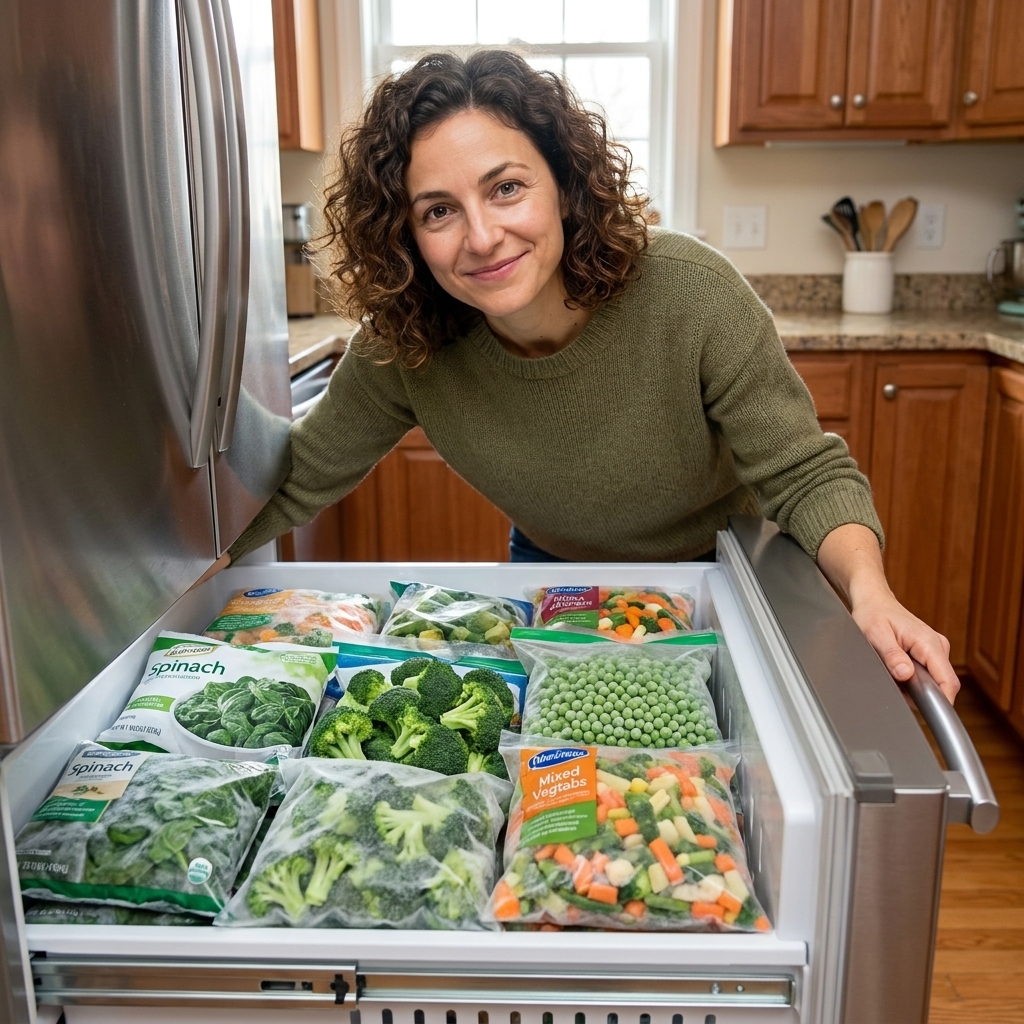
13) Frozen vegetables
Why they earn the space: They are often picked and frozen soon after harvest, require zero prep, and cut food waste. Nutritionally, they absolutely “count.”
- Fast meal ideas: frozen stir-fry mix with rice, spinach in pasta sauce, edamame in grain bowls
- What I keep: spinach, broccoli, peas, mixed veg, and edamame.
14) Nuts and seeds (walnuts, pumpkin seeds, chia)
Why they earn the space: Crunch, healthy fats, minerals like magnesium and zinc, and an easy way to make meals more satisfying.
- Fast meal ideas: sprinkle on salads and oatmeal, blend into pesto, add chia to yogurt
- Storage tip: Keep nuts and seeds in the fridge or freezer if you buy in bulk to slow rancidity.
15) A simple spice and seasoning kit
Why it earns the space: Flavor is what makes healthy eating sustainable. You do not need 40 spices. You need a few that you actually use.
- My minimalist lineup: garlic powder, onion powder, smoked paprika, cumin, Italian seasoning, chili flakes, black pepper, and kosher salt
- Fast meal ideas: taco beans, sheet pan veggies, quick pasta sauce
10-minute meal formula
When I am tired, I do not want a recipe. I want a formula. Most true 10-minute pantry meals work best if you are using quick-cooking pasta, leftover grains, or pre-cooked frozen grains.
Mix and match
- Protein: beans, lentils, eggs, canned fish
- Carb: rice or quinoa (cooked), pasta, oats, toast
- Veg: frozen veg, canned tomatoes, whatever produce is hanging on
- Flavor: olive oil + vinegar, spices, broth, nut butter
Try one of these:
- Grain bowl: cooked rice or quinoa + canned beans or canned salmon + frozen veg + olive oil and vinegar
- Pasta night: pasta + canned tomatoes + garlic and Italian seasoning + white beans or tuna + spinach
- Breakfast-for-dinner: eggs + toast or oats + fruit + nuts or nut butter
- Soup shortcut: broth + canned tomatoes + lentils + frozen veggies + spices
Quick storage note: Once opened, move leftover canned fish to a covered container in the fridge and use within 1 to 2 days.
Budget and diet swaps
You do not need to buy everything at once. Build your pantry gradually, starting with the staples you will actually cook.
- If you are watching sodium: choose no-salt-added tomatoes and low-sodium broth, and rinse canned beans
- If you are gluten-free: swap whole-wheat pasta for brown rice pasta or lentil pasta, and keep certified gluten-free oats
- If you eat mostly plant-based: double down on beans, lentils, nuts, seeds, and canned tomatoes, plus nutritional yeast if you love it
- If you are feeding picky kids: keep a familiar base (pasta, rice), then add “invisible” nutrition like blended beans in sauce or spinach stirred into soup
Honorable mentions
These are not required, but they are pantry-to-plate “bridge” items that make quick meals taste like you meant to do it:
- Soy sauce or tamari: instant savory depth for rice bowls and stir-fries
- Mustard: turns oil and vinegar into a real dressing, fast
- Jarred salsa: easiest way to make eggs, beans, or rice feel like dinner
- Canned coconut milk: weeknight curries and lentil soups without extra steps
Pantry organization
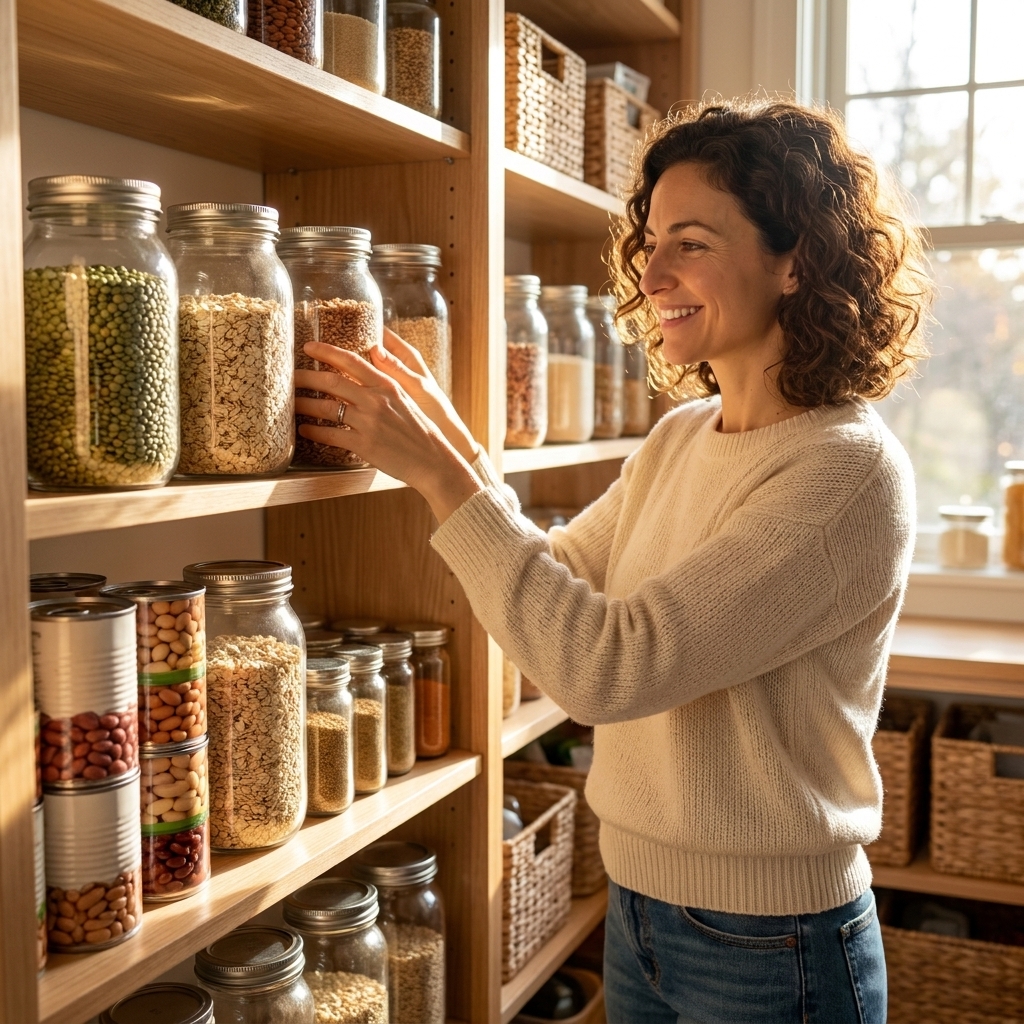
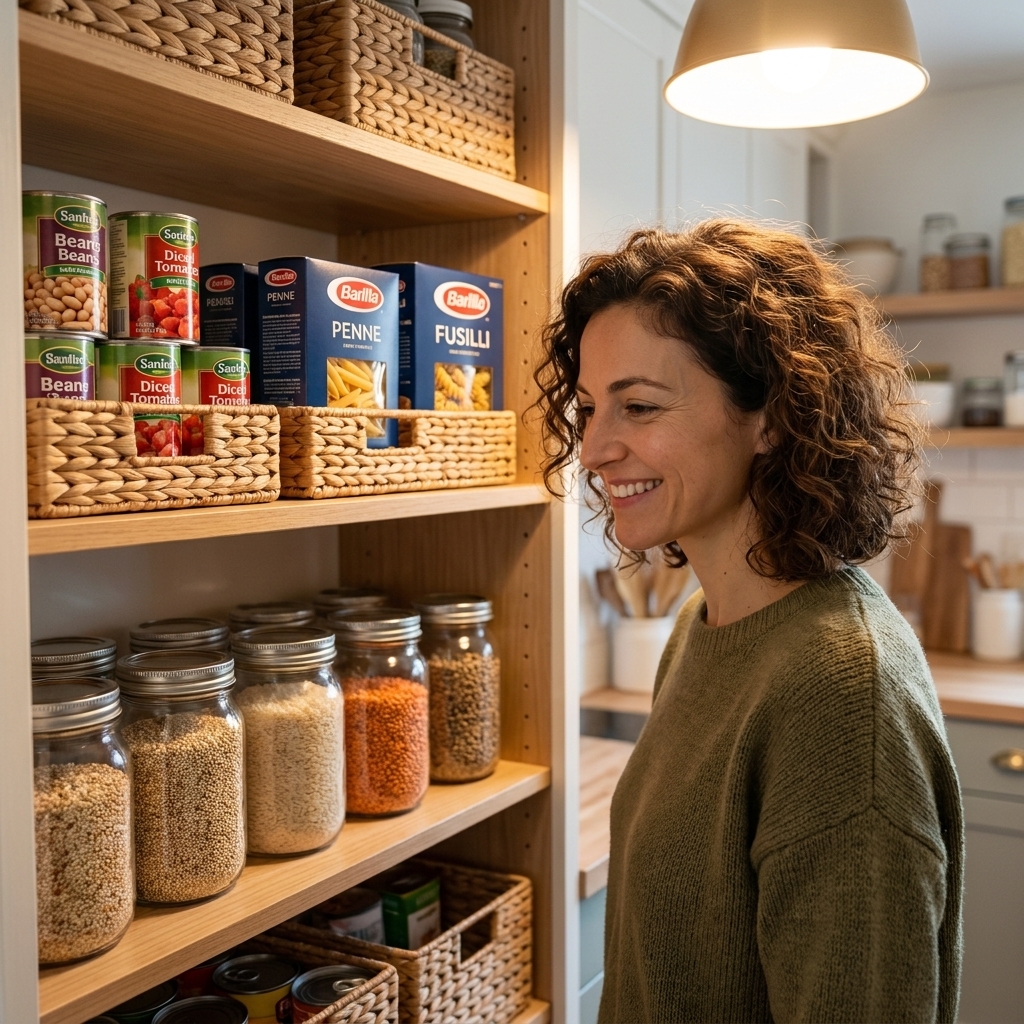
This is the unsexy part that saves you money: if you cannot see it, you will not use it.
- Group by job: proteins (beans, fish), bases (grains, pasta), flavor (tomatoes, broth, spices), snacks (nuts, nut butter)
- Use the “first in, first out” rule: put newer items behind older ones
- Set a 10-minute pantry reset once a week: I do mine while my coffee brews on Sunday
Quick FAQ
Do I have to buy organic?
No. Organic can be a great option if it fits your budget and values, but the biggest nutrition win is consistently eating a variety of fiber-rich foods, proteins, and produce. A can of regular chickpeas is still a very good choice.
Are canned foods less nutritious?
Not automatically. Canned beans, tomatoes, and fish can be highly nutritious and extremely practical. If sodium is a concern, rinsing beans and choosing lower-sodium products helps a lot.
What pantry staples help with protein most?
Canned beans, lentils, canned fish, nut butter, nuts and seeds, and eggs are the big ones. Pairing plant proteins (like beans) with whole grains (like brown rice) can also round out amino acids across the day.
How many staples do I need to start?
Start with 5 to 7: one grain, one pasta, two proteins (beans plus canned fish or eggs), canned tomatoes, broth, and a small spice kit. Add from there as you learn what your household actually eats.
How long do staples last?
Most canned goods are best used within 1 to 5 years, depending on the product and storage. Nuts and seeds are freshest within a few months at room temp, but last longer in the fridge or freezer.
A gentle next step
If your pantry feels chaotic right now, you do not need a total overhaul. Pick three staples from this list that you would genuinely use this week and add them to your next grocery run. Future-you, standing in the kitchen at 5:42 PM, will feel the difference.
And remember: plate empathy counts here. A “pantry dinner” is still dinner, and you still deserve a meal that helps you feel good.