A clear, real-life comparison of batch cooking and ingredient prepping, plus hybrid strategies and storage tips so meal prep feels easier, not stricter.
Platepathy
How to Avoid Meal Prep Burnout
Tired of eating the same prepped meal all week? Use modular ingredients, quick flavor swaps, smart storage, and freezer habits to keep meal prep easy and genuinely enjoyable.

Elena Rossi
Elena Rossi is a Registered Dietitian and meal prep expert who believes that healthy eating shouldn't feel like a second job. Through Platepathy, she translates complex nutrition science into approachable, delicious meal plans designed for real, busy lives.
Published October 18, 2026
Last updated October 18, 2026
Meal prep is supposed to make life easier. But if you've ever opened the fridge on Wednesday, stared at your perfectly portioned containers, and felt your appetite leave your body, you're not alone.
I've been there. Back when I was a project manager, I'd “power through” the same meal all week like it was a productivity badge. Now, as a dietitian and a mom who still needs dinner on the table by 6 PM, I do things differently. Platepathy is all about plate empathy: feeding yourself in a way that supports your goals and your sanity.
Let's talk about how to avoid meal prep burnout with strategies that add variety without turning Sunday into an all-day cooking marathon.
Why meal prep burnout happens
Burnout is rarely about “lack of willpower.” It's usually a design problem. Common culprits I see with clients (and in my own fridge) include:
- Too much repetition: same flavor profile, same texture, same temperature, day after day.
- Over-prepping full meals: locking yourself into one option can feel restrictive by midweek.
- Not enough contrast: everything is soft, beige, and warm. Or everything is crunchy and cold. You get the idea.
- Meals that don't reheat well: soggy veggies and rubbery protein will drain anyone's motivation.
- Decision fatigue: you prep to reduce choices, then accidentally create a new set of complicated choices.
The fix isn't abandoning meal prep. It's shifting from “prep the same meal five times” to “prep building blocks that can become five different meals.”
Think modular
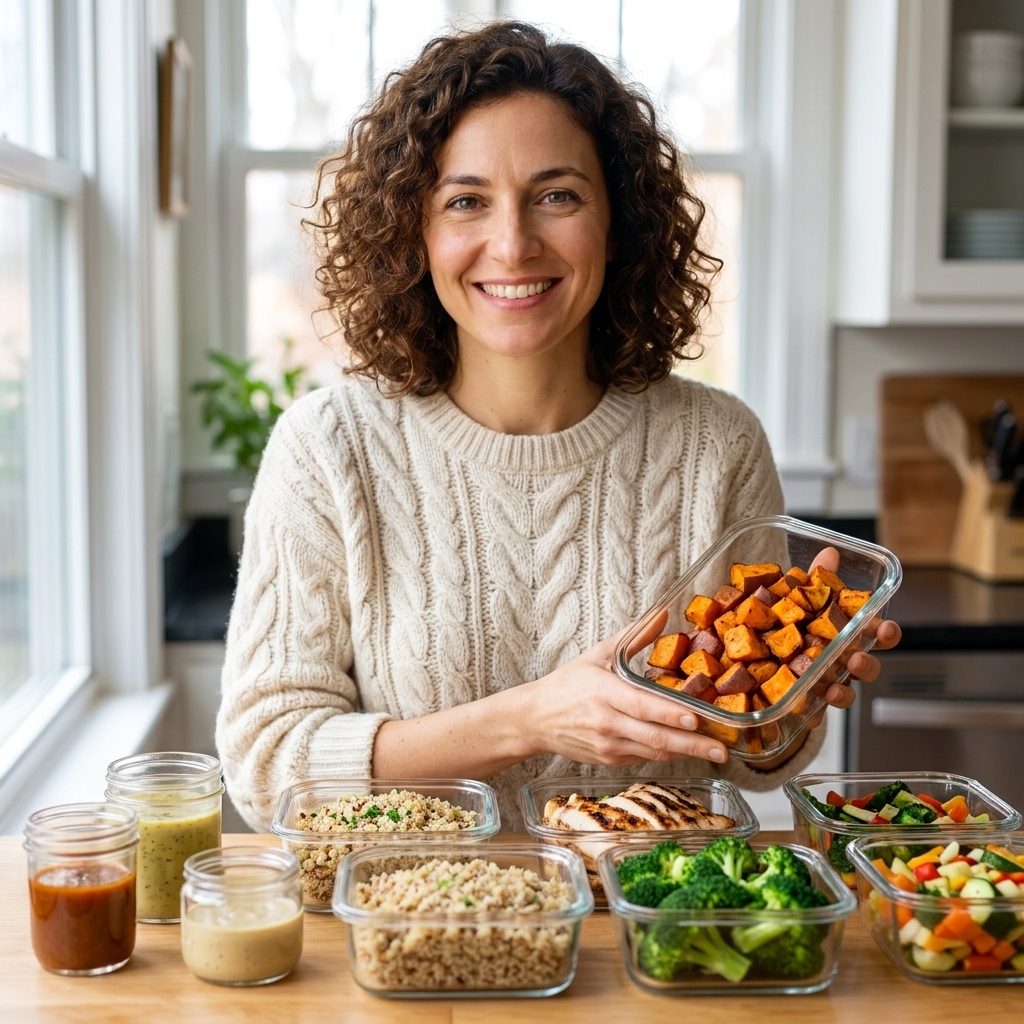
If you only take one idea from this article, let it be this: prep in modules. Modules are versatile basics you can remix quickly.
The 4-module formula
- Protein: chicken thighs, salmon, tofu, lentils, turkey meatballs, beans.
- Carb or starchy veg: rice, quinoa, potatoes, pasta, tortillas, farro.
- Non-starchy veg: roasted sheet pan vegetables, salad mix, sautéed greens, crunchy raw vegetables.
- Flavor maker: sauce, dressing, salsa, seasoning blend, crunchy topping.
Platepathy note: The carb or starch is optional. Depending on your preferences, appetite, and goals, you might go bigger on vegetables, add fruit, or skip the grain and still have a satisfying meal.
When you prep two options in one or two modules (for example, two proteins or two sauces), you multiply variety fast without multiplying effort.
A realistic Sunday prep (75 to 90 minutes)
- Roast a sheet pan of vegetables (broccoli + peppers + red onion).
- Cook one grain (rice or quinoa).
- Cook one protein (shredded chicken or baked tofu).
- Make two sauces (like pesto and a lemon tahini).
- Wash and prep one “fresh” item (cucumber, cherry tomatoes, or a big salad base).
That's enough to build bowls, wraps, salads, and quick stir-fries all week.
Use flavor lanes
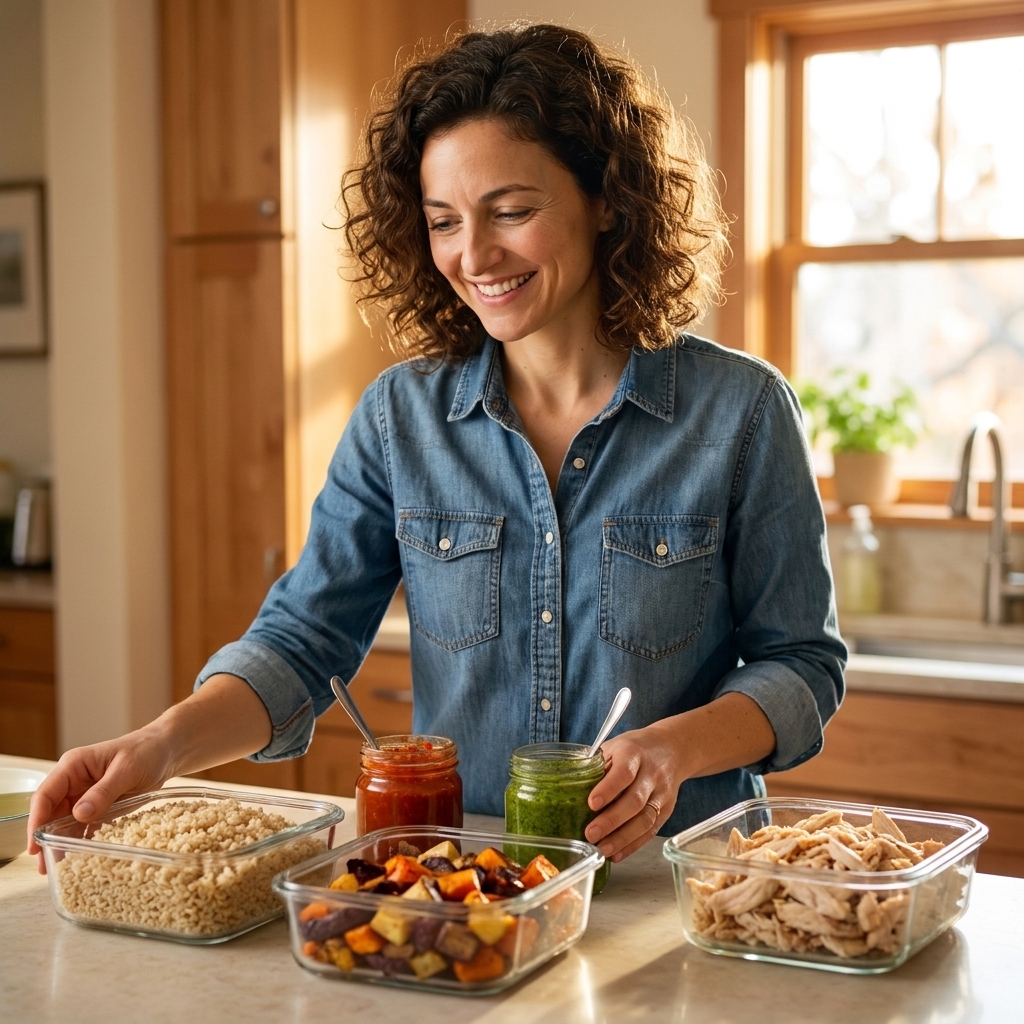
I love using what I call flavor lanes. You keep the same base ingredients, but you switch the vibe. This is often where burnout starts to ease up.
Pick 2 to 3 lanes per week
- Mediterranean: lemon, oregano, feta, olives, cucumber, tzatziki.
- Mexican-inspired: salsa, lime, cumin, cilantro, black beans, avocado.
- Asian-inspired: soy sauce, sesame oil, ginger, scallions, chili crisp.
- Middle Eastern: za’atar, tahini, sumac, pickled onions.
- Comfort food: BBQ sauce, ranch-style yogurt dip, roasted potatoes, slaw.
Platepathy note: “Inspired” is intentional. You can honor flavors without needing a long list of specialty ingredients.
One protein, three meals, three lanes
- Shredded chicken + rice + roasted vegetables with pesto and cherry tomatoes.
- Shredded chicken + tortillas with salsa, cabbage, and a squeeze of lime.
- Shredded chicken + salad with sesame-ginger dressing and crunchy cucumbers.
Plant-forward version (same idea)
- Baked tofu + rice + roasted vegetables with peanut sauce and chopped peanuts.
- Lentils + salad base with lemon tahini and pickled onions.
- Black beans + tortillas with salsa, cabbage, and avocado.
Sauces and crunch
Variety is often less about new recipes and more about new finishing touches. If your meals feel same-y, add contrast.
My go-to sauce rotation (pick two)
- Lemon tahini
- Pesto (basil or kale)
- Salsa or pico de gallo
- Peanut sauce
- Greek yogurt ranch-style dip
- Quick vinaigrette (olive oil + vinegar + mustard)
Crunchy toppers that change everything
- Roasted chickpeas
- Toasted nuts or seeds
- Crushed tortilla chips
- Fried onions (store-bought is fine)
- Pickled onions
- Everything bagel seasoning
Crunch is a burnout antidote for a lot of people. If your prep is mostly soft textures (rice, shredded meat, roasted vegetables), one crunchy element can make it feel like a new meal.
Plan for fresh meals
One mindset shift that helps a lot: you don't need every meal to come from a container.
Instead, aim for:
- 2 meals that are best freshly cooked (like fish, a quick stir-fry, or eggs).
- 3 to 4 meals built from prepped components.
- 1 to 2 freezer or pantry backups for the chaos days.
This is still meal prep. It's also humane.
Stagger your prep
If everything is cooked on Sunday and eaten by Friday, flavors and textures can fade. A simple trick is staggering.
Try the 2-2-2 approach
- Sunday: cook one protein, one grain, one vegetable.
- Wednesday: do a quick refresh that can be as short as 15 minutes, like chopping fresh vegetables, making a new sauce, or cooking a second protein.
- Any day: use freezer portions for variety without extra work.
That midweek refresh is often the difference between “I can't look at this again” and “Oh wait, that sounds good.”
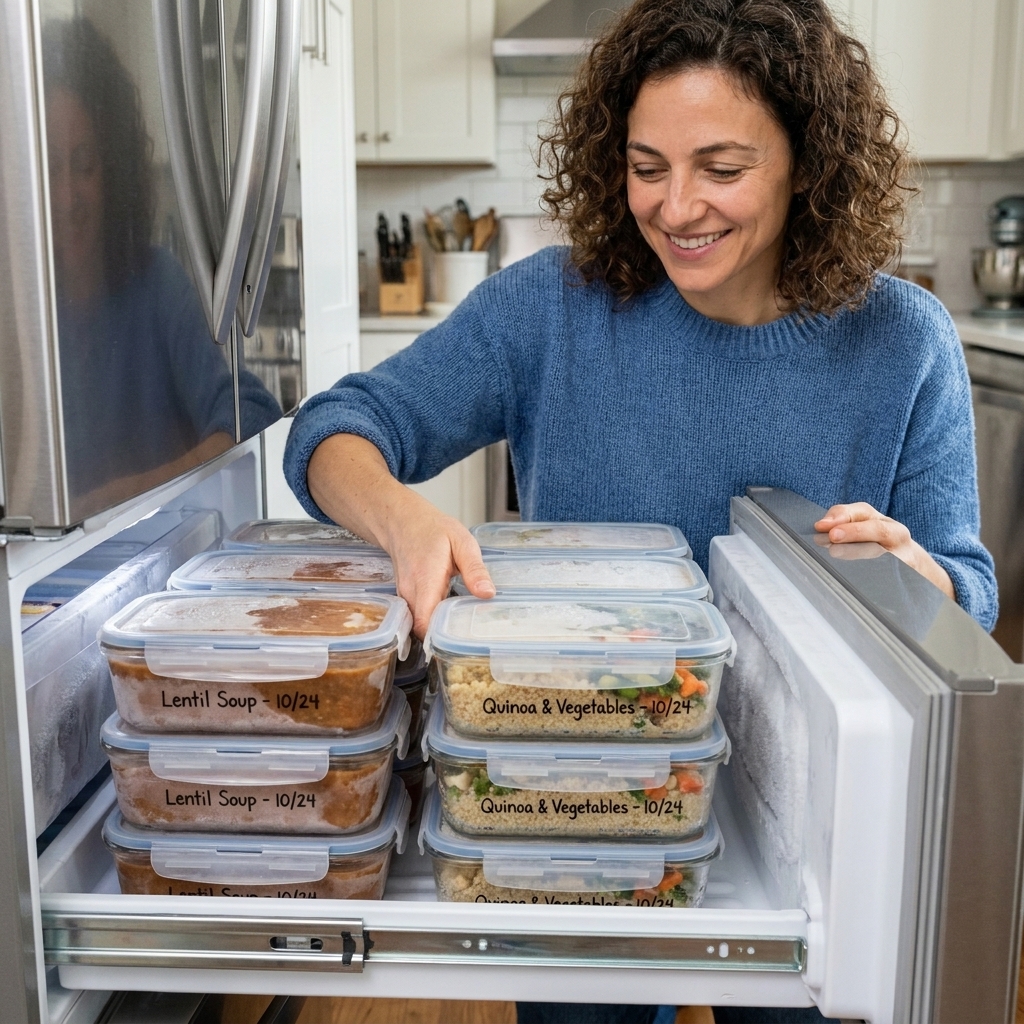
Freeze strategically
Your freezer is your future self's best friend, but only if you freeze the right things.
What freezes well
- Soups, stews, chili
- Cooked beans and lentils
- Cooked grains (spread flat in a bag so they break apart)
- Meatballs and cooked shredded meat
- Breakfast burritos or egg muffins
What I usually keep fresh
- Delicate greens (dress right before eating)
- Crunchy raw vegetables (store cut vegetables with a paper towel to reduce moisture)
- Anything you hate reheated (honor your preferences)
Pro tip: freeze extra portions the day you cook them, not after you're tired of them. That's how you build a “menu” over time.
Swap temp and texture
Sometimes your taste buds are bored, not your recipes. Use these quick swaps:
- Turn a warm bowl into a cold salad: chilled rice or quinoa, chopped vegetables, a punchy dressing.
- Switch the form: bowl one day, wrap the next, salad the next.
- Change the vegetable texture: roasted one day, raw and crunchy the next.
- Add a bright element: lemon, lime, vinegar, pickles, fresh herbs.
Brightness is especially helpful for leftovers. A squeeze of citrus can make a day-three meal taste like it was made on purpose.
Store it smarter
Food fatigue isn't just flavor. It's also sogginess, mush, and “why is everything wet.” A few storage tweaks keep your modules tasting more like real food and less like leftovers.
- Keep sauces separate and add right before eating.
- Store crunchy items dry (nuts, seeds, chips, croutons) and top at the end.
- Don't dress salads ahead. Store greens with a paper towel, dressing on the side.
- Separate hot and cold components when you can (reheat protein and grain, then add fresh vegetables).
- Use shallow containers for faster cooling, especially for big batches like rice, beans, and soups.
Food safety basics
Let's keep this practical and calm. Most food safety issues are preventable with a few habits:
- Cool quickly: refrigerate leftovers promptly, and use shallow containers so food chills faster.
- Use the 3 to 4 day guideline: The USDA and FDA generally recommend eating refrigerated leftovers within 3 to 4 days. Some foods can be shorter for quality, and seafood tends to be less forgiving, so freezing extra portions early is a good move.
- Reheat thoroughly: heat leftovers until they're steaming hot. For soups and sauces, bring them to a simmer when possible.
- Don't rely on smell alone: many foodborne pathogens do not change how food smells or looks. When in doubt, toss it.
Make a tiny variety plan
I'm not asking you to write a novel-length meal plan. Just give yourself a little structure so your modules turn into meals.
A 5-minute variety map
- Pick 1 core protein (plus a backup like eggs, canned tuna, tofu, or beans).
- Pick 1 grain or starch (or skip it if you prefer).
- Pick 2 vegetable styles: one roasted, one fresh and crunchy.
- Pick 2 sauces from different flavor lanes.
- Pick 1 fun extra: a new fruit, a bakery bread, a dessert you love, a special cheese.
Yes, a fun extra is part of a healthy relationship with food. Enjoyment matters.
If you already hate it
Burnout sometimes hits midweek. Here are quick “save it” moves that don't require starting over:
- Change the sauce: even store-bought works.
- Turn it into soup: leftover roasted vegetables + broth + beans or chicken = instant soup.
- Make it crispy: reheat in an air fryer or hot skillet instead of the microwave.
- Do breakfast-for-dinner: keep the prepped meal for lunch and make eggs + toast at night.
- Trade with a friend or partner: if you can, swap one meal to reset your palate.
Plate empathy reminder: The goal is nourishment, not perfection. If you toss a meal you're truly not going to eat, that's information for next week, not a personal failure.
Quick FAQ
How long does meal-prepped food last?
For both quality and safety, the USDA and FDA generally recommend eating refrigerated leftovers within 3 to 4 days. Some foods vary, and if you won't eat it in that window, freeze a portion on day one.
Is it better to prep meals or ingredients?
If you get bored easily, ingredients (modules) usually work better. Full meals can be great for a couple of days or for grab-and-go lunches, but modules give you more freedom.
How do I add variety without buying a ton?
Focus on two sauces, one crunchy topper, and two flavor lanes. You can keep the same protein and vegetables and still feel like you're eating different meals.
A simple weekly reset
If meal prep has started to feel like a chore, try this next week:
- Prep one protein, one grain, one roasted vegetable.
- Prep two sauces from different flavor lanes.
- Keep one meal “fresh-cook only” for midweek.
- Freeze one portion on day one.
That's it. Variety, without the second job.