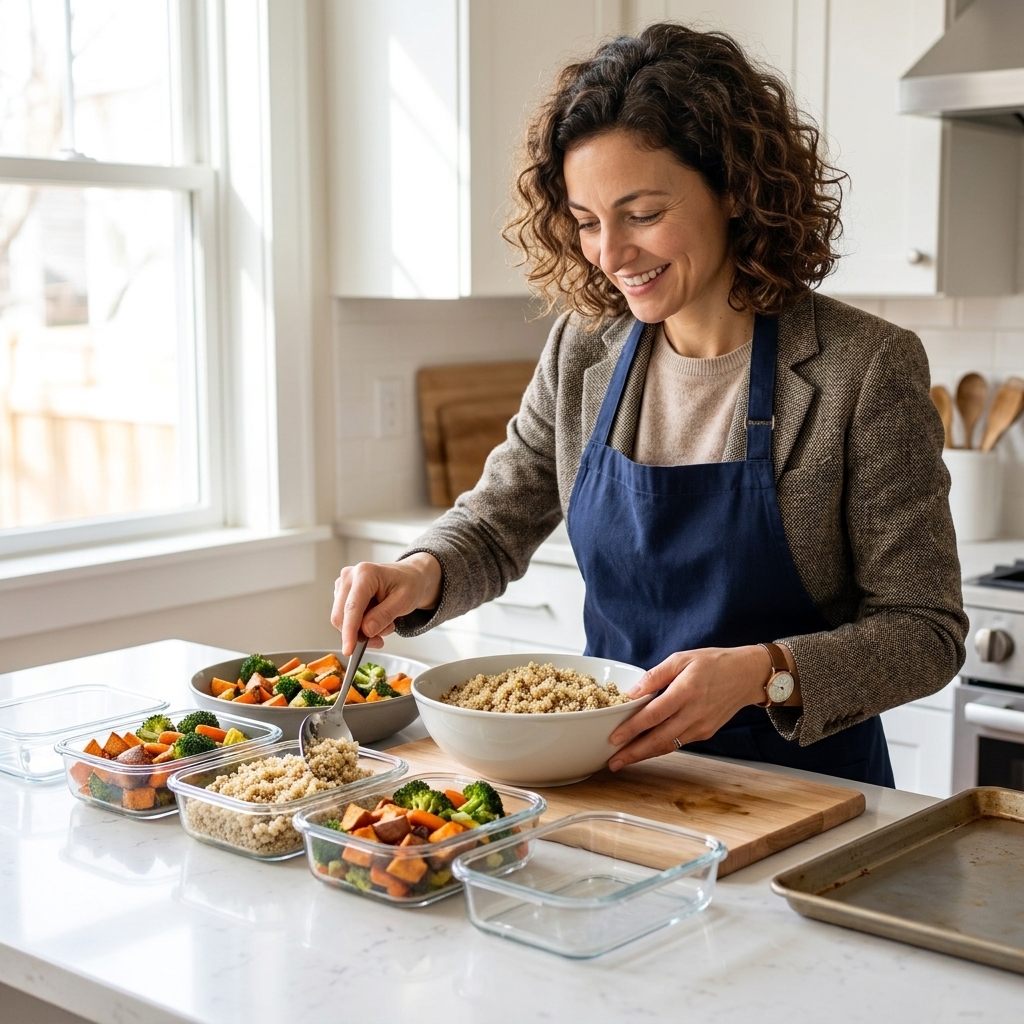
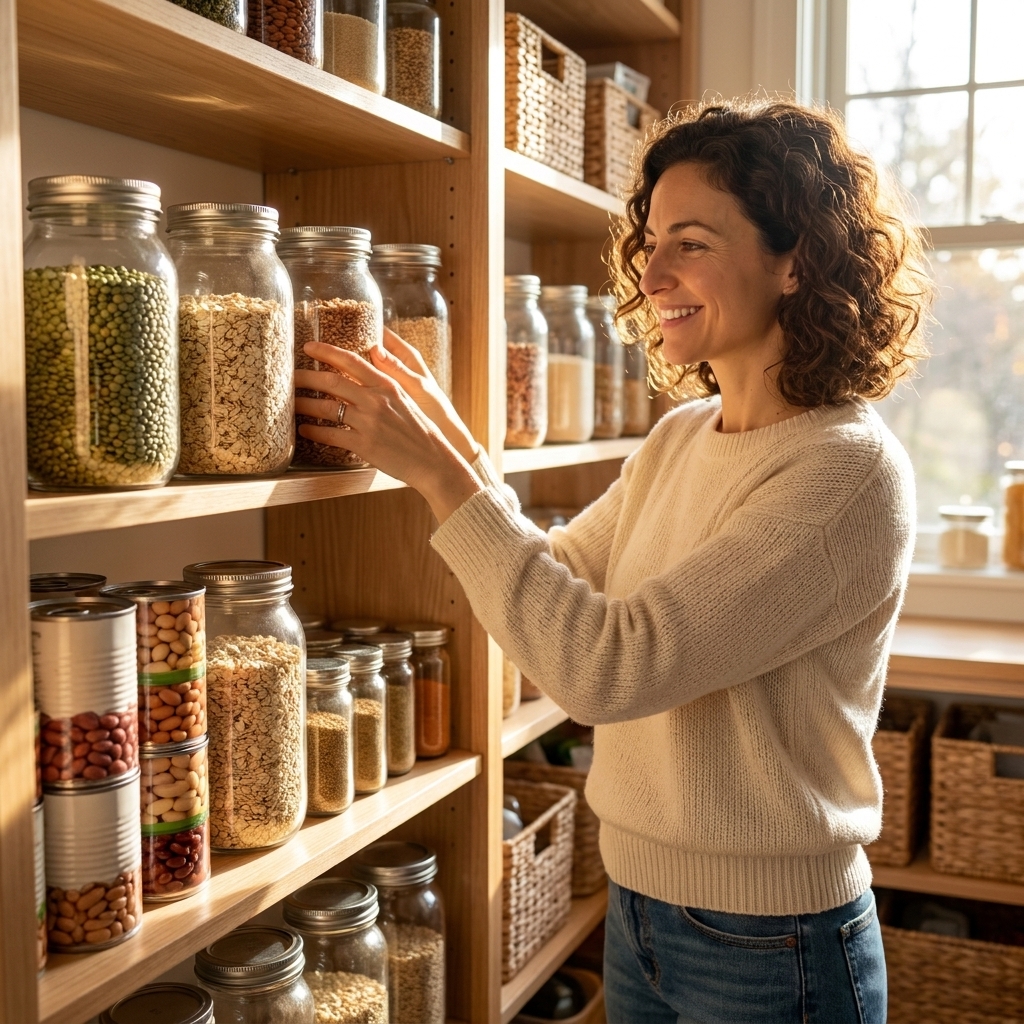
A step-by-step, no-perfection-needed guide to planning, shopping, prepping, and storing healthy meals for the week, even if you only have 60 to 90 minutes.
Platepathy
Batch Cooking vs. Ingredient Prepping
Batch cooking and ingredient prepping can both save your week, but they solve different problems. Learn the pros, cons, food safety basics, and how to choose the method that fits your schedule.

Elena Rossi
Elena Rossi is a Registered Dietitian and meal prep expert who believes that healthy eating shouldn't feel like a second job. Through Platepathy, she translates complex nutrition science into approachable, delicious meal plans designed for real, busy lives.
Published October 18, 2026
Last updated October 18, 2026
Meal prep advice on the internet can make it sound like you must spend half of Sunday lined up with identical containers and a color-coded spreadsheet. In real life, you have work, kids, errands, and a brain that does not want to make 47 micro-decisions at 5:42 PM.
That is where two low-drama approaches shine: batch cooking and ingredient prepping. They both save time, but they do it in different ways. Think of this as choosing the tool that matches your week, not your willpower.
And because I will say it a few times in this article, here is what I mean by plate empathy: planning that respects your real energy, appetite, and schedule, not the fantasy version of you.
Quick definitions
Batch cooking
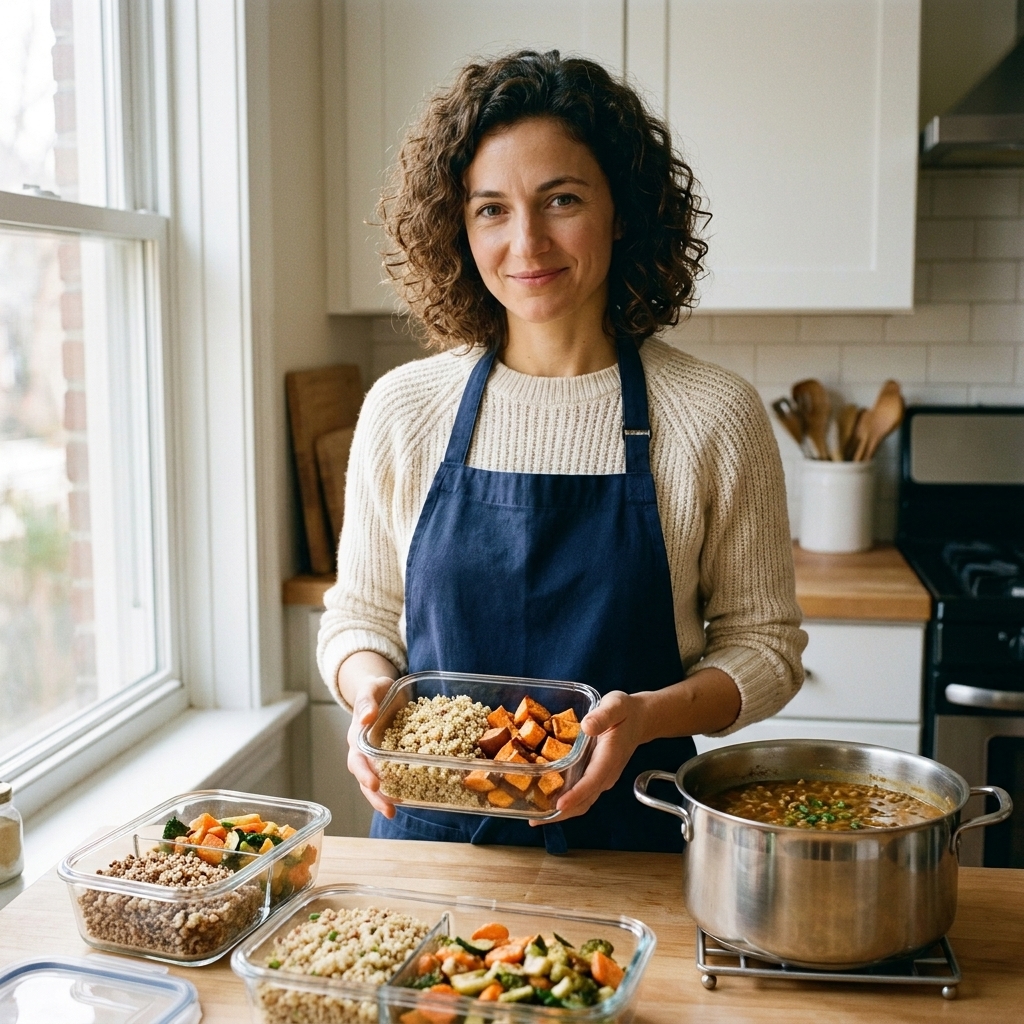
Batch cooking means cooking full dishes in larger quantities on purpose, then using them for multiple meals. Examples: a big pot of turkey chili, a tray of salmon and vegetables, a lentil soup, a pan of baked pasta, or a slow cooker shredded chicken.
Ingredient prepping
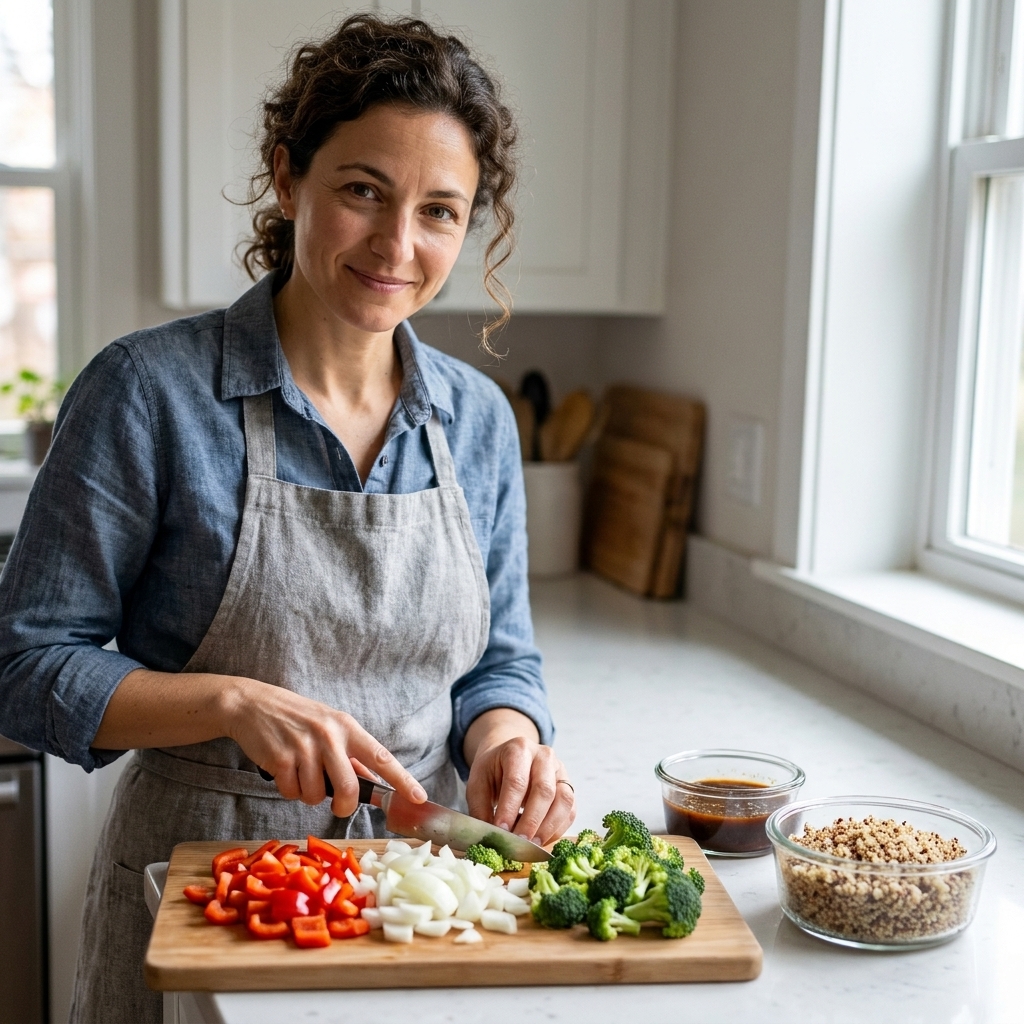
Ingredient prepping means preparing components ahead of time so you can cook or assemble different meals quickly during the week. Examples: washing and chopping produce, cooking a pot of rice or quinoa, mixing a sauce, marinating proteins, boiling eggs, or prepping salad greens.
Both approaches can be healthy. Both can be budget-friendly. Both can be a lifesaver. The difference is where you want your effort to land: complete meals cooked ahead (batch cooking) versus components prepped ahead so weeknight cooking is faster (ingredient prepping).
How each method saves time
Batch cooking saves decisions
When you batch cook, dinner is essentially pre-decided. You are trading one longer cooking block for several “heat and eat” moments later. This is ideal when your week is packed and your evening energy is low.
- Fastest weeknights: minimal chopping, minimal dishes, minimal brainpower.
- More predictable nutrition: you already know what is in the meal.
- Fewer cooking sessions: helpful if you do not want to cook every day.
Ingredient prepping saves friction
Ingredient prepping makes cooking feel less like starting from zero. You still cook during the week, but the annoying parts are mostly handled.
- More variety: the same prepped components can become different meals.
- Better for mixed households: people can build their own bowls, wraps, salads, or plates.
- Less “leftover fatigue”: you are not eating the same full dish three nights in a row unless you want to.
Pros and cons
Batch cooking
- Pros: dinner is ready fast; fewer dishes during the week; great for soups, stews, casseroles, sheet-pan meals; easy to freeze.
- Cons: repetition can get boring; some textures suffer after a few days (crispy foods, delicate greens); requires fridge and container space; one failed recipe can feel like a big loss.
Ingredient prepping
- Pros: mix-and-match meals; easy to accommodate preferences; often better texture; you can prep in short bursts.
- Cons: still involves daily assembly or cooking; can create “lots of little containers”; requires a plan so ingredients actually get used.
Which method fits?
Choose batch cooking if you:
- Have evenings that are truly chaotic and you need meals that reheat well.
- Feel drained by daily cooking decisions.
- Like comfort foods, one-pot meals, and freezer backups.
- Are feeding yourself or a household that is happy to repeat favorites.
Choose ingredient prepping if you:
- Get bored easily and want different flavors all week.
- Cook for people with different preferences or schedules.
- Want quick lunches that can shift day to day.
- Prefer fresher textures like crisp salads, tacos, stir-fries, and grain bowls.
Choose a hybrid if you:
- Want weeknights to be easy but also want variety.
- Need insurance for busy nights but still enjoy cooking sometimes.
- Want to avoid wasting produce.
If you are not sure, start with hybrid. It tends to feel the most “real life,” especially for families.
The hybrid plan
Here is a simple approach I used even when I was an exhausted project manager living on takeout. It is still my go-to as a working mom: batch cook one anchor dish, then ingredient prep two to three flexible components.
Step 1: Anchor dish
Pick one dinner that reheats well and feels like a safety net.
- Turkey or veggie chili
- Lentil soup
- Chicken and bean taco filling
- Sheet-pan sausage and vegetables
- Baked pasta with spinach
Step 2: Components
- One grain or starch: rice, quinoa, roasted potatoes
- One protein option: hard-boiled eggs, marinated tofu, shredded chicken
- One “fast flavor”: vinaigrette, pesto, yogurt sauce, salsa
What your week looks like
- Night 1: Anchor dish, done.
- Night 2: Grain bowl with prepped protein + sauce + any vegetables you have.
- Night 3: Salad or wrap using the same protein, different sauce.
- Night 4: Anchor dish again, or freeze leftovers and make a simple scramble.
What to prep first
If you are new to this and overwhelmed, start with the highest-impact trio: a protein, a fast flavor, and something you will actually snack on.
- Protein: shredded chicken, baked tofu, beans, hard-boiled eggs
- Fast flavor: jarred salsa, pesto, peanut sauce, a simple vinaigrette
- Snackable produce: washed berries, baby carrots, sliced cucumbers, washed salad greens
This is plate empathy in action. You are not prepping “perfect meals.” You are making the next choice easier.
Nutrition basics
People sometimes assume batch cooking equals “healthy meal prep containers” and ingredient prepping equals “random snacking.” Honestly, either method can support balanced eating if you build meals around a few basics:
- Protein: beans, lentils, chicken, fish, tofu, eggs, Greek yogurt
- Fiber: vegetables, fruit, whole grains, legumes, nuts and seeds
- Healthy fats: olive oil, avocado, nuts, tahini
- Flavor: sauces, spices, citrus, aromatics, cheese if you love it
If you want a simple goal, aim for protein + color + something satisfying. Satisfaction counts because meals that feel punishing are the ones that do not stick.
Food safety and storage
How long does it last?
As a general rule, most leftovers keep well in the refrigerator for 3 to 4 days when cooled and stored promptly in airtight containers. Some items can be fussier, including seafood and rice, so when in doubt, keep the window shorter and freeze extras.
For official guidance, the USDA’s Food Safety and Inspection Service generally recommends using refrigerated leftovers within 3 to 4 days.
Cooling and reheating
- Do not linger at room temp: refrigerate leftovers within 2 hours (1 hour if it is very hot out), and use shallow containers so food cools faster.
- Reheat thoroughly: “steaming hot” is a helpful cue, but for best safety, reheat leftovers to 165°F/74°C, especially soups, casseroles, and meat dishes.
- Keep it dry when you can: store sauces and dressings separately to prevent sogginess.
What freezes best?
- Great: soups, stews, chili, cooked beans, shredded meats, cooked grains, sauces
- Not my first choice: creamy sauces (can separate), crisp salads, cucumbers, delicate greens
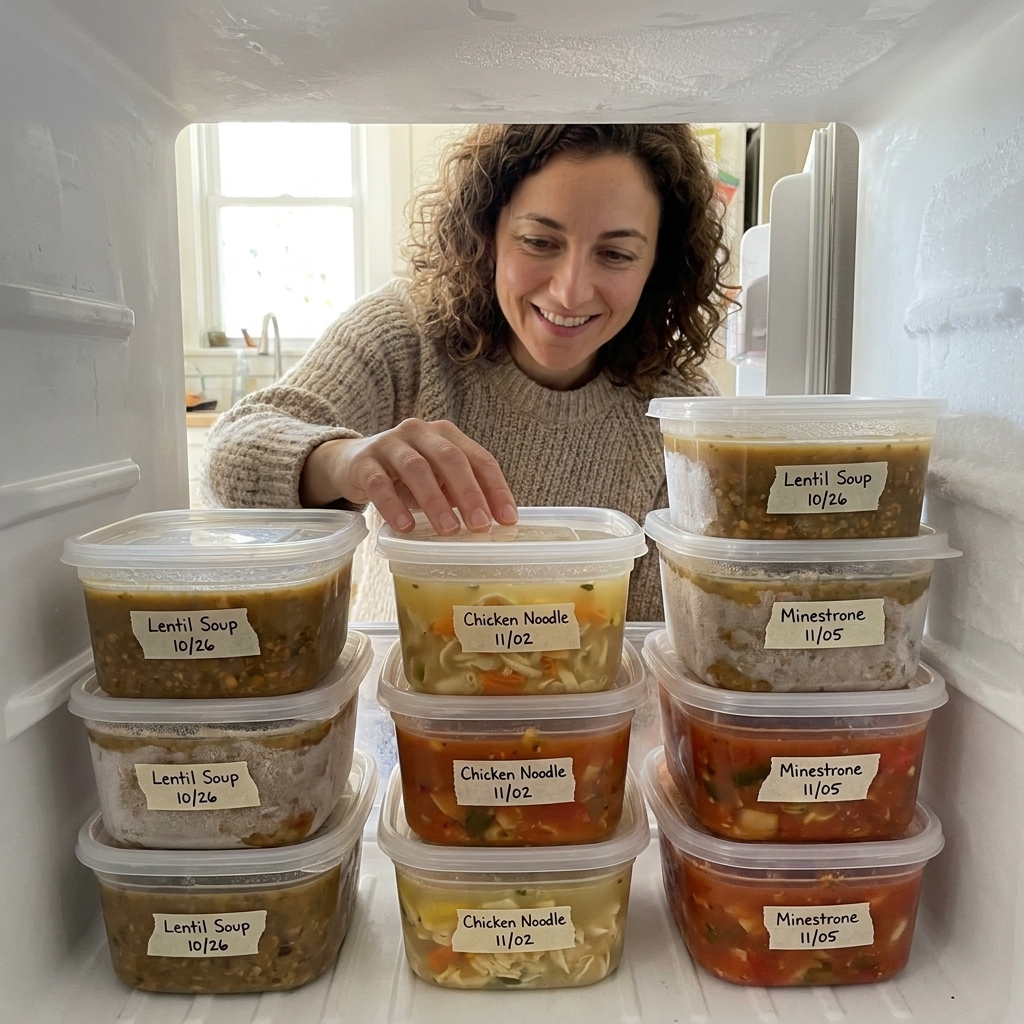
One tiny habit that saves a lot of money: label and date your containers. Future-you should not have to play freezer roulette.
Cost and waste
Both methods can cut grocery costs, but they prevent waste in different ways.
Batch cooking reduces takeout emergencies
When you have ready meals, you are less likely to order dinner because you ran out of energy. That is a financial win and a stress win.
Ingredient prepping reduces produce regret
For many people, washing and chopping produce makes it much more likely they will eat it. A box of spinach is aspirational. A box of spinach that is already washed and tucked into a container is Tuesday lunch.
If you routinely throw away wilted vegetables, ingredient prepping may pay for itself fast.
Sample schedules
Schedule A: No-cook weekdays
- Sunday: cook 2 large dishes + 1 breakfast item
- Weekdays: rotate leftovers, add simple sides (bagged salad, fruit, microwaved frozen veg)
- Midweek: freeze one portion per dish for next week
Schedule B: Variety with a head start
- Sunday: prep chopped vegetables, cook a grain, mix 2 sauces, marinate a protein
- Weekdays: quick-cook proteins, assemble bowls, stir-fries, wraps
- Friday: “use-it-up” fried rice, frittata, or sheet-pan clean-out
Schedule C: Hybrid parent life
- Sunday: one anchor dinner + prep grains and a sauce
- Tuesday: 15-minute restock of chopped veg or another sauce
- Weekdays: two heat-and-eat nights, two assemble nights, one flexible night
Roadblocks and fixes
“I hate eating leftovers.”
You might not hate leftovers. You might hate repetition. Try ingredient prepping or a hybrid, or change the format. Shredded chicken can become tacos one night and a rice bowl the next with a different sauce.
“I prep and still order takeout.”
This usually means the prep did not match your true capacity. Make the emergency option even easier: frozen portions, microwavable rice, bagged salad kits, or a store-bought rotisserie chicken alongside your prepped components.
“I do not have enough fridge space.”
Consider batch cooking and freezing portions, especially soups and stews. If freezer space is tight too, scale down: prep fewer items, but pick high-impact categories like one protein and one sauce.
“Meal prep makes me feel boxed in.”
That is real. Plate empathy means your plan should feel supportive, not controlling. Try prepping options instead of “assigned meals,” and leave one night completely unplanned on purpose.
Decision checklist
If you want a quick way to choose for this week, answer these:
- How many nights will I realistically have energy to cook? If the answer is 0 to 1, lean batch cooking.
- Will my household eat the same main dish twice? If no, lean ingredient prepping or hybrid.
- Am I more stressed by cooking time or by deciding what to cook? If decision stress is higher, batch cooking helps more.
- What tends to go to waste in my kitchen? If it is produce, ingredient prepping can be a game changer.
FAQ
Is batch cooking the same as meal prepping?
Batch cooking is one type of meal prep. Meal prep is the umbrella. Under it you have batch cooking, ingredient prepping, and hybrids like prepping sauces plus cooking one big dinner.
Can I do ingredient prepping without giving up my Sunday?
Yes. Set a 30 to 60 minute timer and focus on the highest friction items: wash greens, chop a few vegetables, cook a grain, mix a sauce. Stop when the timer ends.
What is the easiest first recipe to batch cook?
Something forgiving and freezer-friendly like chili, lentil soup, or a bean and chicken taco filling. These reheat well and do not depend on perfect texture.
How do I keep prepped food from getting soggy?
Store wet and dry separately. Dress salads at the last minute, keep sauces in small containers, and let roasted vegetables cool before sealing them up.
Bottom line
Batch cooking is your best friend when your week needs autopilot dinners. Ingredient prepping is ideal when you want flexibility and variety without starting from scratch each night. And if you are living in the messy middle like most of us, hybrid prep is often the sweet spot.
Your “best” method is the one that makes it more likely you will eat, enjoy your food, and feel cared for by your own plan. That is plate empathy in practice.