A step-by-step, no-perfection-needed guide to planning, shopping, prepping, and storing healthy meals for the week, even if you only have 60 to 90 minutes.
Platepathy
A Foolproof Grocery List for Meal Planning
Build a grocery list that matches your week: start with anchor meals, organize by your store layout, add budget checks and shortcuts, and use overlap ingredients to cut waste and impulse buys.

Elena Rossi
Elena Rossi is a Registered Dietitian and meal prep expert who believes that healthy eating shouldn't feel like a second job. Through Platepathy, she translates complex nutrition science into approachable, delicious meal plans designed for real, busy lives.
Published October 18, 2026
Last updated October 18, 2026
There is a special kind of chaos that happens when you walk into a grocery store with good intentions and a vague mental note like “chicken, veggies, maybe snacks?” Twenty minutes later you have three kinds of crackers, no actual dinner plan, and a bag of spinach that will quietly liquefy in the back of the fridge.
Been there. In my project manager era, I treated grocery shopping like a speed run. Now, as a nutrition professional and a mom trying to land dinner on the table before someone melts down, I treat the grocery list like the plan that protects my time, budget, and energy.
This is my Platepathy approach to a foolproof grocery list: lead with empathy, keep it flexible, and build it for real life, not a perfect week.

What makes a grocery list foolproof
A foolproof list is not longer. It is clearer. It does three things really well:
- Connects to real meals you will actually make.
- Matches your store layout so you do not zigzag past temptation 14 times.
- Accounts for what you already have so you stop buying duplicate mustard and mystery produce.
Many people struggle with meal planning because the list and the plan are not connected. Let’s fix that.
Step 1: Pick anchor meals
If meal planning has ever felt like homework, you probably tried to plan seven perfect dinners. Instead, choose 3 to 4 anchor meals for the week, then let leftovers, freezer staples, and simple “assembly meals” fill the gaps.
My realistic weekly structure
- 3 dinner anchors (the ones that need ingredients)
- 1 flexible dinner (tacos, breakfast-for-dinner, big salad with protein)
- 2 leftover nights
- 1 pantry or freezer night (pasta, soup, frozen dumplings, etc.)
This approach can help cut waste because you are shopping for fewer brand-new cooking projects.
Step 2: List from recipes
This is the step that makes everything click: write your list from each recipe outward, then combine duplicates.
How to do it fast
Write your 3 to 4 anchor meals at the top of a page.
Under each meal, jot the key ingredients (especially the perishable ones).
Circle repeats (like onions, lemons, tortillas) and combine amounts.
Add your “always” items (coffee, eggs, lunch staples) and stop there unless you truly need more.
Most weeks, this takes about 5 to 10 minutes once you get used to it.
When you shop from vibes, you buy possibilities. When you shop from recipes, you buy outcomes. Outcomes get eaten.

Step 3: Do a kitchen scan
I still do this like a former project manager. It is quick, and it saves real money.
The 4-zone scan
- Fridge: What needs to be used first? Any produce that can be moved into this week’s meals?
- Freezer: Do you already have a protein (chicken, shrimp, turkey) you can build around?
- Pantry: Check grains, canned goods, sauces, and snacks before you buy duplicates.
- Backstock: That shelf or bin where extras live. Look there for tortillas, broth, rice, nut butter, and spices.
Platepathy mindset: This is not about perfection. This is about being kind to Future You, who will be annoyed if Present You buys the fourth bottle of soy sauce.
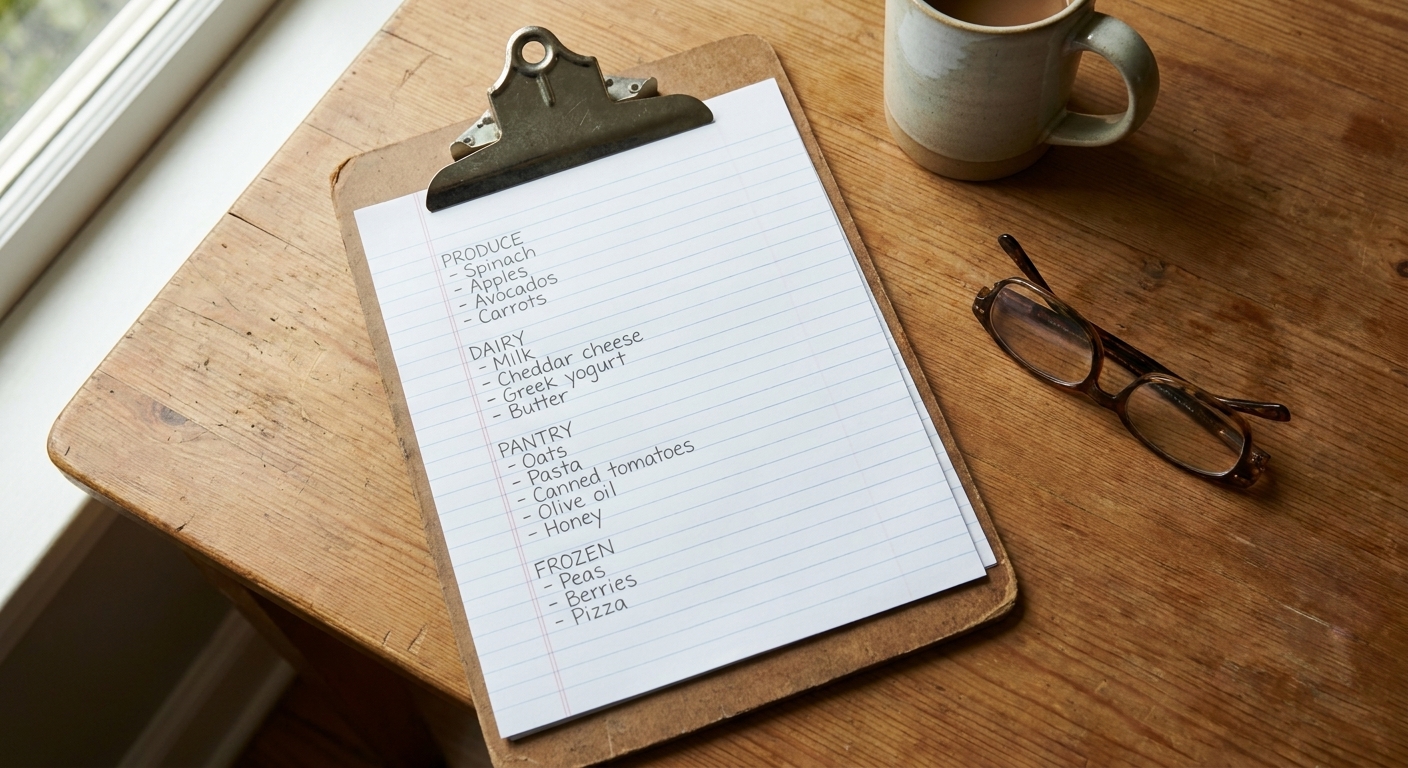
Step 4: Sort by aisles
Once you have your ingredients, sort them into the order you walk your store. This reduces time, decision fatigue, and the number of times you pass the snack aisle “just to check.”
A layout-based list to copy
- Produce (greens, salad add-ins, fruit, onions, garlic, herbs, lemons)
- Protein (chicken, tofu, fish, beans, eggs, deli turkey)
- Dairy and refrigerated (yogurt, milk, cheese, hummus)
- Bakery (bread, tortillas, pitas)
- Pantry (rice, pasta, canned tomatoes, broth, oils, spices)
- Frozen (frozen veg, berries, quick proteins)
- Household (trash bags, dish soap, paper towels)
If you shop multiple stores, make a mini-version for each one. For example: “Costco run” and “regular grocery.” Fewer aisles equals fewer impulse buys.
Step 5: Use overlap ingredients
Food waste often happens because we buy specialty ingredients for one recipe, use a spoonful, then forget the rest exists.
My favorite trick is to pick one overlap ingredient that shows up in at least two meals that week. Examples:
- Cilantro: taco bowls + chickpea salad
- Greek yogurt: breakfast + creamy dressing + marinade
- Bell peppers: stir-fry + fajitas
- Baby spinach: pasta + omelets + smoothies
This keeps your list tighter and your fridge calmer.
Step 6: Buy the right amounts
You do not need to calculate grams to shop smart. Use these “good enough” portion anchors as a starting point, then adjust for appetite, age, activity level, and any medical needs.
Simple quantity guide
- Protein: roughly 4 to 6 ounces per adult portion. For kids, roughly 2 to 4 ounces depending on age and appetite.
- Vegetables: aim for 1 to 2 handfuls per person per meal (more if it is a salad).
- Grains and starches: 1 fist-sized portion per person per meal is a practical starting point.
If you are cooking once and planning leftovers, double the recipe on purpose rather than accidentally buying “extra just in case.” Intentional leftovers are a beautiful thing.
Step 7: Plan shortcut nights
The best grocery list is the one that matches your real energy levels. If you know Tuesday is stacked with meetings or kid activities, bake that reality into your list.
Smart shortcuts to add
- Rotisserie chicken
- Bagged salad kit plus an extra cucumber or avocado
- Frozen brown rice or microwave quinoa cups
- Frozen vegetables you actually like
- A sauce you love (pesto, salsa, stir-fry sauce)
Shortcut meals are not “cheating.” They are strategy.
Bonus: Keep the budget calm
If you want your list to protect your budget (not just your time), add two tiny checks before you shop:
- Choose 1 to 2 sale proteins and build your anchors around them (chicken thighs, ground turkey, tofu, beans).
- Use unit pricing when you are on autopilot. The bigger box is not always the better deal.
- Lean seasonal for produce, and use frozen when fresh is pricey or you know you will not get to it in time.
- Keep one low-cost “backup meal” on deck (pasta with chickpeas, breakfast-for-dinner, bean tacos).
- Store brands are your friend for staples like oats, canned tomatoes, beans, broth, and frozen veg.
This is Platepathy in practice: spend with intention, not with stress.
Do not forget lunches
Dinner gets all the attention, but lunches and snacks are where a week quietly goes off the rails. A quick add-on list helps:
Lunch and snack staples
- Protein: deli turkey, eggs, canned tuna or salmon, tofu, beans, Greek yogurt
- Easy produce: baby carrots, cucumbers, berries, apples, bagged salad
- Carbs: bread, wraps, rice cups, crackers, pasta
- Packable extras: hummus, cheese, nuts, salsa, pickles
If picky eating is part of your house, I like the “one safe option” rule: plan at least one meal you know everyone will eat, then add one small new element somewhere else in the week.
Sample list
Here is what this looks like in practice. Let’s say your anchor dinners are:
- Sheet pan chicken and veggies
- Turkey taco bowls
- Lemony chickpea pasta
List by store layout
- Produce: broccoli, zucchini, bell peppers, romaine, cherry tomatoes, cucumbers, onions, garlic, lemons, cilantro, avocados, berries
- Protein: chicken thighs or breasts, ground turkey (or black beans), eggs (optional for breakfasts)
- Dairy and refrigerated: shredded cheese, Greek yogurt, hummus
- Bakery: tortillas (or tortilla chips for bowls), sandwich bread (if needed)
- Pantry: chickpeas, pasta, rice or quinoa, taco seasoning, olive oil, salsa
- Frozen: corn (optional), frozen fruit (optional)
Notice what is missing: random “maybe” foods. The list is still flexible, but it is tied to meals.
Cut impulse buys
Impulse buys are not a moral failing. They are often a combination of hunger, decision fatigue, and clever marketing.
My store guardrails
- Eat something first, even if it is a yogurt or a banana in the car.
- One fun item rule: pick one “just because” item on purpose. When joy is planned, it is less likely to spiral.
- Shop the perimeter first, then pantry, then leave.
- Use a basket when possible. A cart invites extras.
- Do not browse. Go to sections, grab items, move on.
Platepathy matters here. If you love cookies, you are allowed to buy cookies. The win is buying them intentionally rather than accidentally.
Habits that help
When you get home
- Wash and prep one produce item right away (berries, lettuce, peppers).
- Move “use first” foods to eye level in the fridge.
- Freeze what you will not use soon (extra bread, ripe bananas, extra ground meat).
Quick safety note: Freeze foods promptly, label and date them, and thaw in the fridge (or cook from frozen when appropriate). If meat has already been thawed in the fridge, cook it before refreezing.
Midweek reset
- Scan the fridge for leftovers and produce.
- Decide which night is leftover night.
- Make a micro list of 3 to 5 items if needed.
On most weeks, this takes about 5 minutes.
FAQ
Should I organize my grocery list by meals or by aisles?
Do both. Build the list from meals first so you know you have what you need. Then rewrite or sort it by aisles so you shop faster and avoid impulse loops.
How far ahead should I meal plan?
For most busy households, 3 to 5 days of planned dinners is the sweet spot. It is long enough to be efficient, short enough to stay flexible when life happens.
What if I do not want to follow recipes?
You can still make a foolproof list using “mix and match” building blocks: 2 proteins, 3 vegetables, 2 carbs, and 1 to 2 sauces. That is a meal plan, just a more flexible one.
How do I grocery shop for one person without wasting food?
Plan 2 anchor meals, lean on freezer staples, and choose overlap ingredients on purpose. Buy smaller amounts from the salad bar or bulk bins when possible, and do not be afraid of frozen vegetables.
How do I adapt this for dietary needs?
Keep the structure, swap the parts. Choose anchors that fit your needs (vegetarian, gluten-free, dairy-free), then stock 1 to 2 go-to staples that make it easy (beans and tofu, gluten-free pasta, lactose-free yogurt, etc.). The goal is still the same: a list tied to meals you can actually pull off.
Your next trip, gentler
If meal planning has felt like pressure, let this be your permission slip to simplify. Pick a few anchor meals, build the list from those meals, then organize it the way you walk the store. You will likely waste less, spend less, and think less, which is the whole point.
Healthy eating should not feel like a second job. Your grocery list can do more of the work so you do not have to.