A practical list of antioxidant-rich whole foods and realistic prep tips to help you plan balanced, satisfying meals without the stress.
Platepathy
7 Anti-Inflammatory Recipes with Omega-3s and Antioxidants
Seven practical, anti-inflammatory recipes featuring omega-3 rich salmon, sardines, chia, walnuts, leafy greens, berries, turmeric, and olive oil, with meal prep tips, swaps, and an overlap-friendly shopping list.

Elena Rossi
Elena Rossi is a Registered Dietitian and meal prep expert who believes that healthy eating shouldn't feel like a second job. Through Platepathy, she translates complex nutrition science into approachable, delicious meal plans designed for real, busy lives.
Published October 18, 2026
Last updated October 18, 2026
If “eat anti-inflammatory” has ever sounded like a vague wellness command with zero dinner ideas attached, you are in the right place. Inflammation is a normal immune response, but our everyday patterns can tilt the balance. The most helpful approach is not a cleanse or a perfect food list. It is a steady rhythm of meals built around omega-3 fats, colorful plants, herbs and spices, and minimally processed ingredients.
Below are seven Platepathy-friendly recipes that do exactly that. Platepathy is my shorthand for flexible, empathy-forward plating: build a supportive base, make swaps without shame, and keep it delicious. These recipes are designed for real life: repeatable, family-friendly, and meal prep compatible. You will see familiar anti-inflammatory all-stars like salmon, turmeric, leafy greens, berries, extra virgin olive oil, and legumes, plus a few underrated gems like sardines and flax.
What makes these recipes anti-inflammatory
Nutrition science is nuanced, but the patterns that show up again and again are pretty practical in the kitchen. These recipes lean on:
- Omega-3 fats (EPA and DHA from fatty fish, and ALA from chia, flax, and walnuts) that support a healthier inflammatory balance.
- Antioxidants and polyphenols from berries, leafy greens, cruciferous veggies, herbs, spices, cocoa, and extra virgin olive oil, which help counter oxidative stress.
- Fiber from beans, lentils, vegetables, oats, and seeds to nourish your gut microbiome, which is closely linked to immune function.
- Flavor-first techniques like citrus, garlic, ginger, and toasted spices so “healthy” never tastes like punishment.
Quick note: These meals can support overall health, but they are not meant to diagnose, treat, or cure any condition. If you are managing an autoimmune condition, IBS, or you take blood thinners (especially warfarin), check in with your clinician before making big changes. In particular, keep vitamin K intake consistent if you are on warfarin, and treat turmeric and fish oil at supplement-level doses as “ask first” territory.
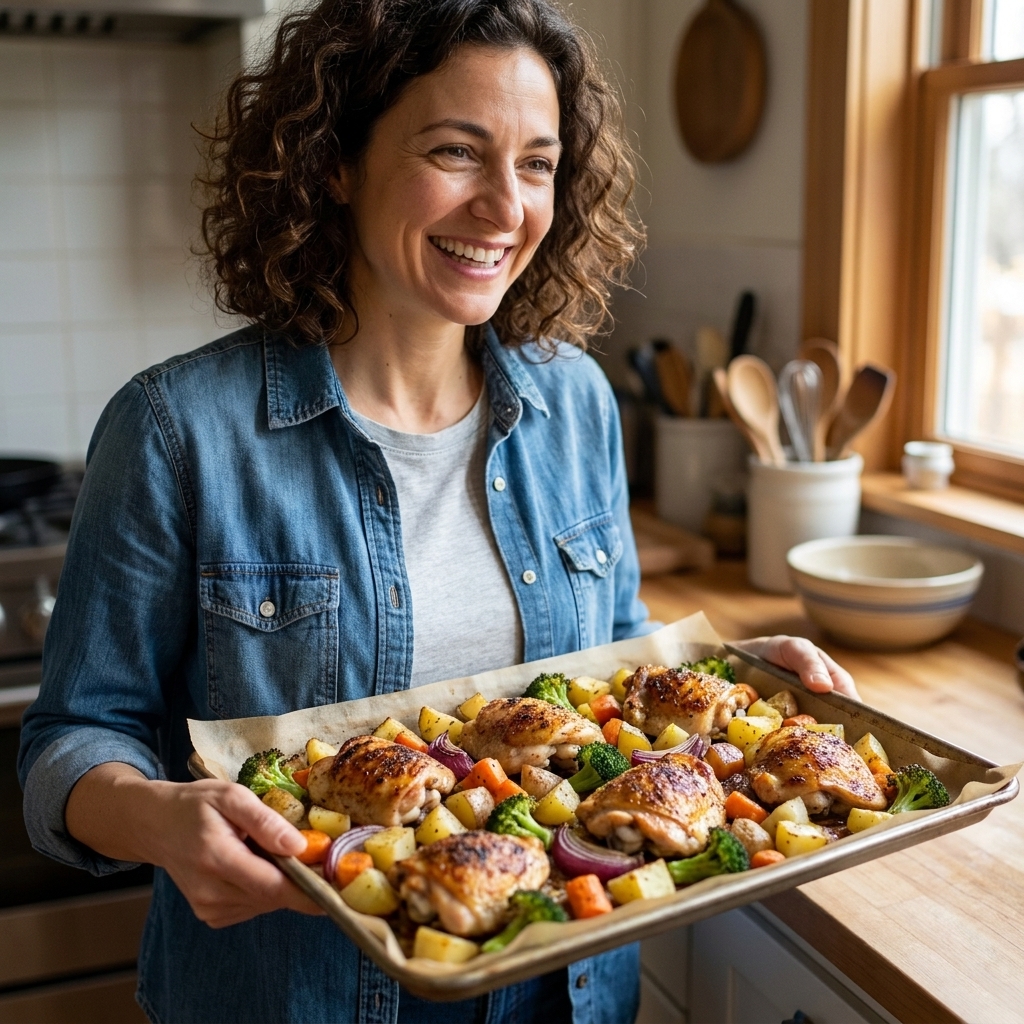
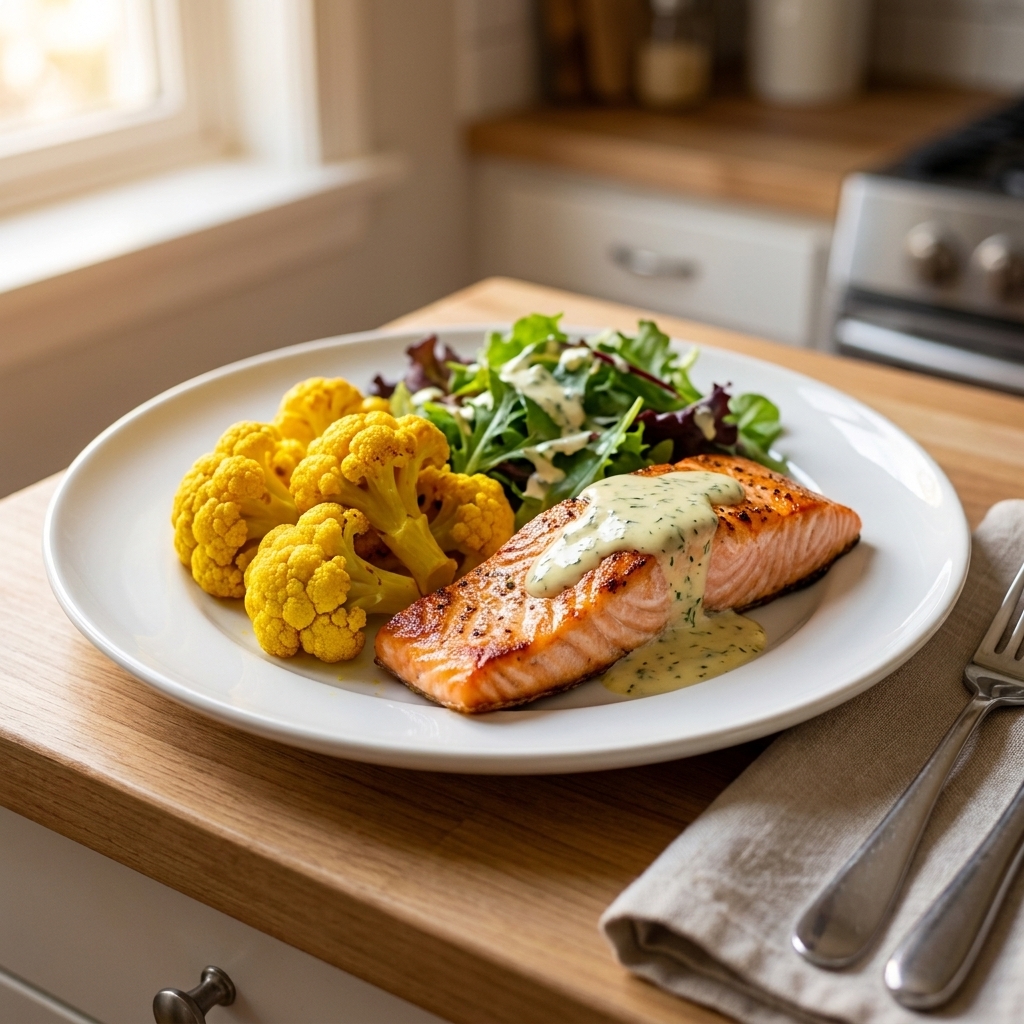
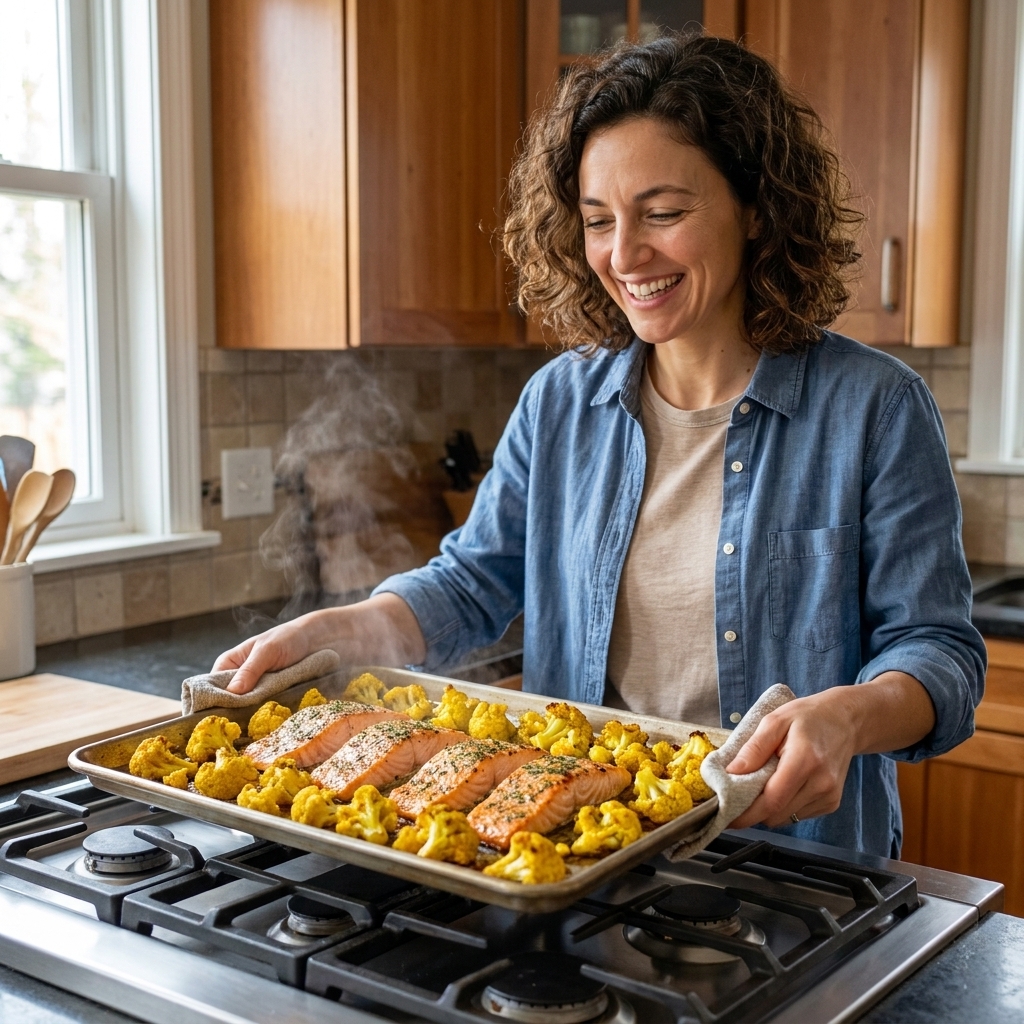
1) Sheet Pan Salmon with Turmeric Cauliflower and Garlicky Greens
This is my favorite kind of weeknight win: one pan, big flavor, and leftovers that reheat like a dream. Turmeric brings curcumin, an antioxidant compound. Pairing turmeric with black pepper may improve curcumin bioavailability, even though the effect can vary in everyday food amounts.
Why it supports an anti-inflammatory pattern
- Salmon for EPA and DHA omega-3s
- Turmeric + black pepper for antioxidant support
- Leafy greens for polyphenols, folate, and fiber
Ingredients (4 servings)
- 4 salmon fillets (about 5 to 6 oz each)
- 1 large head cauliflower, cut into florets
- 2 tbsp extra virgin olive oil, divided
- 1 1/2 tsp turmeric
- 1 tsp smoked paprika
- 1/2 tsp black pepper, plus more to taste
- 3/4 tsp kosher salt, divided
- 3 cloves garlic, minced
- 6 cups baby spinach or chopped kale
- 1 lemon (zest and juice)
Steps
- Heat oven to 425°F.
- Toss cauliflower with 1 tbsp olive oil, turmeric, paprika, pepper, and 1/2 tsp salt. Roast on a sheet pan for 15 minutes.
- Push cauliflower to one side. Add salmon to the pan, rub with remaining 1 tbsp olive oil and a pinch of salt. Roast 10 to 12 minutes, until salmon flakes easily.
- While salmon finishes, warm 1 tsp olive oil in a skillet over medium. Add garlic for 30 seconds, then add greens and cook just until wilted. Season with lemon zest, juice, and a pinch of salt.
- Serve salmon and cauliflower over greens. Add extra lemon if you like it bright.
Meal prep tip
Roast extra cauliflower. It becomes tomorrow’s salad topper or a quick side for eggs.
Storage note
Cooked salmon keeps well in the fridge for 3 to 4 days in a sealed container. Reheat gently so it stays tender.
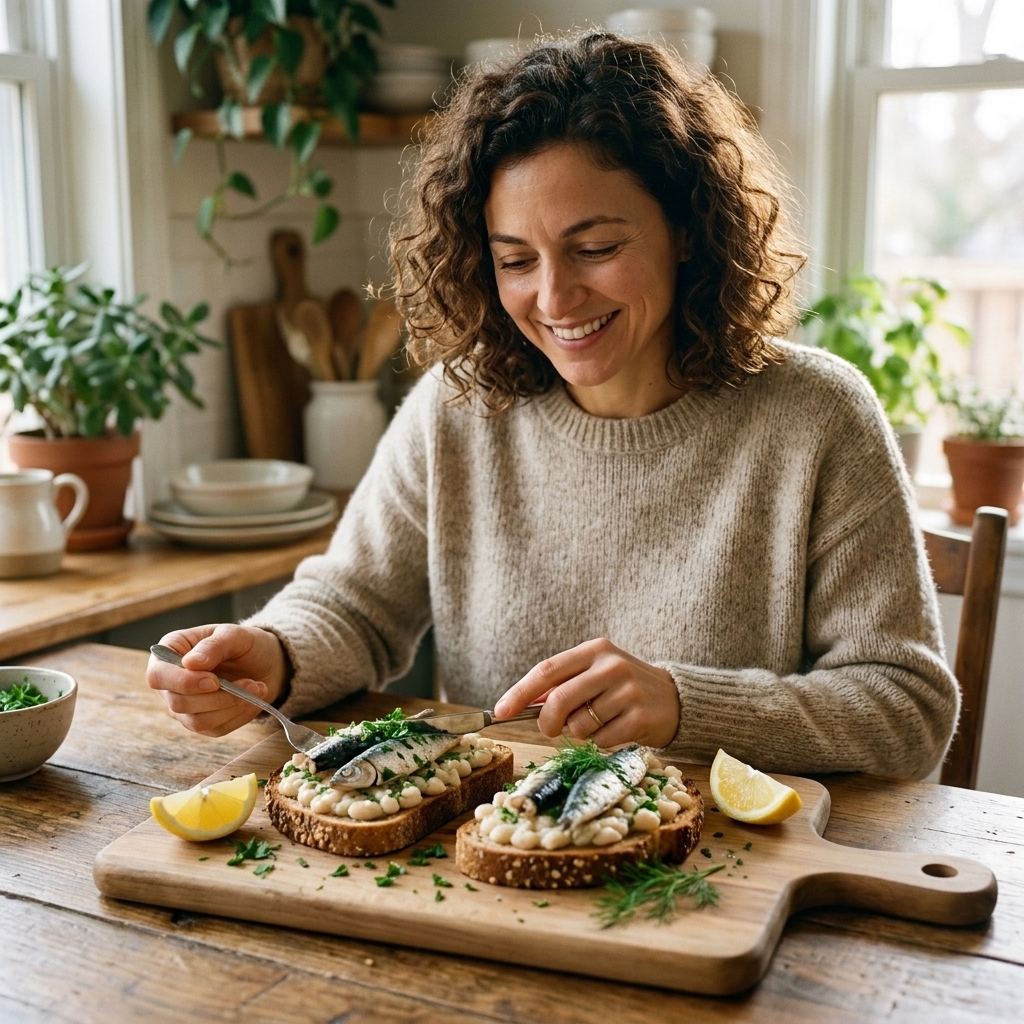
2) Sardine and White Bean Lemon Herb Toast
Sardines are one of the most budget-friendly omega-3 sources, and they are also a good source of calcium when you eat the soft bones. Vitamin D content can vary by brand and packing liquid, but many sardines contribute some. If you are sardine-curious, this is the gateway recipe: citrusy, herby, and not fishy.
Ingredients (2 generous servings)
- 1 can sardines in olive oil, drained (save 1 tsp oil)
- 1 can cannellini beans, rinsed and drained
- 1 tbsp lemon juice + extra to taste
- 1 tsp Dijon mustard
- 1 small garlic clove, grated
- 1/4 tsp black pepper
- Pinch of salt (optional, depending on canned items)
- 2 tbsp chopped parsley or dill
- 2 slices whole grain bread, toasted (or serve over arugula)
- Optional: sliced cucumber, cherry tomatoes, or arugula
Steps
- Mash beans in a bowl with lemon juice, Dijon, garlic, pepper, herbs, and reserved sardine oil.
- Fold in sardines gently so you keep some texture.
- Pile onto toast, or spoon over arugula with cucumbers and tomatoes.
Platepathy swap
No sardines? Use canned salmon or canned trout. “Platepathy swap” means you keep the same idea and the same ease, and you change what you need to based on taste, budget, or what is in your pantry.
Sodium note
Canned fish and beans can be salty. Rinsing beans, choosing lower-sodium options, and using lemon and herbs aggressively can keep flavor high without leaning on extra salt.
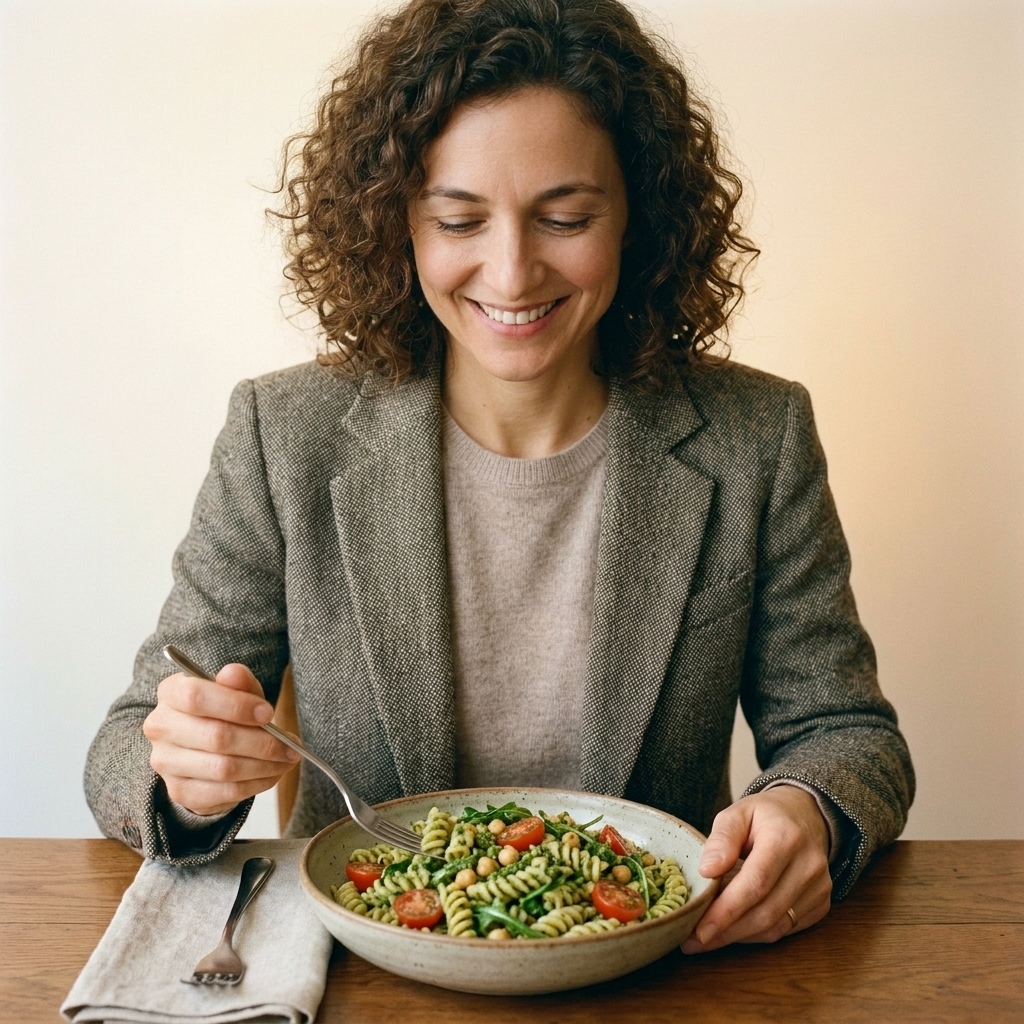
3) Walnut Pesto Chickpea Pasta with Arugula and Tomatoes
When people tell me anti-inflammatory eating feels expensive, I point them to pantry proteins and plant fats. Chickpeas bring fiber and minerals, walnuts add ALA omega-3s, and arugula gives that peppery bite that makes dinner feel interesting.
Ingredients (4 servings)
- 8 oz whole wheat or legume-based pasta
- 1 can chickpeas, rinsed and drained
- 2 cups arugula, plus extra for serving
- 1/2 cup walnuts
- 1/3 cup grated Parmesan (optional)
- 1 clove garlic
- 1/4 cup extra virgin olive oil
- 1 tbsp lemon juice
- 1 to 1 1/2 cups cherry tomatoes, halved
- Salt and pepper to taste
Steps
- Cook pasta. Reserve 1/2 cup pasta water.
- Blend arugula, walnuts, garlic, olive oil, lemon juice, Parmesan (if using), salt, and pepper into a pesto.
- Toss pasta with pesto, chickpeas, tomatoes, and a splash of pasta water to loosen.
- Serve with extra arugula and black pepper.
Meal prep tip
Store pesto separately if you want the brightest color for 3 to 4 days. Toss right before eating.
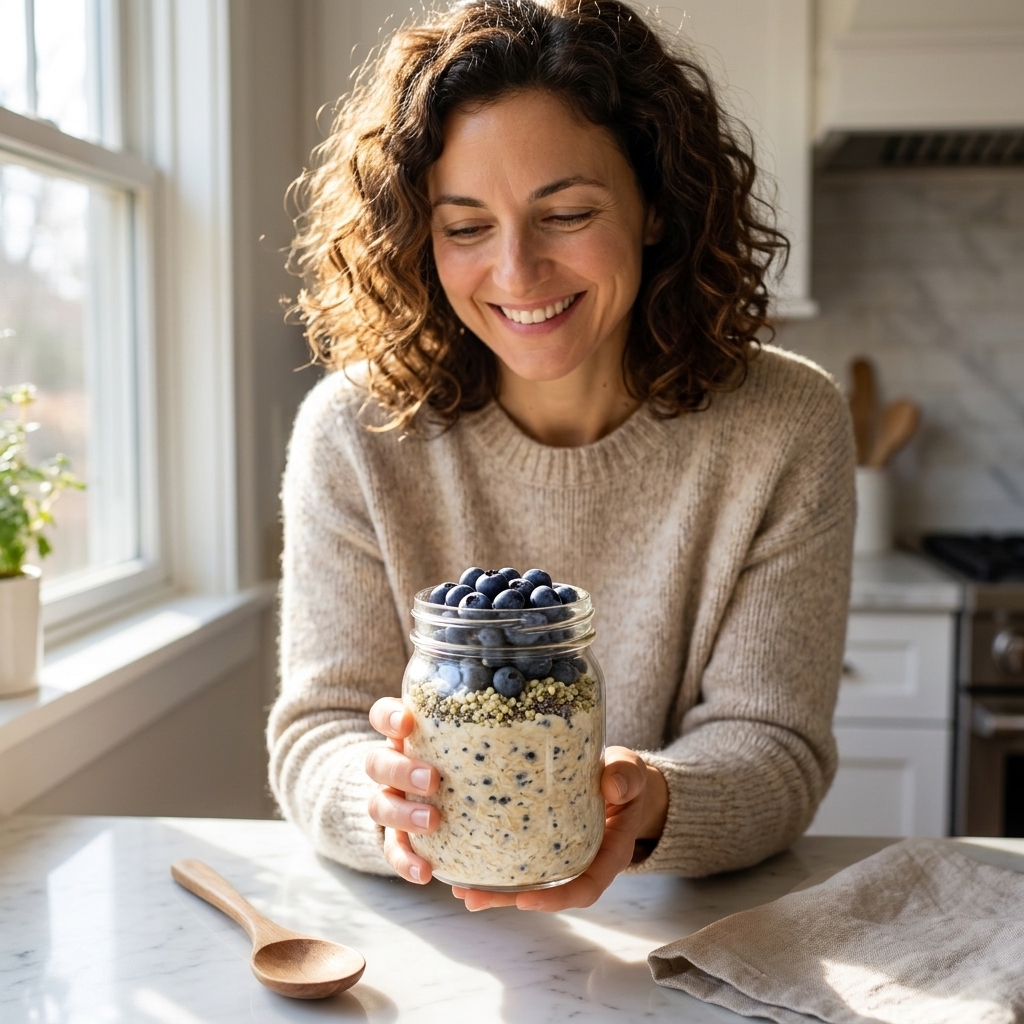
4) Blueberry Chia Overnight Oats
This is my “future me will thank me” breakfast. Chia brings fiber plus ALA omega-3s, blueberries bring anthocyanins (powerful antioxidants), and cinnamon adds cozy flavor without making it dessert.
Ingredients (1 serving, scale up for meal prep)
- 1/2 cup rolled oats
- 1 tbsp chia seeds
- 1 tbsp hemp hearts
- 3/4 cup milk of choice (dairy or fortified soy is great for protein)
- 1/2 cup blueberries (fresh or frozen)
- 1/2 tsp cinnamon
- 1 to 2 tsp maple syrup or honey (optional)
- Pinch of salt
Steps
- Stir everything in a jar. Let sit 5 minutes, stir again to prevent clumps.
- Refrigerate at least 4 hours, ideally overnight.
Make it more filling
Add Greek yogurt or skyr, or pair with a hard-boiled egg. Anti-inflammatory eating still needs enough calories and protein to keep you steady.
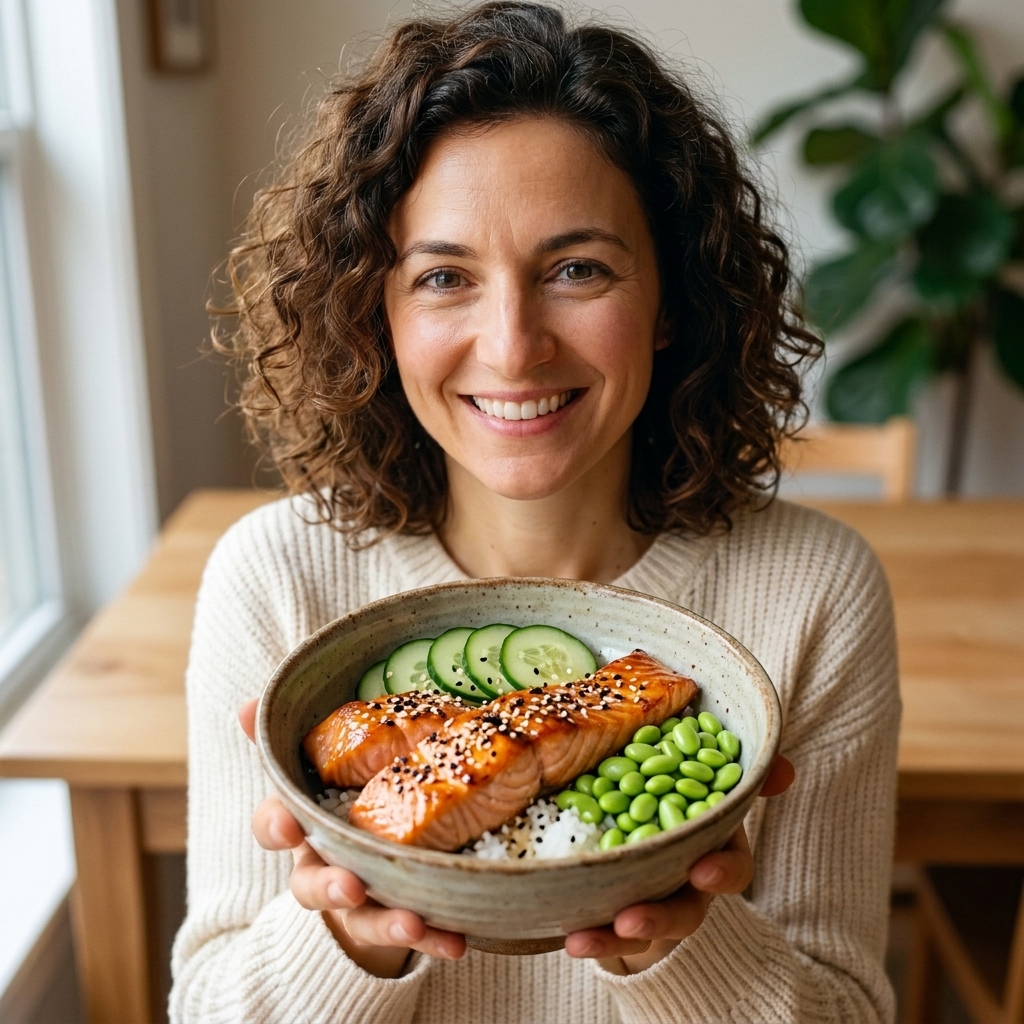
5) Ginger Miso Salmon Rice Bowls
These bowls hit the sweet spot: fast, satisfying, and packed with color. Ginger brings antioxidant compounds, miso adds fermented flavor, and edamame boosts plant protein and fiber.
Ingredients (4 servings)
- 1 1/4 lb salmon, cut into 4 portions
- 2 tbsp white or yellow miso
- 1 tbsp grated fresh ginger
- 1 tbsp low-sodium soy sauce or tamari
- 1 tsp honey or maple syrup
- 2 tsp rice vinegar
- 3 cups cooked brown rice (or quinoa)
- 2 cups shelled edamame (thawed if frozen)
- 1 large cucumber, sliced
- Optional: sesame seeds, sliced scallions, seaweed snacks
Steps
- Heat oven to 400°F. Whisk miso, ginger, soy sauce, honey, and vinegar.
- Brush sauce onto salmon. Bake 10 to 12 minutes, watching closely near the end since miso glazes can brown fast.
- Warm edamame. Build bowls with rice, salmon, cucumber, and toppings.
Weeknight shortcut
Use microwave brown rice and frozen edamame. Dinner is still a nutrient-dense win.
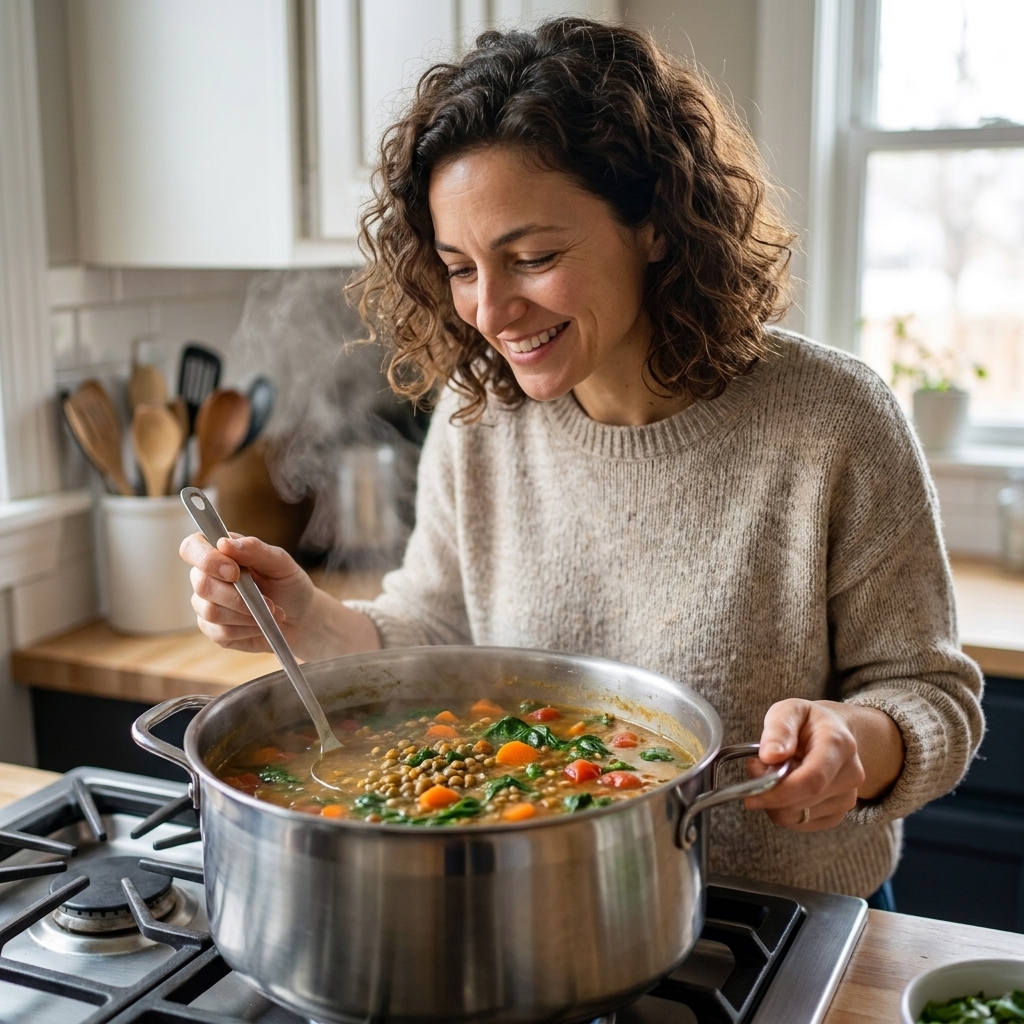
6) Lentil and Spinach Soup
Soup is my secret weapon for making supportive eating automatic. Lentils cook quickly, deliver fiber and plant protein, and pair beautifully with antioxidant-rich tomatoes and leafy greens.
Ingredients (6 servings)
- 1 tbsp extra virgin olive oil
- 1 onion, diced
- 2 carrots, diced
- 3 cloves garlic, minced
- 1 tsp ground cumin
- 1/2 tsp turmeric (optional but lovely)
- 1 cup dried brown or green lentils, rinsed
- 1 can diced tomatoes
- 6 cups low-sodium broth
- 4 cups baby spinach
- 1 tbsp lemon juice
- Salt and pepper to taste
Steps
- Sauté onion and carrots in olive oil for 5 to 7 minutes. Add garlic and spices, cook 30 seconds.
- Add lentils, tomatoes, and broth. Simmer 20 to 25 minutes until lentils are tender, checking at 20 minutes. Add a splash of water or broth if it gets too thick.
- Stir in spinach to wilt, finish with lemon juice. Adjust seasoning.
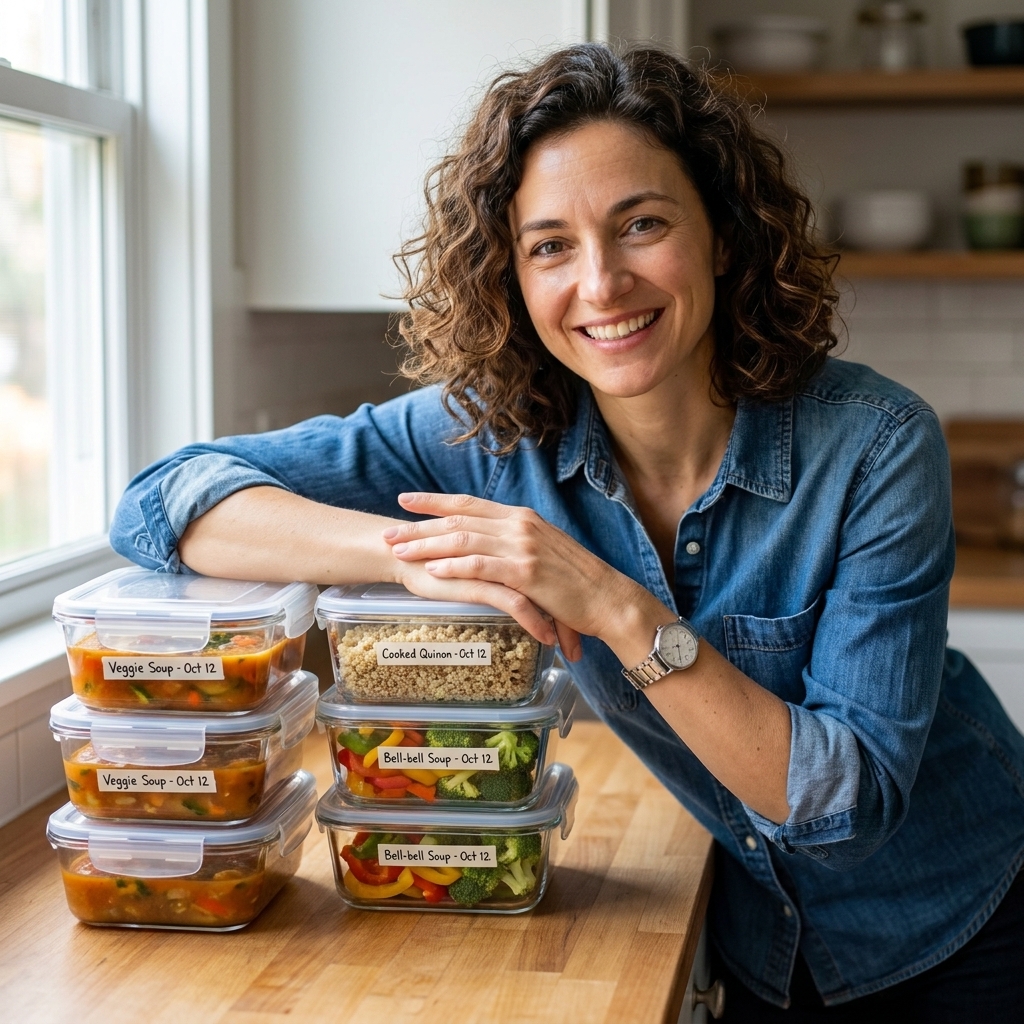
Freezer note
This freezes well for up to 3 months. Portion it out now, thank yourself later.
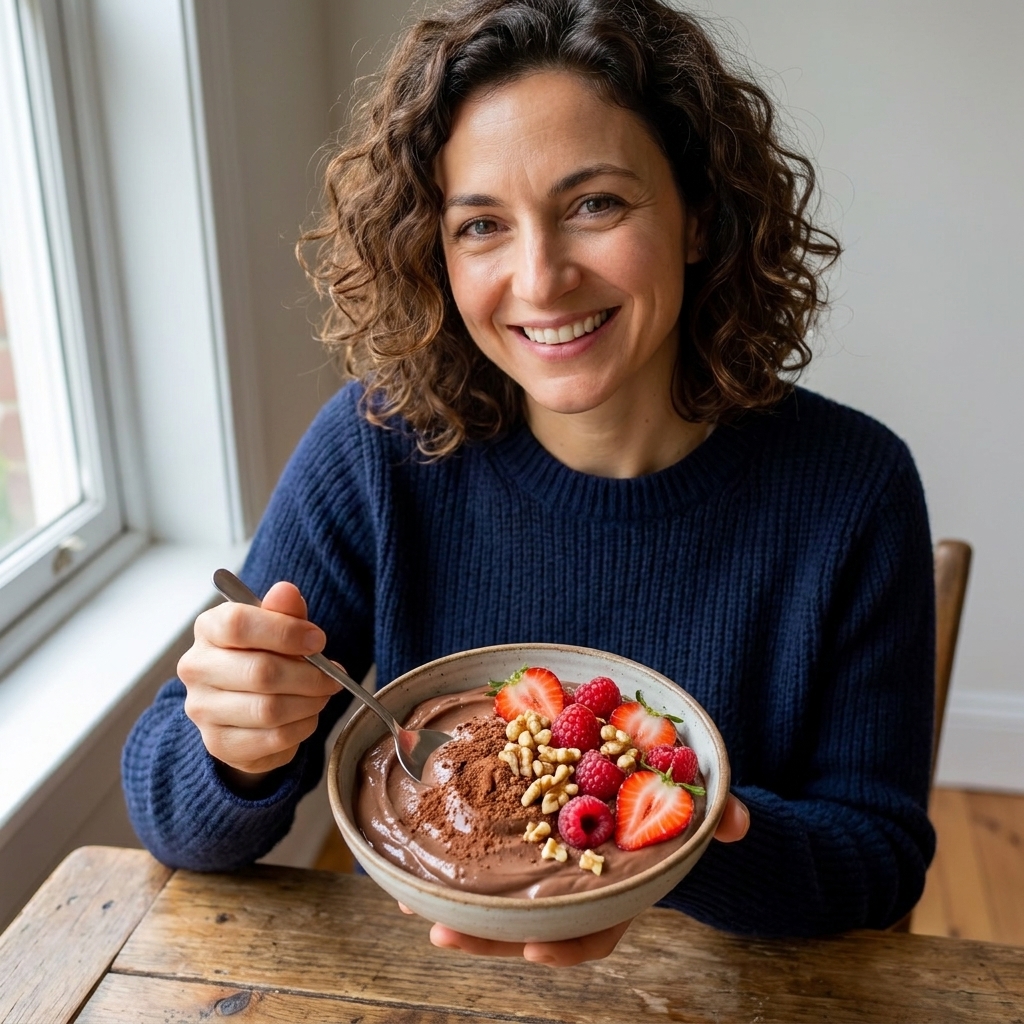
7) Cocoa Berry Walnut Yogurt Bowl
I am firmly in the “dessert is allowed” camp. This bowl is a go-to when you want something sweet that still fits the bigger picture. Cocoa contains flavanols, especially in minimally processed, unsweetened cocoa. Berries bring more polyphenols, and walnuts add omega-3 fats.
Ingredients (1 serving)
- 1 cup plain Greek yogurt (or a high-protein dairy-free yogurt)
- 1 tbsp unsweetened cocoa powder (natural cocoa if you have it)
- 1 to 2 tsp maple syrup or honey (optional)
- 1/2 cup strawberries or raspberries
- 2 tbsp chopped walnuts
- Optional: 1 tbsp ground flaxseed, pinch of cinnamon
Steps
- Stir cocoa into yogurt (and sweetener if using).
- Top with berries and walnuts. Add flax if you want extra omega-3 support.
Kid-friendly tip
Call it “chocolate yogurt” and let them add toppings. A little autonomy goes a long way.
Shopping list
If you want to make this week ridiculously easy, here is the overlap-friendly list I would build:
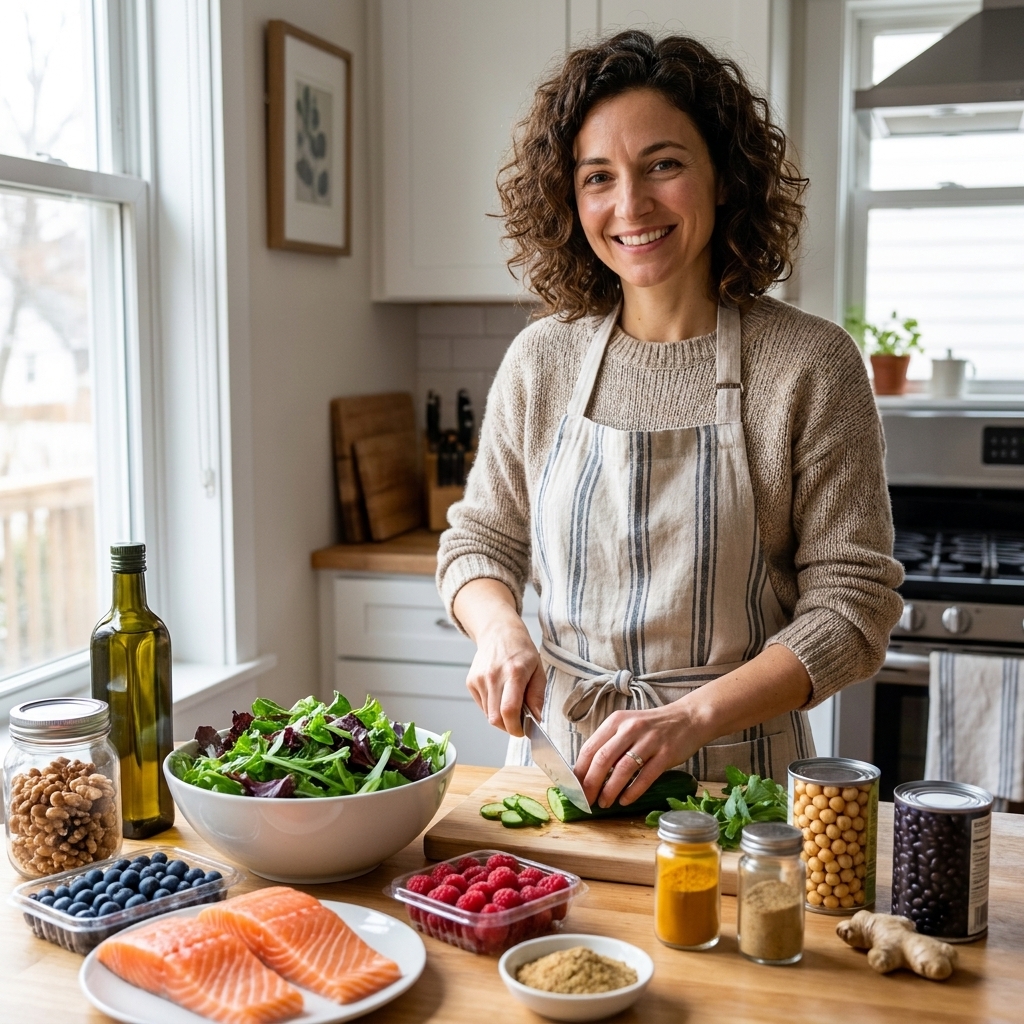
- Omega-3s: salmon (fresh or frozen), canned sardines, chia seeds, hemp hearts, walnuts, optional ground flaxseed
- Produce: cauliflower, spinach or kale, arugula, cherry tomatoes, cucumbers, lemons, garlic, onions, carrots, blueberries, strawberries or raspberries, fresh ginger
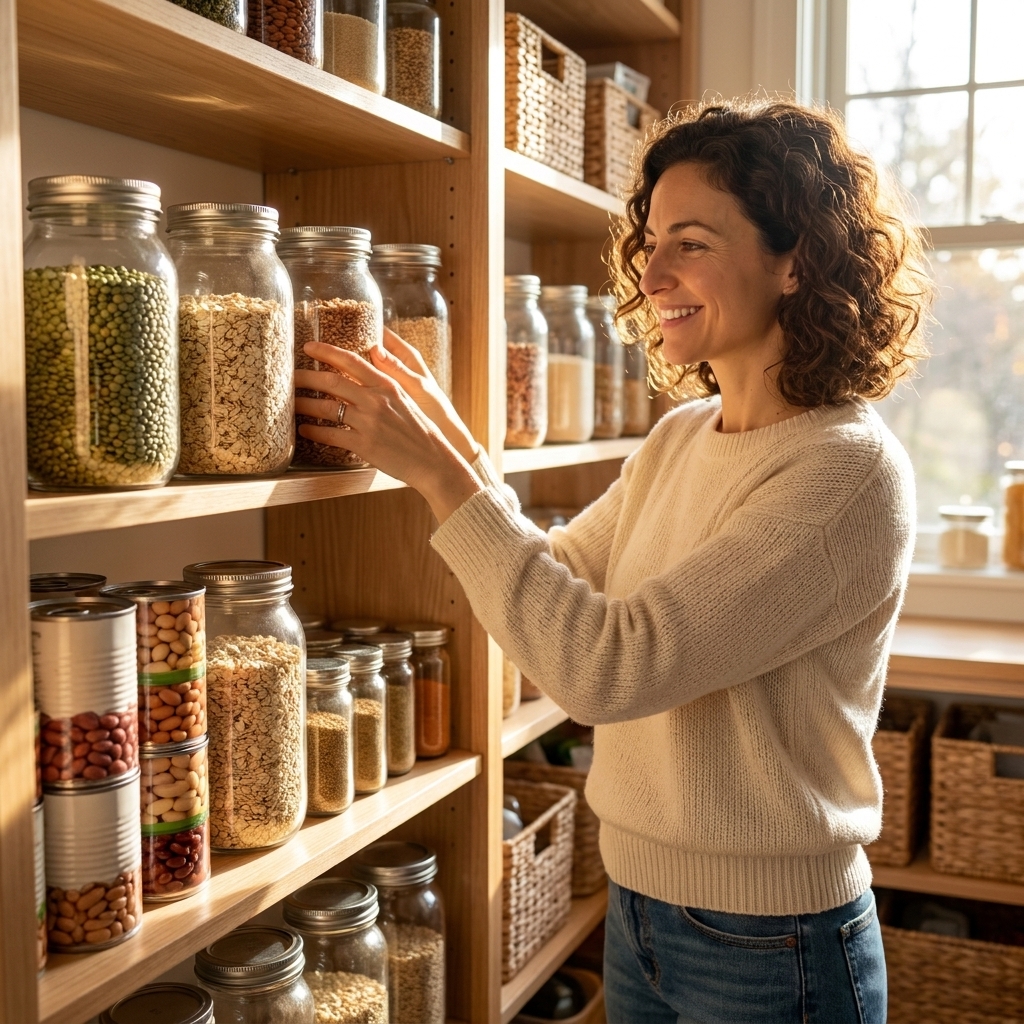
- Pantry: lentils, chickpeas, cannellini beans, oats, brown rice or quinoa, diced tomatoes, low-sodium broth, miso, soy sauce or tamari, rice vinegar
- Spices and fats: extra virgin olive oil, turmeric, cinnamon, cumin, black pepper, smoked paprika, cocoa powder
- Optional proteins: Greek yogurt, Parmesan
FAQ
How often should I eat omega-3 fish?
For many adults, a practical target is 2 servings per week of fatty fish like salmon, sardines, trout, or herring. A common serving size is about 3 to 4 oz cooked (roughly the size of your palm). If you are pregnant, breastfeeding, or choosing fish for kids, follow current mercury guidance and choose low-mercury options.
Can I get omega-3s without fish?
Yes. Plant sources like chia, flax, hemp, and walnuts provide ALA omega-3s. Your body can convert some ALA into EPA and DHA, but the conversion is limited, so mixing plant sources with fatty fish (if you eat it) can be helpful. If you avoid fish entirely, ask your clinician about an algae-based DHA/EPA supplement.
Do I need to avoid inflammatory foods completely?
In real life, “never” rules usually backfire. A more sustainable approach is to add more anti-inflammatory building blocks most days, then let the rest fit around your life, culture, and preferences. Plate empathy beats perfection.
Your easiest start
If you want a low-friction plan, here is a simple two-day batch that covers a lot of ground:
- Make Lentil and Spinach Soup for lunches.
- Do Sheet Pan Salmon for dinner plus leftovers.
- Prep Overnight Oats for grab-and-go breakfasts.
That is three recipes, one grocery trip, and a week that feels calmer and more manageable.