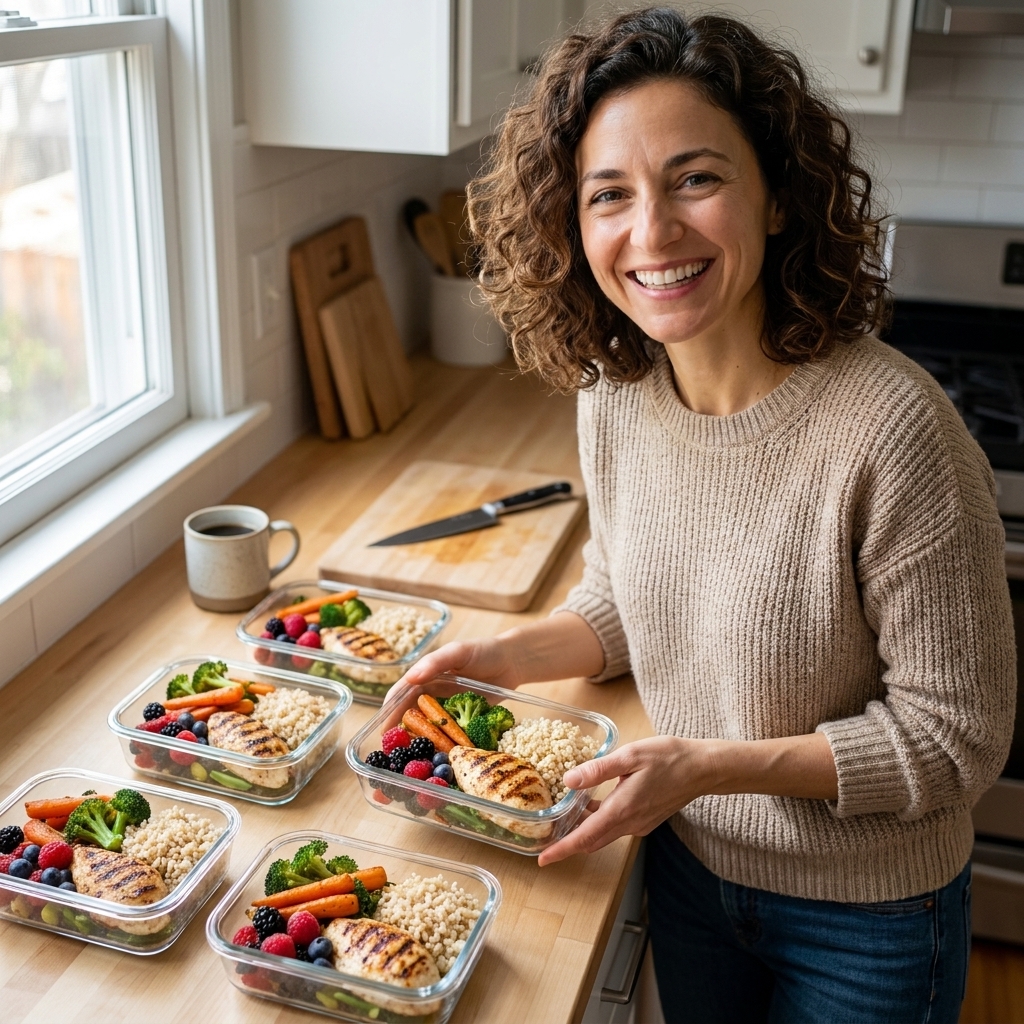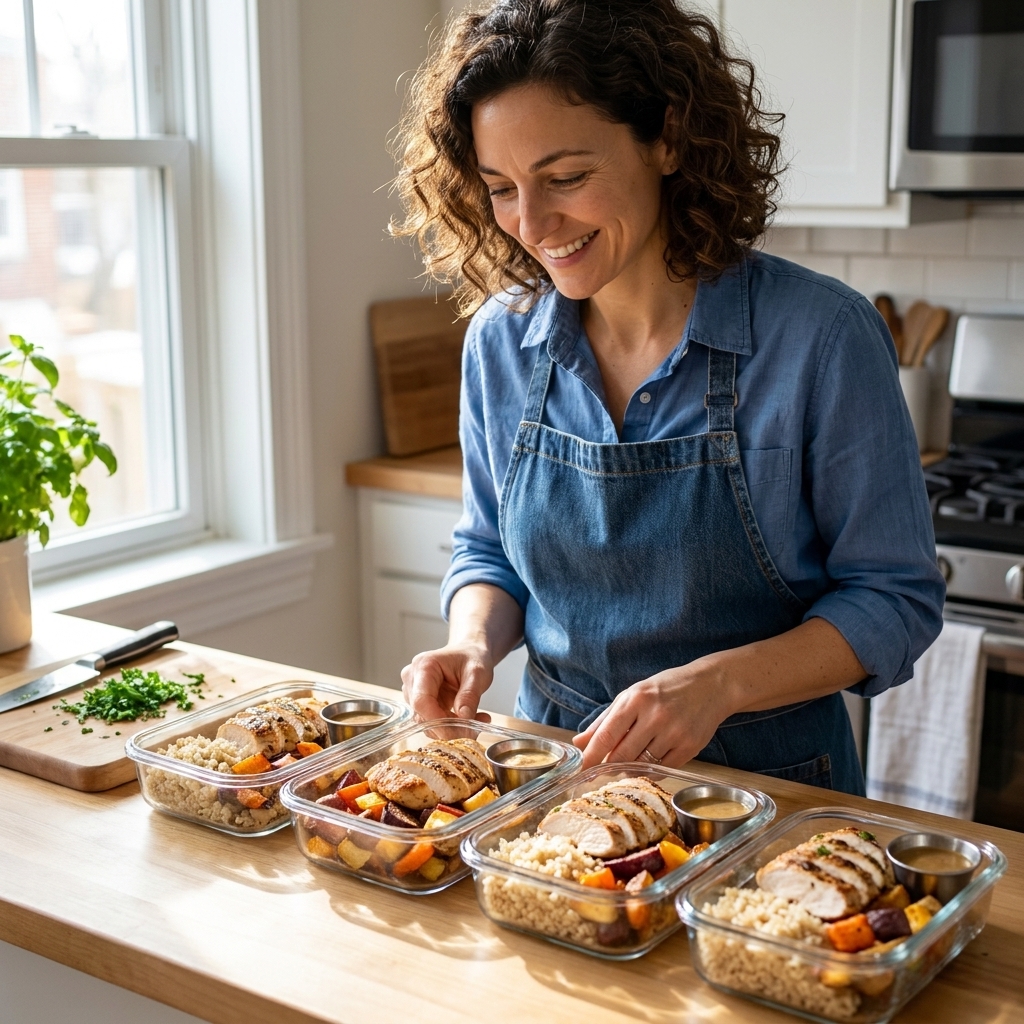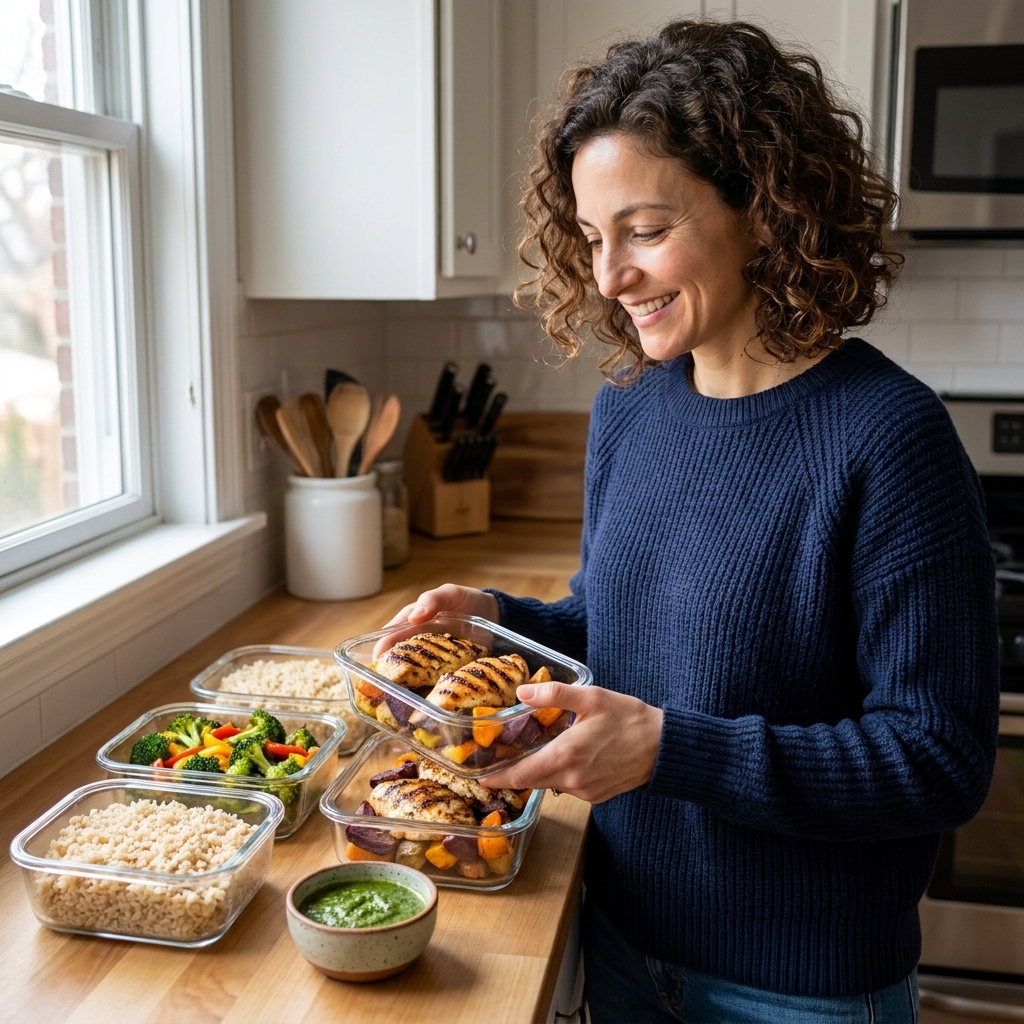
A practical, kind-to-yourself guide to setting macro targets, prepping repeatable meals, and adjusting your plan without burnout.
Platepathy
Sheet Pan Dinners: 8 Macro-Friendly Recipes for Easy Cleanup
Eight macro-friendly sheet pan dinners with balanced protein, complex carbs, and healthy fats, plus simple swaps for different needs and minimal cleanup.

Elena Rossi
Elena Rossi is a Registered Dietitian and meal prep expert who believes that healthy eating shouldn't feel like a second job. Through Platepathy, she translates complex nutrition science into approachable, delicious meal plans designed for real, busy lives.
Published October 18, 2026
Last updated October 18, 2026
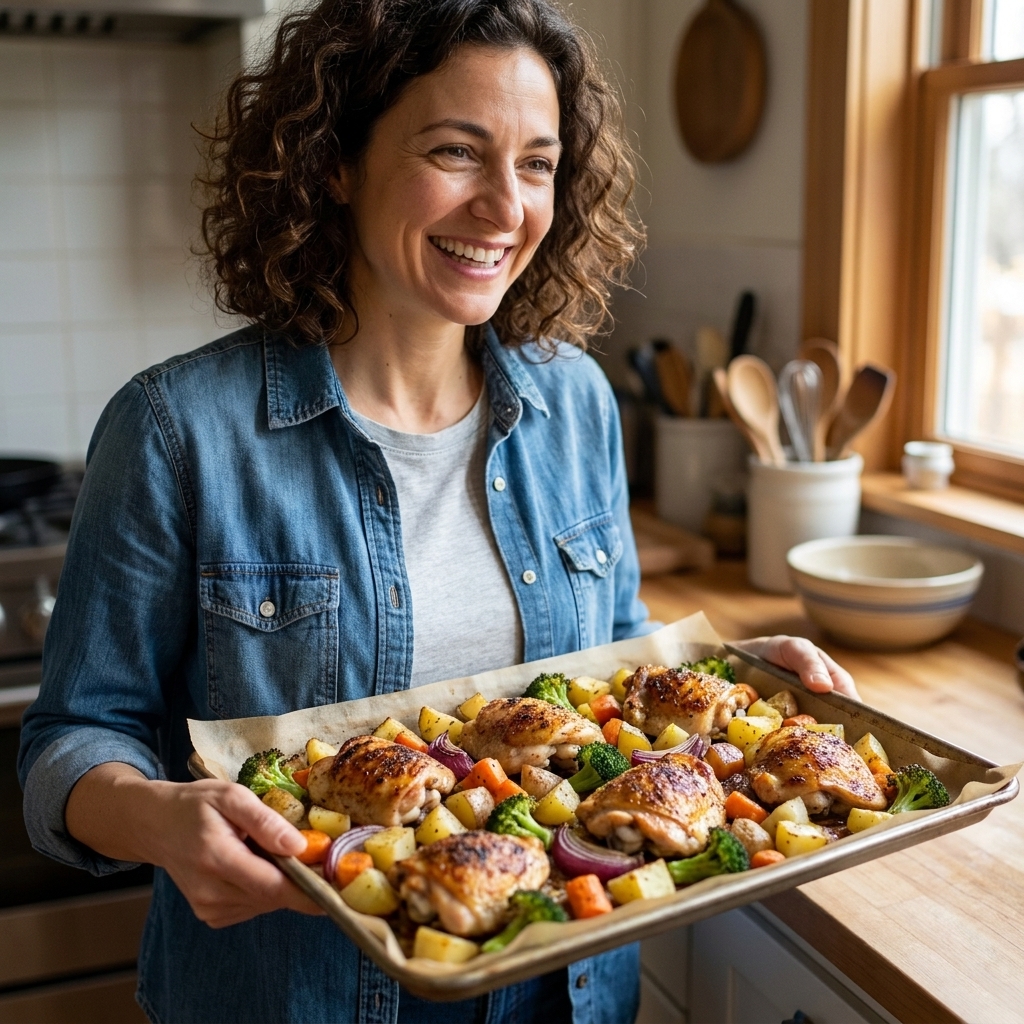
There is a very specific kind of tired that hits at 5:12 PM when you want a wholesome dinner, your sink is already judging you, and everyone is hungry now. Sheet pan dinners are my favorite answer because they let you build a balanced plate with minimal mental load and minimal dishwashing. One pan, one timer, done.
When I say “macro-friendly,” I mean: a solid protein anchor, a portion of complex carbs for energy and satisfaction, and enough healthy fat to make everything taste good and keep you full. No food groups banished. No perfection required.
Quick note: All recipes below use a 425°F oven unless noted. Use a half-sheet pan (about 18 x 13 inches) when you can, and rotate the pan halfway through for even browning.
My macro-friendly sheet pan formula
If you remember nothing else, remember this build-your-own approach. It is how I keep dinners both balanced and flexible for different appetites.
- Protein: chicken, turkey sausage, salmon, shrimp, tofu, tempeh, lean pork, or beans (a common target for many people is 25 to 40 g protein per serving most nights, but adjust to your needs).
- Complex carbs: potatoes, sweet potatoes, brown rice (served on the side), chickpeas, lentils, corn, or whole grains you batch-cooked earlier.
- Healthy fats: olive oil, avocado, tahini, nuts, seeds, or a little cheese. Often 1 to 2 teaspoons oil per serving is plenty because roasting concentrates flavor.
- Fiber and color: at least 2 cups non-starchy veggies per person if possible.
Portion sanity check: if you are tracking macros, it often helps to keep the pan mostly protein and vegetables, then portion the carb more intentionally (like weighed potatoes, or a measured scoop of cooked rice on the plate). That is the simplest way to make the same recipe fit different macro goals.
About macros in this article: I am not listing exact macro totals per recipe because brands and portion sizes vary a lot (especially oils, sauces, and the size of your chicken breasts). If you want to dial it in, the highest-impact things to weigh and log are your protein portion, the carb by weight (potatoes, squash, grains), and any added fats (oil, nuts, cheese).
Sheet pan success tips
- Use a big pan: overcrowding leads to steaming. Two sheet pans is still easier than six pots.
- Parchment or foil: parchment for easy release, foil for easier scrubbing. Either works.
- Cut for timing: small pieces cook faster. Dense veggies (potatoes, carrots) need smaller cuts than broccoli.
- Stagger when needed: start potatoes first, then add quick-cooking items like asparagus or shrimp later.
- High heat is your friend: 425°F roasts quickly and actually browns.
- Rotate halfway: sheet pans have hot spots. A quick turn at the midpoint helps everything brown evenly.
- Thermometer = less stress: chicken 165°F, pork 145°F with a rest. For salmon, doneness is preference: about 125°F is softer and medium, 140°F is firmer and more well-done.
- Let it rest: give chicken and pork 5 minutes after roasting before slicing. Your future self will thank you for the juiciness.
8 macro-friendly sheet pan dinners
Each recipe below is written for busy-life execution. They are designed to give you a balanced plate without a million steps, and most make excellent leftovers.
1) Lemon-Garlic Chicken, Potatoes, and Green Beans
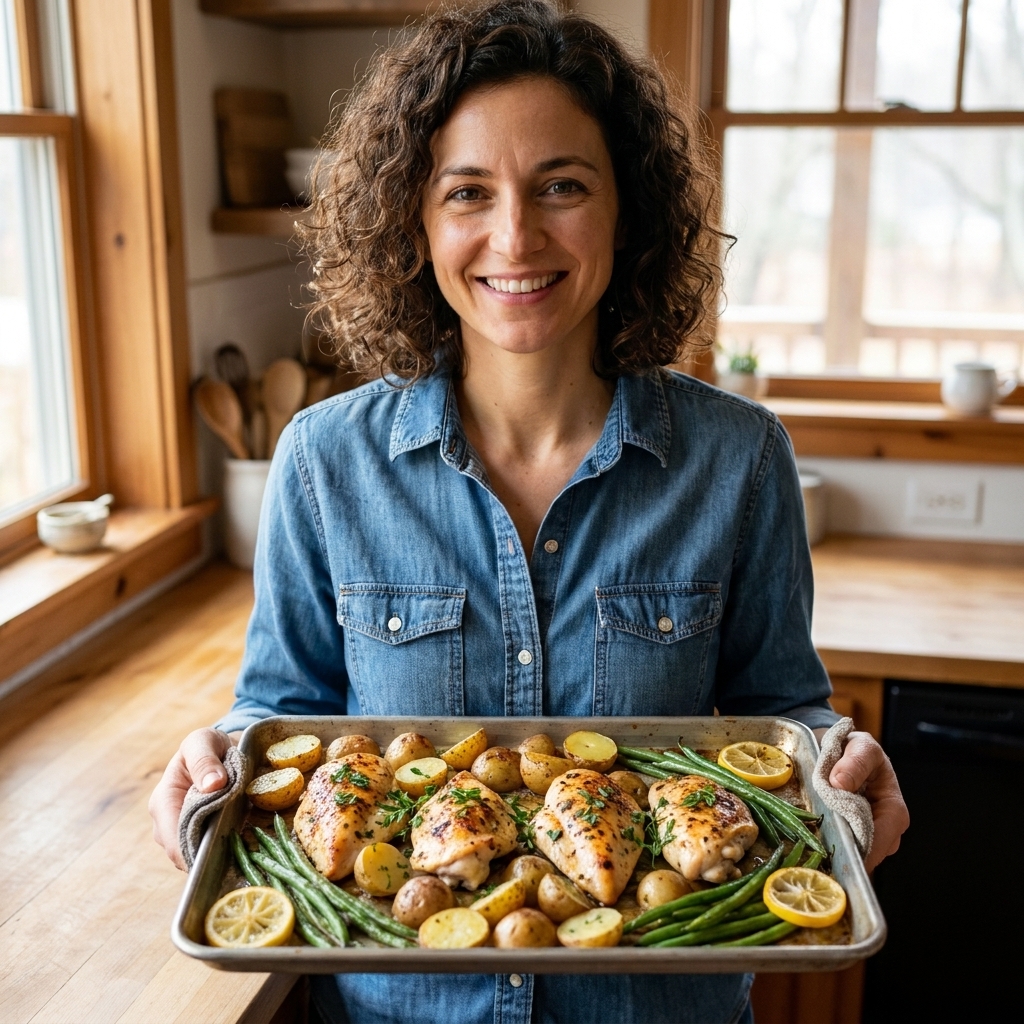
Why it works: classic protein + carb + fiber, with bright acid to keep it from tasting like meal prep.
- Protein: boneless skinless chicken breast or thighs
- Carb: baby potatoes (or sweet potatoes)
- Fat/flavor: olive oil, garlic, lemon zest
Ingredients (4 servings): 1.5 lb chicken, 1.5 lb baby potatoes (halved), 12 oz green beans, 2 tbsp olive oil, 3 cloves garlic (minced), zest and juice of 1 lemon, 1 tsp dried oregano, 1 tsp kosher salt, black pepper.
Directions: Heat oven to 425°F. Toss potatoes with half the oil, half the salt, pepper. Roast 15 minutes. Meanwhile toss chicken with remaining oil, garlic, oregano, lemon zest and half the lemon juice. Push potatoes to one side, add chicken. Roast 15 minutes. Add green beans tossed with a pinch of salt and the remaining lemon juice. Roast 8 to 12 minutes more, until chicken hits 165°F and beans are tender-crisp. Rest chicken 5 minutes before slicing.
Macro-friendly tweaks: For lower carbs, swap half the potatoes for cauliflower florets. For higher carbs, add a side of cooked brown rice or whole grain bread.
2) Honey-Lime Salmon with Sweet Potatoes and Broccoli
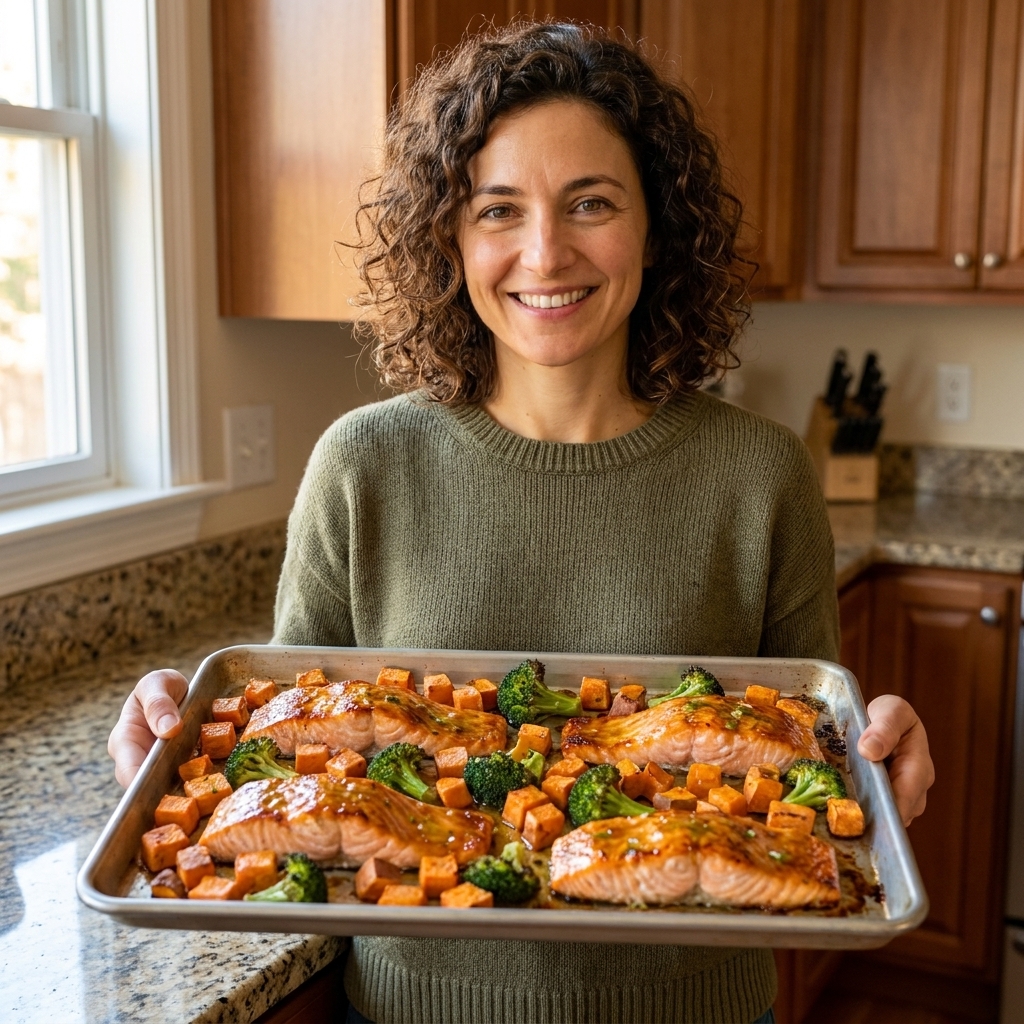
Why it works: salmon brings healthy fats, sweet potatoes bring steady energy, broccoli brings fiber and volume.
Ingredients (4 servings): 4 salmon fillets (about 5 oz each), 1.5 lb sweet potatoes (cubed small), 5 to 6 cups broccoli florets, 2 tbsp olive oil, 1.5 tbsp honey, juice of 1 lime, 1 tsp smoked paprika, 1 tsp kosher salt.
Directions: Heat oven to 425°F. Toss sweet potatoes with 1 tbsp oil, paprika, half the salt. Roast 18 minutes. Add broccoli tossed with remaining oil and salt, stir. Nestle salmon into the pan. Mix honey and lime juice, brush over salmon. Roast 10 to 12 minutes, until sweet potatoes are tender and salmon reaches your preferred doneness (about 125 to 140°F, or until it flakes easily).
Macro-friendly tweaks: Want higher protein? Add a second small salmon piece or serve with a Greek yogurt lime sauce. Want lower fat? Use cod, and add avocado slices at serving for optional fat.
3) Harissa Chickpeas and Chicken with Peppers and Onions
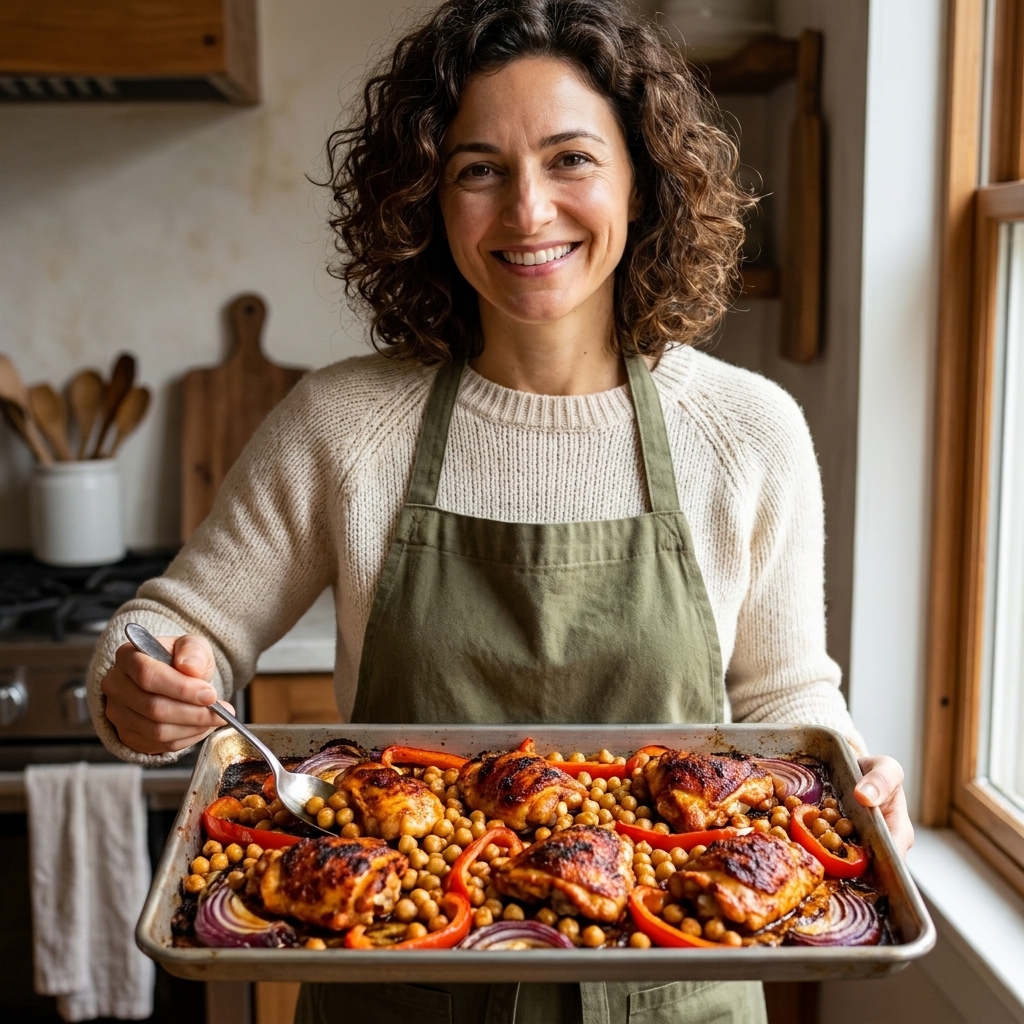
Why it works: double protein from chicken and chickpeas, plus fiber that keeps you satisfied.
Ingredients (4 servings): 1.25 lb chicken thighs (boneless), 2 cans chickpeas (drained, rinsed, and patted very dry), 3 bell peppers (sliced), 1 large red onion (sliced), 2 to 3 tbsp harissa paste, 2 tbsp olive oil, 1 tsp cumin, 1 tsp kosher salt.
Directions: Heat oven to 425°F. Toss peppers, onion, chickpeas with oil, cumin, salt. Spread on pan and roast 12 minutes. Toss chicken with harissa (start with 2 tbsp) and place on pan. Roast 18 to 22 minutes, until chicken is cooked through (165°F). Rest 5 minutes. Serve with lemon wedges if you have them.
Macro-friendly tweaks: Serve over cooked farro or quinoa if you need more carbs. For lower carbs, use one can chickpeas and add extra peppers and zucchini.
4) Turkey Sausage, Brussels Sprouts, and Apple with Mustard
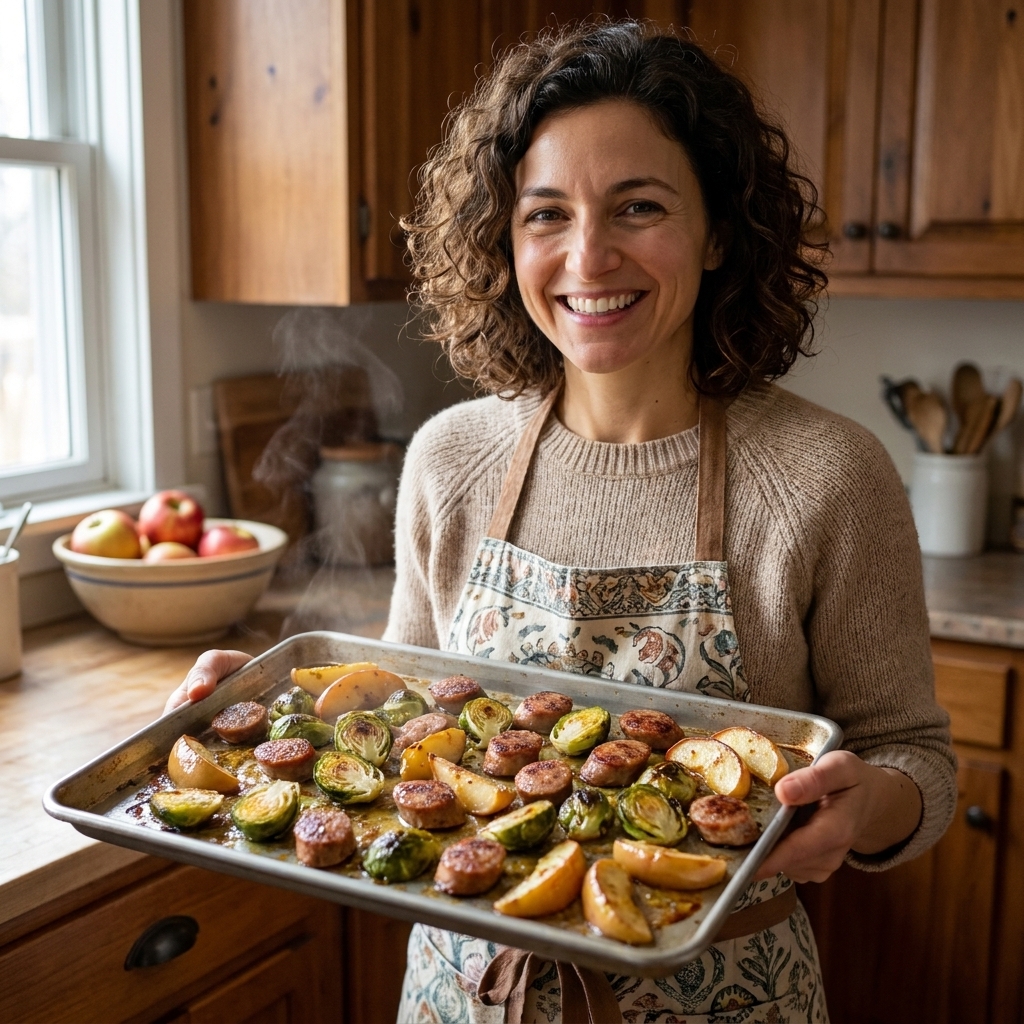
Why it works: sweet-savory comfort food energy, with a protein-forward base and a veggie you actually want to eat.
Ingredients (4 servings): 14 to 16 oz turkey sausage (fully cooked, sliced), 1.5 lb Brussels sprouts (halved), 2 apples (sliced into wedges), 2 tbsp olive oil, 1.5 tbsp Dijon mustard, 1 tbsp maple syrup, 1 tbsp apple cider vinegar, 1/2 tsp salt, pepper.
Directions: Heat oven to 425°F. Toss Brussels and apples with oil, salt, pepper. Roast 15 minutes. Add sliced sausage, toss. Roast 10 minutes. Whisk Dijon, maple, vinegar. Drizzle over everything and roast 5 minutes more.
Macro-friendly tweaks: If sodium is a concern, choose lower-sodium sausage and add extra mustard-vinegar for punch. Need more carbs? Add cubed delicata squash to the pan at the start.
5) Sheet Pan Shrimp Fajitas with Peppers and Onions
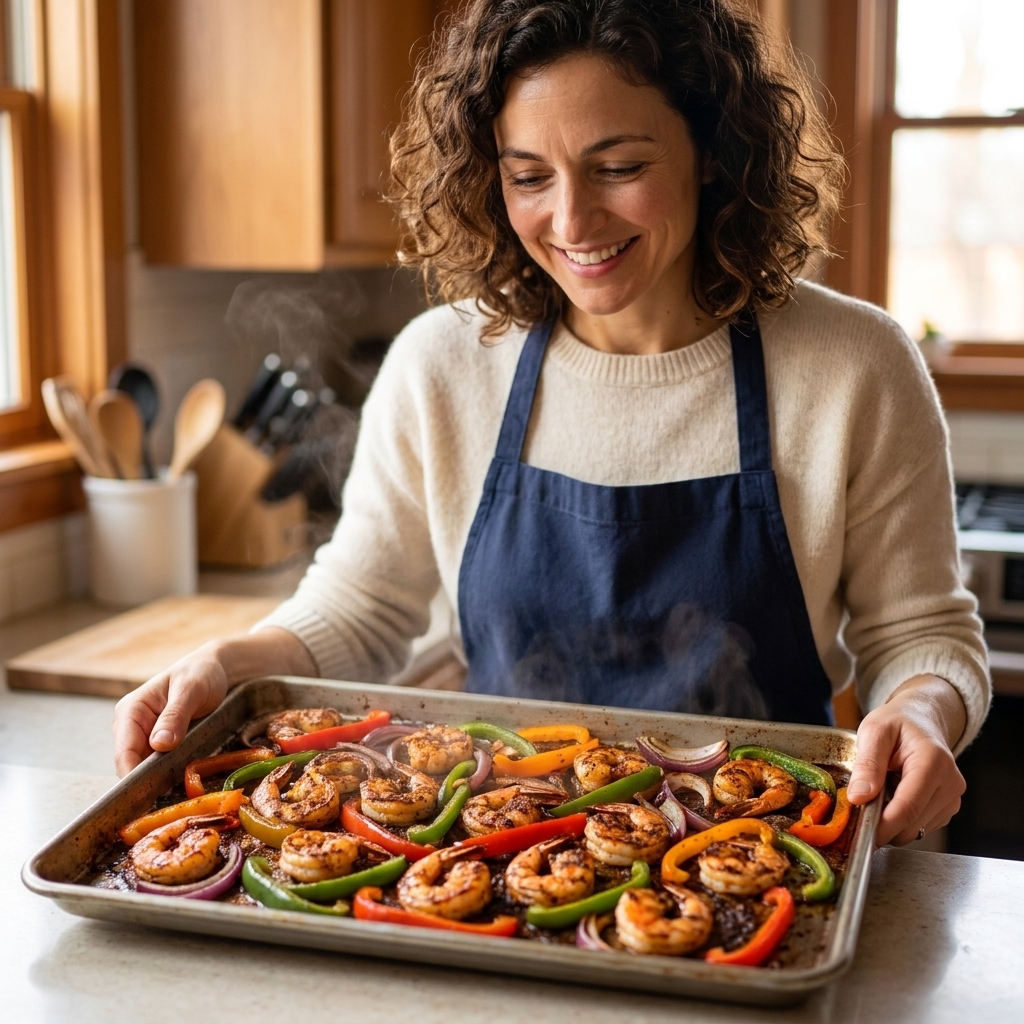
Why it works: high protein, quick cooking, and you can control carbs by choosing tortillas, rice, or lettuce wraps.
Ingredients (4 servings): 1.5 lb shrimp (peeled, deveined), 3 bell peppers (sliced), 1 large onion (sliced), 2 tbsp olive oil, 2 tsp chili powder, 1 tsp cumin, 1 tsp garlic powder, 1/2 tsp salt, juice of 1 lime. Serve with tortillas, avocado, and salsa.
Directions: Heat oven to 425°F. Toss peppers and onions with half the oil and spices. Roast 12 minutes. Toss shrimp with remaining oil and spices, add to pan. Roast 6 to 8 minutes, until shrimp are opaque. Finish with lime.
Macro-friendly tweaks: For more fat and staying power, add sliced avocado. For more carbs, add a side of black beans or rice.
6) Tofu Peanut-Ginger Sheet Pan with Broccoli and Carrots
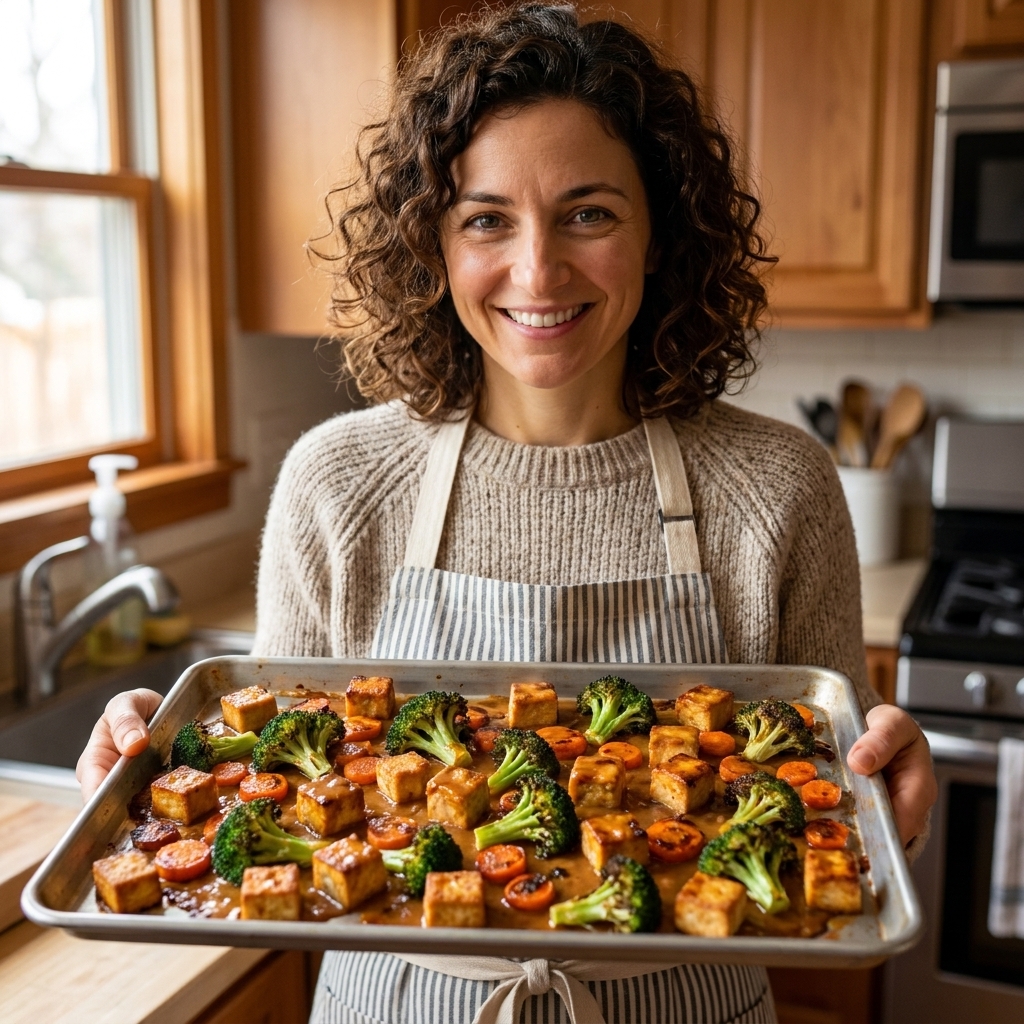
Why it works: plant-based protein plus healthy fats from peanut butter, with roasted veggies for volume. It is cozy and weeknight-fast.
Ingredients (4 servings): 2 blocks extra-firm tofu (pressed, cubed), 6 cups broccoli florets, 3 large carrots (sliced on a bias), 2 tbsp avocado or olive oil, 3 tbsp peanut butter, 1.5 tbsp soy sauce, 1 tbsp rice vinegar, 2 tsp grated ginger, 1 tsp garlic (minced), warm water to thin.
Directions: Heat oven to 425°F. Toss tofu with 1 tbsp oil and a pinch of salt. Toss broccoli and carrots with remaining oil and a pinch of salt. Roast 20 minutes, flipping tofu once. Whisk peanut butter, soy sauce, vinegar, ginger, garlic with 2 to 4 tbsp warm water. Drizzle sauce over pan and roast 5 minutes more. Serve with cooked rice or noodles if desired.
Macro-friendly tweaks: For lower fat, use powdered peanut butter or reduce to 1.5 tbsp and add extra soy-vinegar-ginger for flavor. For higher protein, add shelled edamame to the pan for the last 8 minutes.
7) Greek Chicken with Zucchini, Tomatoes, and Potatoes
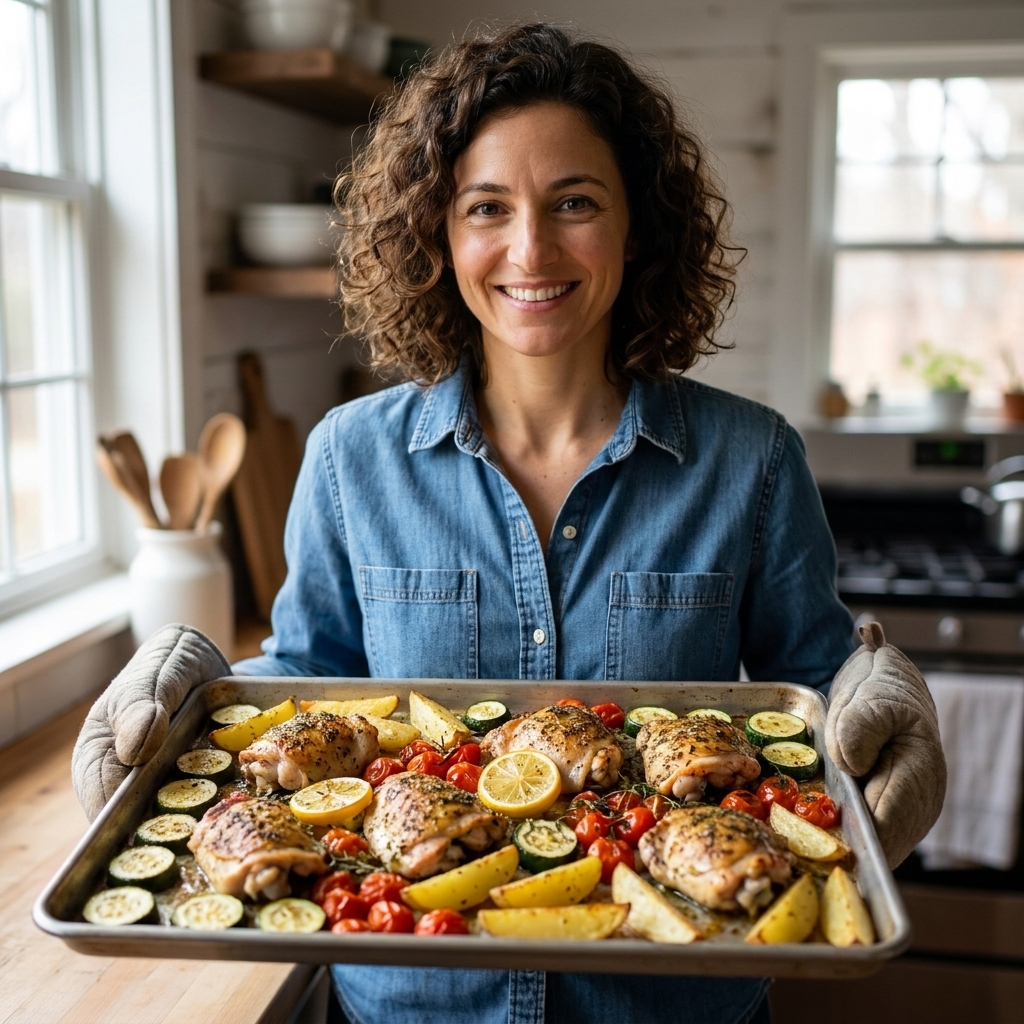
Why it works: Mediterranean flavors that stay exciting as leftovers, plus an easy yogurt sauce option for extra protein.
Ingredients (4 servings): 1.5 lb chicken thighs or breasts, 1.25 lb Yukon gold potatoes (wedged), 2 zucchini (sliced thick), 2 cups cherry tomatoes, 2 tbsp olive oil, 2 tsp dried oregano, 1 tsp garlic powder, 1 tsp kosher salt, juice of 1 lemon. Optional: 1/2 cup crumbled feta.
Directions: Heat oven to 425°F. Toss potatoes with 1 tbsp oil, oregano, half the salt. Roast 15 minutes. Toss chicken with remaining oil, oregano, garlic, lemon juice, remaining salt. Add chicken to pan. Roast 15 minutes. Add zucchini and tomatoes. Roast 10 minutes more, until chicken reaches 165°F. Rest 5 minutes. Sprinkle feta after baking if using.
Macro-friendly tweaks: Serve with a simple tzatziki made from Greek yogurt for more protein. For lower carbs, reduce potatoes and add extra zucchini and tomatoes.
8) Balsamic Pork Tenderloin with Butternut Squash and Red Onion
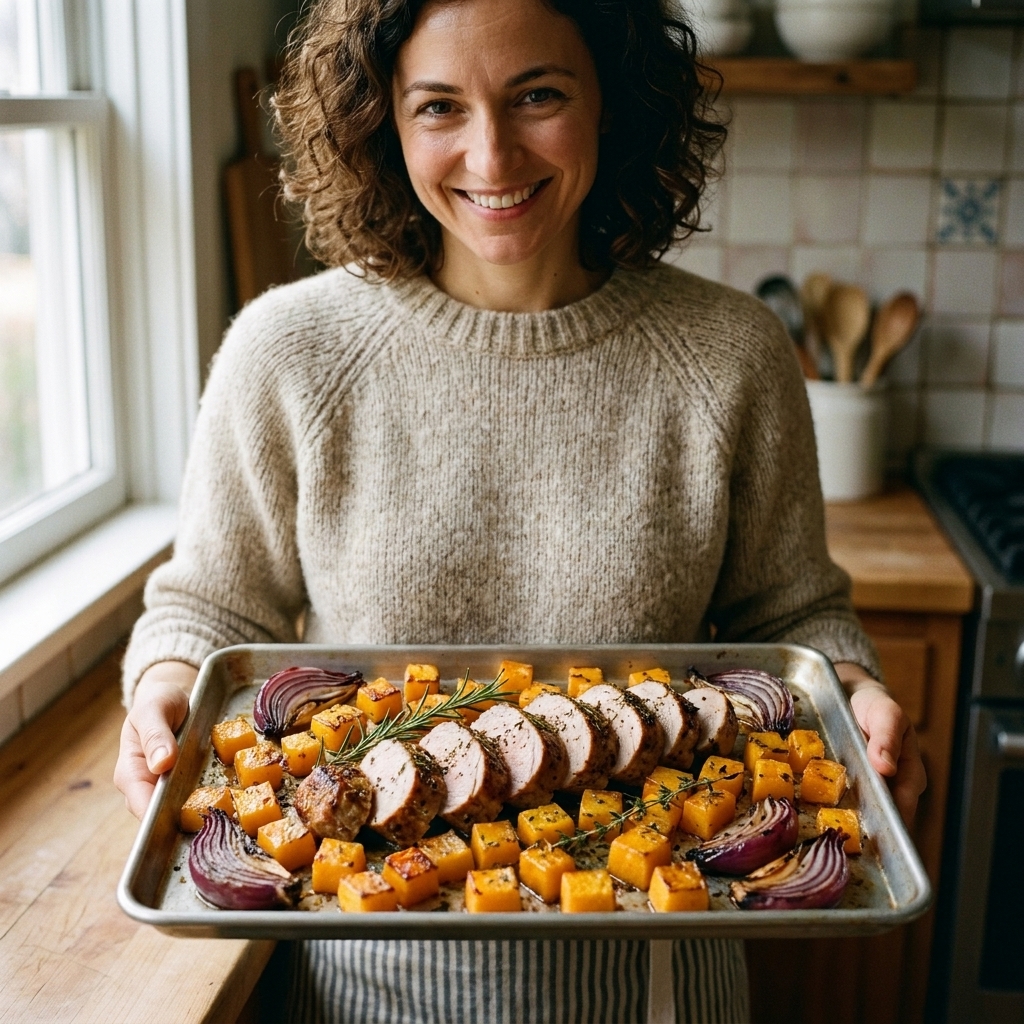
Why it works: pork tenderloin is lean and high-protein, squash brings comforting carbs, balsamic delivers big flavor with minimal effort.
Ingredients (4 servings): 1.25 to 1.5 lb pork tenderloin, 5 cups butternut squash cubes, 1 red onion (cut into wedges), 2 tbsp olive oil, 3 tbsp balsamic vinegar, 1 tbsp Dijon mustard, 1 tsp dried thyme, 1 tsp salt, pepper.
Directions: Heat oven to 425°F. Toss squash and onion with 1 tbsp oil, thyme, half the salt. Roast 15 minutes. Whisk balsamic, Dijon, remaining oil, remaining salt and pepper. Brush over pork and place on pan. Roast 15 to 20 minutes until pork reaches 145°F, then rest 5 minutes before slicing.
Macro-friendly tweaks: Need more vegetables? Add Brussels sprouts or green beans for the last 12 minutes. Need higher carbs? Serve with cooked barley.
Meal prep
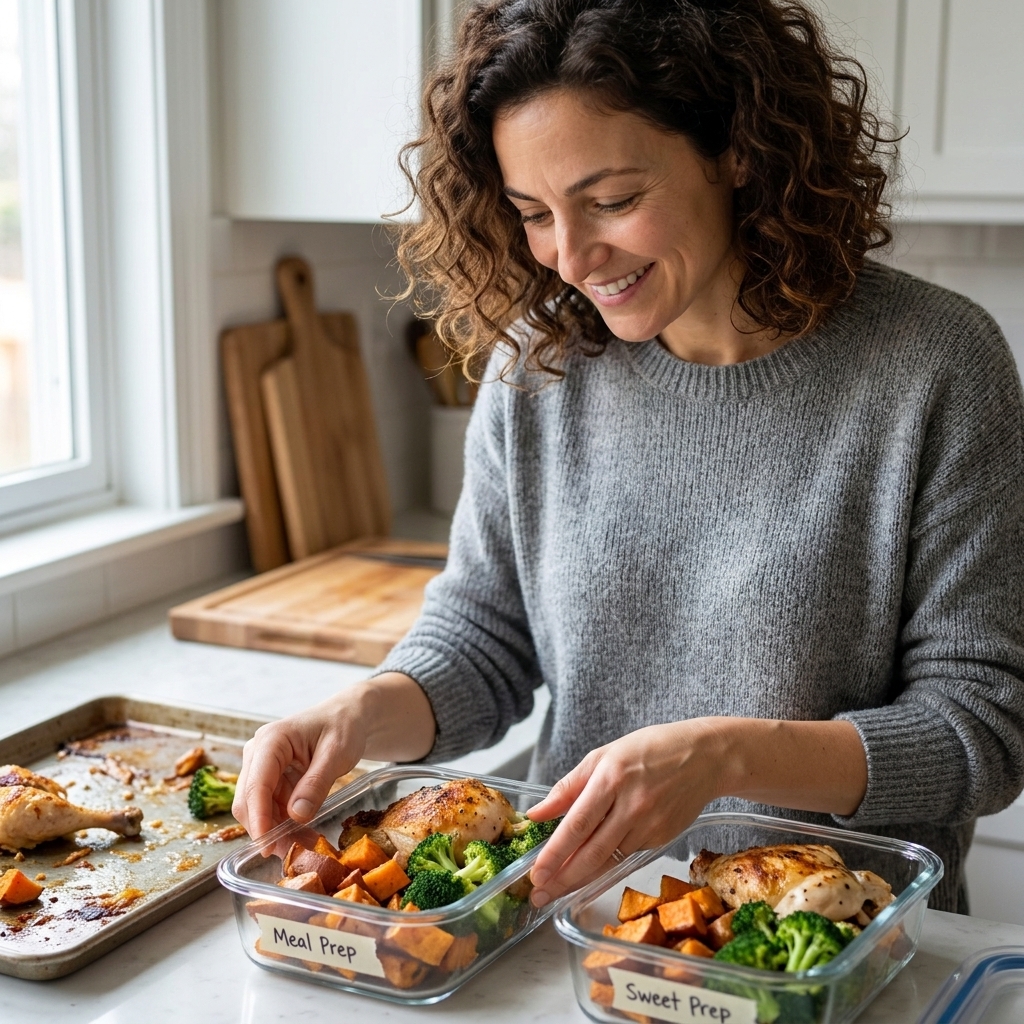
Sheet pan dinners can absolutely be meal prep without tasting like “sad leftovers.” Here is the rhythm I use on Sundays when life is about to get loud.
- Cook once, sauce later: roast protein and vegetables simply, then add sauces at serving so textures stay better.
- Keep carbs modular: roast potatoes or squash, but also batch-cook a grain (rice, farro) to mix and match.
- Store smart: cool food fully, then portion into airtight containers. Keep sauces separate. Refrigerate 3 to 4 days.
- Reheat like you mean it: oven or air fryer brings back crisp edges. Microwave is fine, but add a splash of water to veggies and do not overheat protein. For best food-safety practice, reheat leftovers until steaming hot (165°F is a solid target for mixed leftovers).
Macro adjustments
If two people in your house have different needs, you do not need two separate dinners. Use these levers instead:
- Protein lever: increase or decrease the portion of chicken, fish, tofu, or shrimp.
- Carb lever: adjust potato or grain portion on the plate, not necessarily on the pan.
- Fat lever: drizzle olive oil, add avocado, nuts, pesto, or cheese at serving for those who need more calories.
- Volume lever: add a bagged salad, extra roasted veggies, or raw crunchy veg for more fullness without many extra calories.
Plate empathy reminder: your macros are not a moral scorecard. They are just one way to learn what helps your body feel energized and satisfied.
FAQ
What temperature is best for sheet pan dinners?
Most sheet pan dinners do best at 425°F. It is hot enough to brown vegetables and proteins quickly, which means better flavor and less mush.
How do I keep vegetables from getting soggy?
Use a large pan, dry your ingredients well, and avoid overcrowding. If everything is piled together, it steams. Two pans is still a win if it saves your texture and your mood.
Can I use frozen vegetables?
Yes, with a caveat: frozen vegetables release water. Roast them at 425°F, spread them out, and expect slightly softer texture. I like frozen broccoli best for this, and I usually skip extra oil until the last 5 to 8 minutes.
How do I make these higher protein without changing the whole recipe?
Add a simple side: Greek yogurt sauce, cottage cheese dip, a cup of edamame, or an extra 2 to 3 oz portion of the main protein. That keeps the sheet pan method intact.