A practical, RD-written guide to storing meal prep: fridge and freezer timelines, smart container choices, cooling rules, thawing, and reheating tips that ke...
Platepathy
Why Roasted Meal-Prep Vegetables Turn Soggy (and How to Keep Them Firm)
Roasted vegetables shouldn’t turn watery by Tuesday. Learn why meal-prep veggies go soggy and the simple fixes that keep them browned, firm, and weeknight-ready.

Elena Rossi
Elena Rossi writes Platepathy's meal planning guides, translating nutrition research into approachable, delicious meal plans for real, busy lives.
Published November 15, 2026
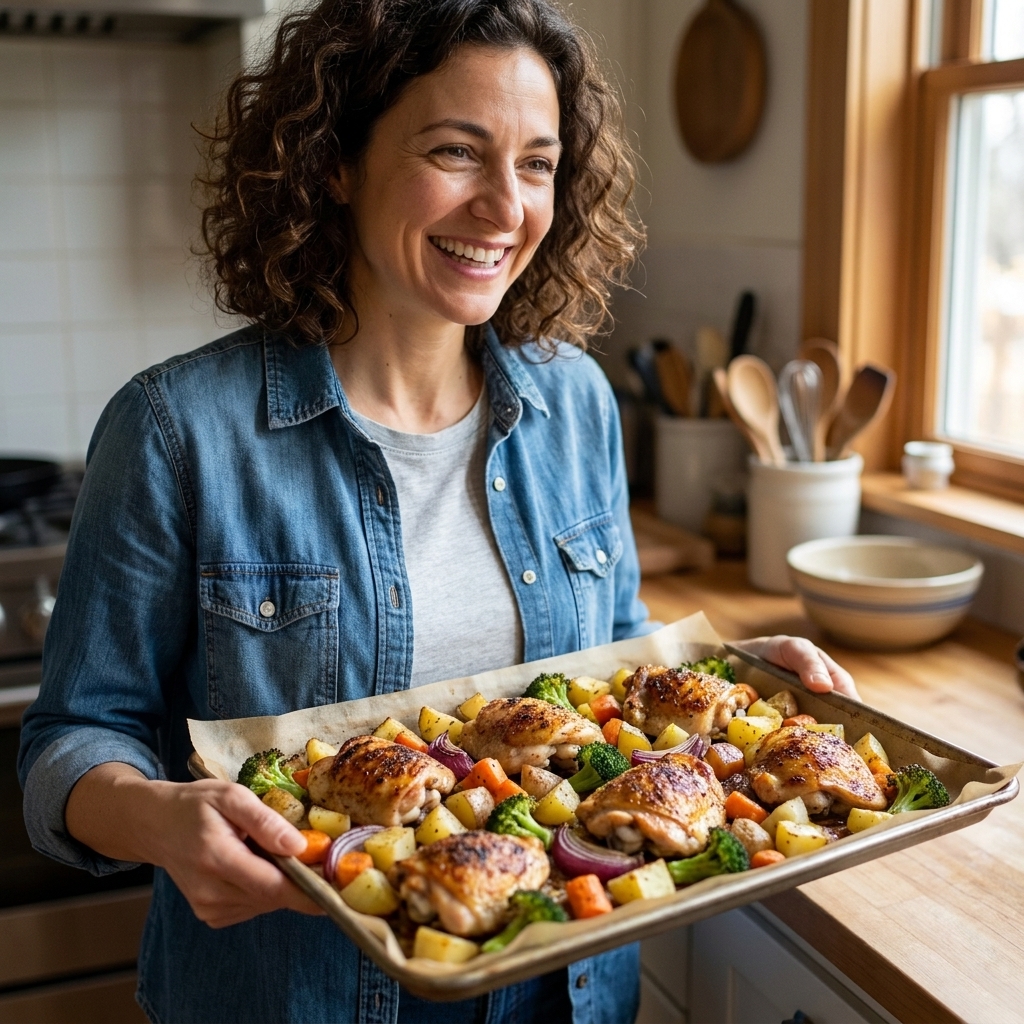
Sunday night, I pull a gorgeous sheet pan of roasted vegetables out of the oven. The edges are browned, the kitchen smells like garlic and cumin, and I feel like I have my life together. Then Wednesday hits, I open the container, and suddenly my once-crisp broccoli is… damp. My peppers are slumped. There is a mysterious puddle. If you have ever stared into that sad little pool of veggie water and wondered what you did wrong, you are not alone.
The good news is that soggy meal-prep vegetables are usually not about your skills. It is about moisture management and a few tiny choices that add up. Here is the Sunday troubleshooting guide I wish I had back in my project manager, takeout-every-night era.
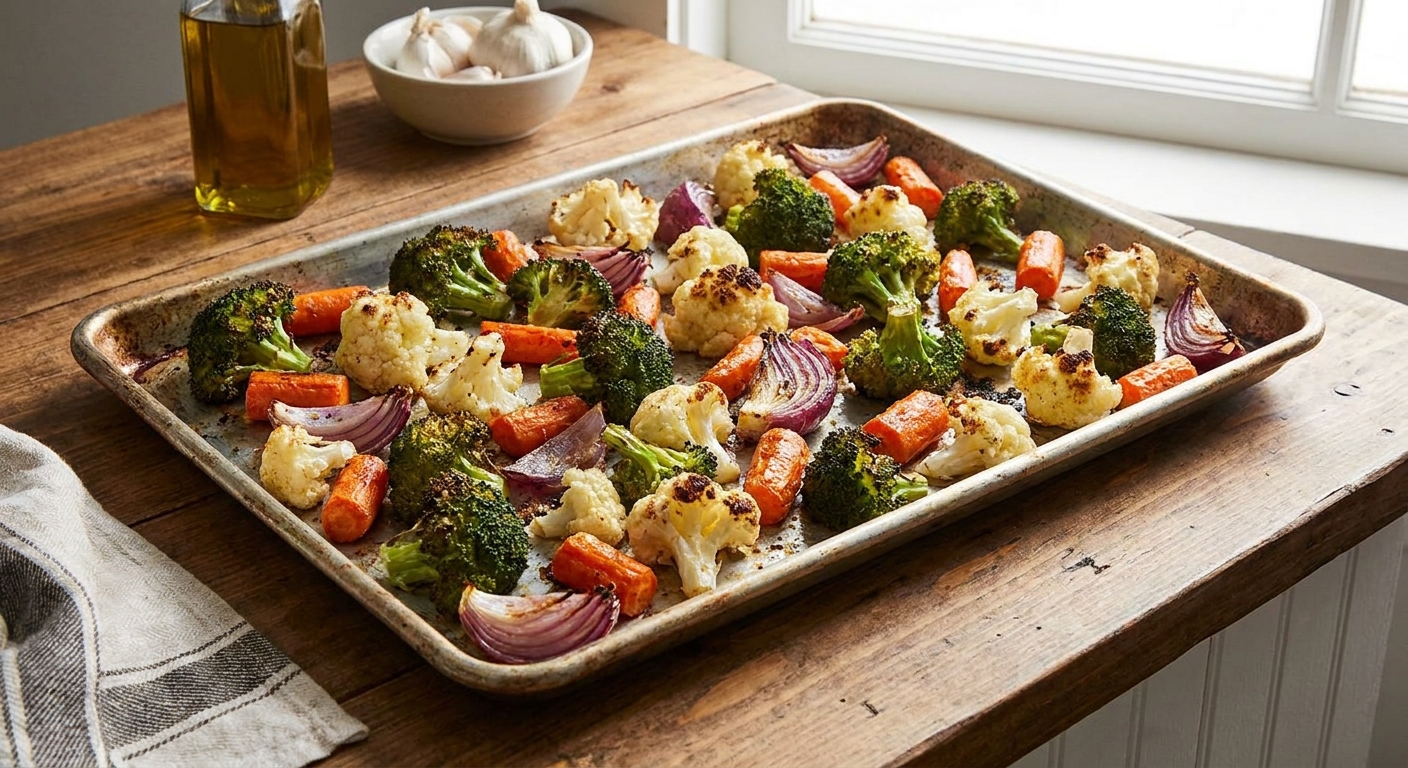
The real reason roasted veggies go soggy
Roasting is basically a tug-of-war between two things:
- Water leaving the vegetables as steam
- Heat browning the surface once that moisture has cooked off
If steam cannot escape, or if too much water is present to begin with, your vegetables cook more like they are being steamed. They can still taste good, but the texture shifts from firm and browned to soft and wet. Storage can make this worse, because trapped steam turns into condensation, which turns into puddles.
Also, a quick reality check: some vegetables are simply high-water by nature (I am looking at you, zucchini). Even when you roast them well, they tend to soften more by day three or four.
4 common culprits
1) The vegetables went onto the pan wet
If you rinse broccoli, zucchini, mushrooms, or bell peppers and then toss them straight with oil, that surface water has to go somewhere. In a hot oven it becomes steam, and steam is the enemy of crisp edges.
2) The pan was crowded
When vegetables are packed tightly, their moisture has nowhere to evaporate. Instead of roasting, they create a humid little environment and soften each other. Crowding is one of the most common reasons a pan looks like it roasted but eats like it steamed.
3) The oven was too cool (or the pan never got truly hot)
Lower temps can absolutely cook vegetables through, but they do not drive off moisture quickly enough to build that dry, browned exterior. A too-cool oven can also happen when we load multiple pans at once or keep opening the door to check.
4) They were packed while still steaming
This is the classic meal-prep trap. You roast perfectly, then you put hot vegetables into a container and close the lid. The steam hits the cool plastic or glass, condenses, and rains right back down onto your vegetables. By the next day, they are sitting in their own condensation.
8 fixes that work
1) Dry your vegetables like you mean it
After rinsing, give vegetables a thorough towel-dry. For extra wet produce (mushrooms, zucchini, eggplant), I blot twice: once right after washing and again right before seasoning.
- Fast method: Spread on a clean towel or paper towels, pat dry, then transfer to a bowl.
- Bonus tip: If you cut vegetables and they release juices (hello tomatoes or zucchini), let them sit on a towel while the oven preheats.
2) Cut pieces to a similar size
If half your broccoli is tiny and the other half is a tree, the small pieces overcook first and go soft while you wait for the big pieces to finish. Aim for consistent bite-size chunks so everything browns and holds texture more evenly in the fridge.
3) Leave space on the pan
You want a single layer with a little breathing room so steam can escape. If you are making a big batch, use two pans. I know it is annoying. It is also the difference between roasted and soggy.
- Aim for vegetables not touching, or just barely touching.
- Use a large, rimmed sheet pan so heat circulates.
4) Use enough oil (but not a ton)
Oil helps with browning and keeps vegetables from drying out into a sad, chewy situation. But if everything is heavily slicked, you can end up with more pooling in the container later. I aim for a light, even coat so the vegetables look glossy, not drenched.
5) Roast hot and uncovered
For most mixed vegetables, I like 425°F. For sturdier veg like carrots, Brussels sprouts, and cauliflower, 425 to 450°F works well if your oven runs steady.
Also make sure you are actually roasting, not baking under cover. No foil tent. No lid. The goal is evaporation.
6) Vent first, then seal
These are two different steps that solve two different problems. First you want steam to escape. Then you want the fridge to do its job.
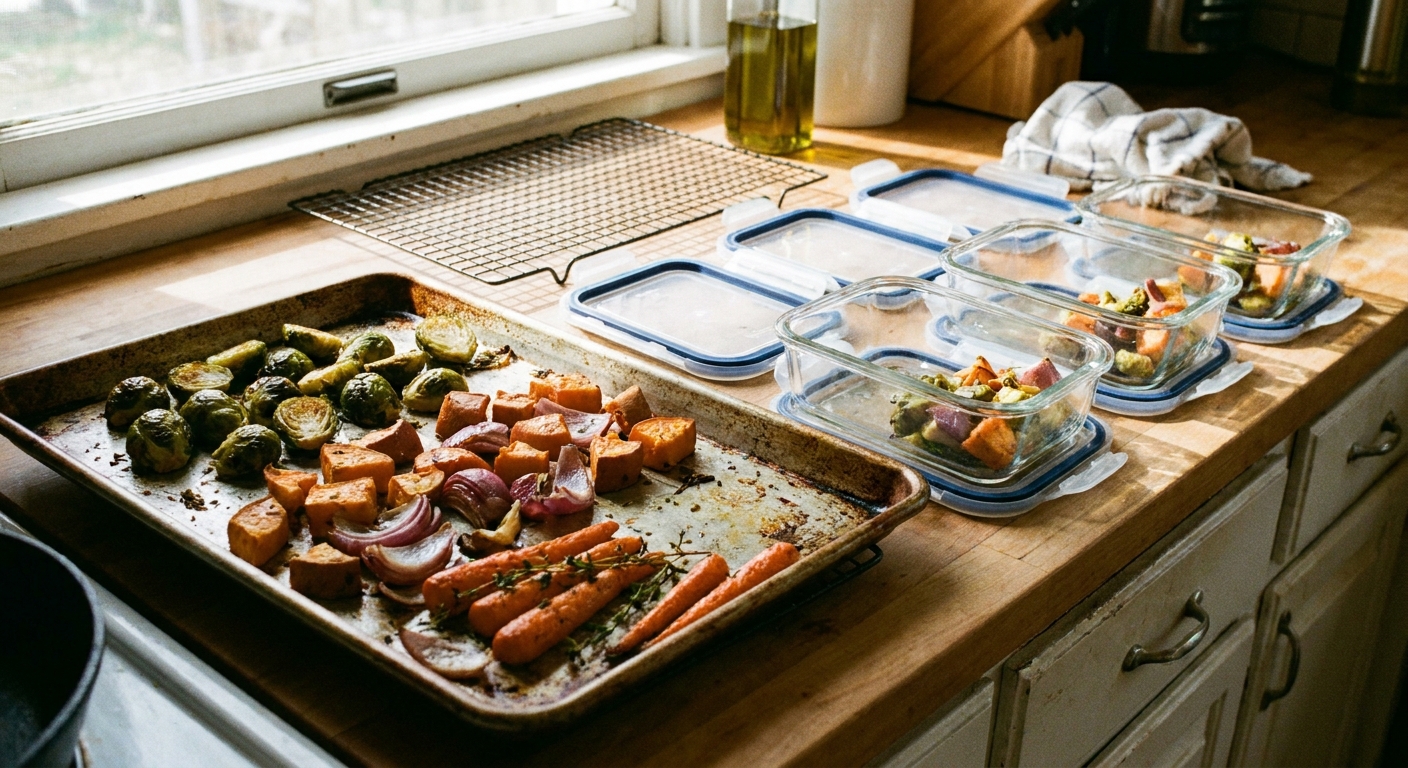
- Right after roasting: Let vegetables cool on the pan so steam can dissipate.
- When portioning: If they are still slightly warm, set lids on at an angle or leave a small vent for a short window so condensation does not build up inside the container.
7) Cool quickly and refrigerate promptly
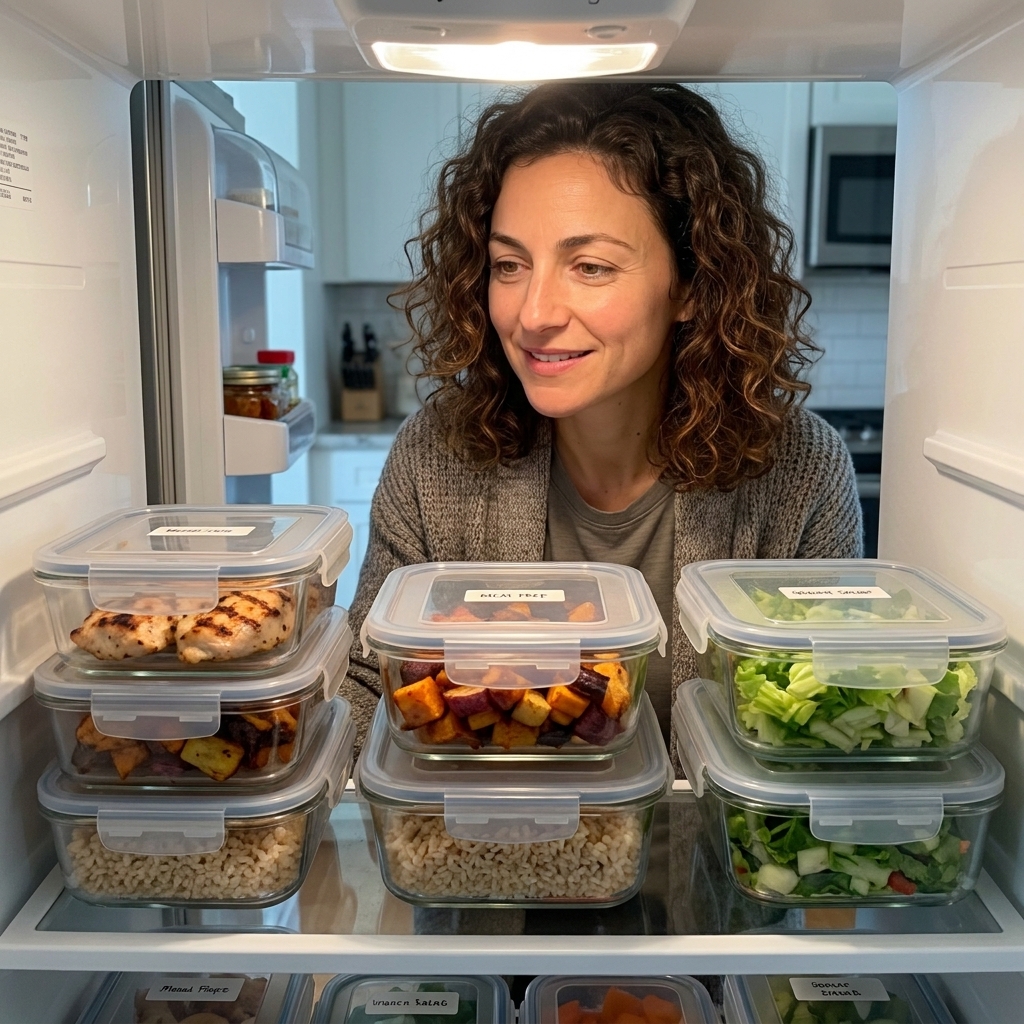
For texture, you want the steam gone before you fully seal things up. For safety, you also do not want cooked food hanging out at room temperature for too long. My rule of thumb is to spread the vegetables out and cool them until they stop steaming and feel warm, not hot (often about 15 to 30 minutes), then refrigerate. Do not leave them out for more than 2 hours total, and cut that time shorter if your kitchen is very warm.
- My Sunday flow: Roast pan #1, spread it out to cool, roast pan #2, then portion once everything has stopped steaming.
- If your kitchen is warm: Place the pan on a cooling rack so air can circulate underneath.
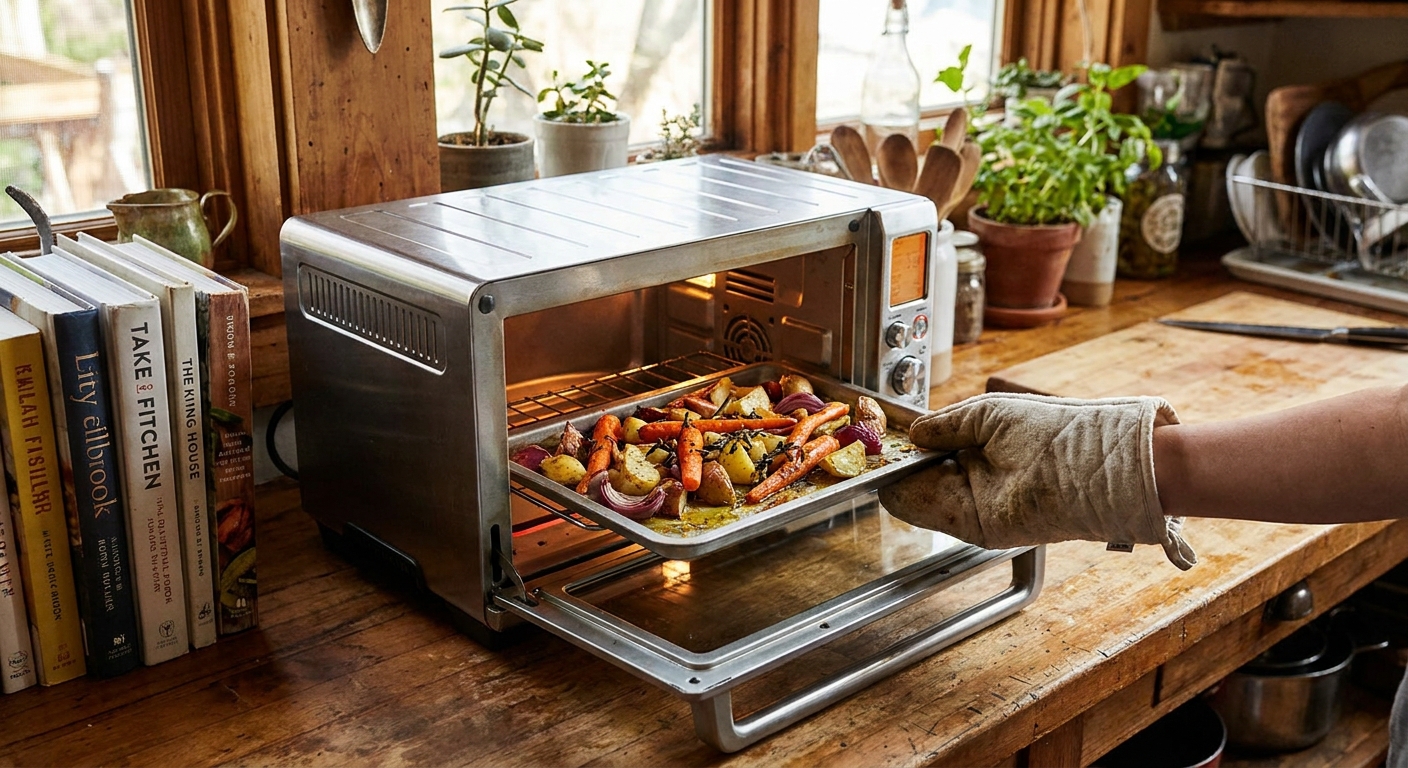
8) Reheat uncovered
Microwaves are convenient, but they heat water fast and create a lot of steam. If texture matters, reheat roasted vegetables uncovered whenever possible:
- Best: A hot skillet with a little oil, 3 to 6 minutes, letting them sit to re-crisp.
- Great: Toaster oven or oven at 425°F for 6 to 10 minutes on a sheet pan.
- If you must microwave: Use a lower power level and leave the lid vented. Then finish 1 to 2 minutes in a skillet if you can.
My Sunday checklist
If your vegetables went soggy last week, run this quick check before your next batch:
- Wet? Dry better next time.
- Uneven pieces? Cut to a similar size.
- Crowded? Use two pans.
- Too cool? Roast at 425°F and preheat fully.
- Stored hot? Cool until steam is gone, then refrigerate and seal.
- Reheated covered? Reheat uncovered and use dry heat when you can.
And one gentle reminder from someone who has burned out on perfectionism: even “imperfect” roasted vegetables are still vegetables. The goal is not flawless crispness every time. The goal is making weeknights easier and your plate more nourishing without adding stress.
Best veggies for meal prep
Usually stay firmer
- Brussels sprouts
- Cauliflower
- Broccoli (if well-roasted and not crowded)
- Carrots
- Green beans (roast hot, do not overcook)
- Red onion (softens, but does not usually get watery)
More likely to soften or leak water
- Zucchini and summer squash
- Mushrooms
- Eggplant
- Cherry tomatoes
If you love the more delicate ones, you do not have to avoid them. Just roast them on their own pan, give them extra space, and expect a softer texture by day three or four. Sometimes I plan those for earlier-in-the-week meals and save the sturdier veg for later.
FAQ
Is it safe to cool roasted vegetables on the counter?
Letting vegetables cool briefly so they stop steaming is a common home-cooking step, and it helps prevent condensation in storage. The key is time. Spread them out to cool for about 15 to 30 minutes, then refrigerate. As a general food-safety rule, do not leave cooked food at room temperature for more than 2 hours total (less if your kitchen is hot).
Should I store roasted vegetables with a paper towel?
You can, especially for extra moisture-prone vegetables. A small piece of paper towel placed at the top can absorb some condensation. It is a helpful backup, but it does not replace the big wins: space on the pan, high heat, and cooling and venting before sealing.
Why are my roasted vegetables watery even at 425°F?
The most common reasons are crowding, starting with wet vegetables, or using a pan that is overloaded and cools the oven down when it goes in. Try using two pans and placing them in the upper and lower thirds of the oven, rotating once halfway through.