A step-by-step, no-perfection-needed guide to planning, shopping, prepping, and storing healthy meals for the week, even if you only have 60 to 90 minutes.
Platepathy
Food Storage and Safety for Weekly Meal Prep
How long meal prep lasts in the fridge and freezer, the safest cooling and storage methods, and the best ways to reheat without drying food out or risking foodborne illness.

Elena Rossi
Elena Rossi is a Registered Dietitian and meal prep expert who believes that healthy eating shouldn't feel like a second job. Through Platepathy, she translates complex nutrition science into approachable, delicious meal plans designed for real, busy lives.
Published October 18, 2026
Last updated October 18, 2026
Meal prep is supposed to make your week easier, not turn your refrigerator into a guessing game of “Is this still okay?” I have been there, standing in front of a container of chicken and rice on Thursday night, trying to remember if I cooked it on Sunday or Monday.
This guide is your go-to reference for how long common meal prep foods last in the fridge and freezer, plus the storage and reheating habits that keep food both safe and genuinely enjoyable to eat. I am a big believer in plate empathy, which includes not punishing yourself for being human. The goal is simple: fewer decisions, less waste, and more confidence.
Your safety baseline
1) Time and temperature do the heavy lifting
Most food safety comes down to controlling temperature and not letting prepared foods hang out too long before chilling.
- Fridge temperature: Keep it at 40°F (4°C) or below.
- Freezer temperature: Keep it at 0°F (-18°C).
- The 2-hour rule: Refrigerate perishable cooked foods within 2 hours of cooking, or within 1 hour if the room is very warm (above 90°F or 32°C).
2) Use shallow containers
Hot food in a deep container cools slowly, which is exactly what we do not want. Portion into shallow containers so it cools quickly and evenly. If you cooked a big pot of chili or soup, split it into multiple containers before refrigerating.
3) Labeling is self-care
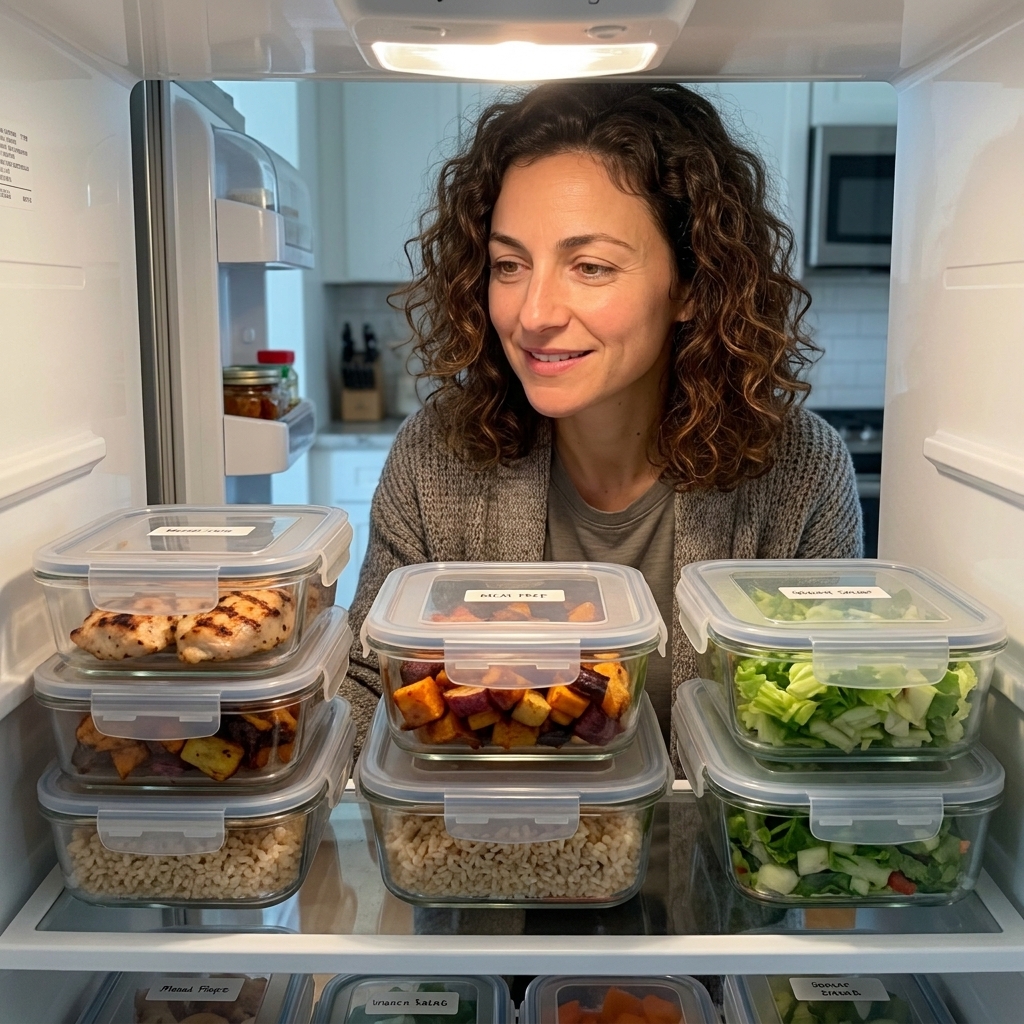
If you do nothing else, do this: add a simple label with the cook date. Masking tape and a marker work. Your Thursday-night self will thank you.
4) When in doubt, throw it out
Food can look and smell fine and still be unsafe. If you are beyond the recommended storage time, it is not a moral failure to toss it. It is a smart call.
How long meal prep lasts
These timelines assume your food was cooked safely, cooled promptly, and stored in a fridge at 40°F (4°C) or below. USDA guidance for many leftovers lands in the 3 to 4 day range. If any of those steps were a little messy, use the shorter end of the range.
Cooked proteins
- Chicken, turkey (cooked pieces, shredded, meatballs): 3 to 4 days in the fridge; best quality within about 2 to 6 months in the freezer.
- Ground meat (beef, pork, turkey), cooked: 3 to 4 days in the fridge; best quality within about 2 to 3 months in the freezer.
- Steak, chops, roasted pork, cooked: 3 to 4 days in the fridge; best quality within about 2 to 3 months in the freezer.
- Fish and seafood (cooked): best within 1 to 2 days for quality; up to 3 to 4 days in the fridge if cooled promptly and stored cold; best quality within about 2 to 3 months in the freezer.
- Hard-boiled eggs (in shell): up to 7 days in the fridge; not ideal to freeze whole.
- Egg dishes (frittata, egg muffins, scrambled eggs): 3 to 4 days in the fridge; best quality within about 2 to 3 months in the freezer.
- Tofu, cooked: 3 to 4 days in the fridge; best quality within about 2 to 3 months in the freezer.
- Beans and lentils (cooked): 3 to 5 days in the fridge; best quality within about 2 to 6 months in the freezer.
Cooked grains and starchy sides
- Rice (white or brown), cooked: 3 to 4 days in the fridge; best quality within about 1 to 2 months in the freezer.
- Quinoa, farro, barley, couscous, oats (cooked): 3 to 5 days in the fridge; best quality within about 1 to 2 months in the freezer.
- Pasta (plain), cooked: 3 to 5 days in the fridge; best quality within about 1 to 2 months in the freezer.
- Potatoes (roasted, mashed, baked), cooked: 3 to 4 days in the fridge; best quality within about 1 to 2 months in the freezer, but texture changes are common.
Vegetables and fruit
- Roasted or sautéed vegetables: 3 to 5 days in the fridge; best quality within about 2 to 3 months in the freezer.
- Steamed vegetables: 3 to 5 days in the fridge; best quality within about 2 to 3 months in the freezer.
- Cut raw vegetables (carrots, cucumbers, peppers): about 3 to 5 days in the fridge (drier storage helps).
- Leafy greens (washed and dried): about 3 to 5 days in the fridge, stored with a paper towel to absorb moisture.
- Cut fruit: about 3 to 4 days in the fridge.
Soups, stews, casseroles, and mixed meals
- Soups and stews: 3 to 4 days in the fridge; best quality within about 2 to 3 months in the freezer.
- Casseroles and baked pasta: 3 to 4 days in the fridge; best quality within about 2 to 3 months in the freezer.
- Stir-fries and skillet meals: 3 to 4 days in the fridge; best quality within about 2 to 3 months in the freezer.
Sauces, dressings, and condiments (homemade)
- Vinaigrettes (oil and vinegar based): usually 1 to 2 weeks in the fridge.
- Yogurt-based dressings or dips: about 3 to 5 days in the fridge.
- Tomato sauce (cooked): 3 to 4 days in the fridge; best quality within about 2 to 3 months in the freezer.
- Pesto: about 3 to 5 days in the fridge; best quality within about 3 to 6 months in the freezer.
Quick note on freezer timelines: Frozen food stays safe much longer than it stays tasty. The freezer is a quality game. If something comes out a little dry or bland after a few months, it is not “bad,” it just needs a sauce, a squeeze of lemon, or a quick broth splash to bring it back to life.
What to store where
Fridge zones matter
- Back of the fridge: typically the coldest and most stable. Best for meal prep containers, cooked proteins, dairy.
- Door: warmest. Best for condiments, not milk or meal prep.
- Bottom shelf: a good place for raw meats in leak-proof packaging if you have them, so drips cannot contaminate other foods.
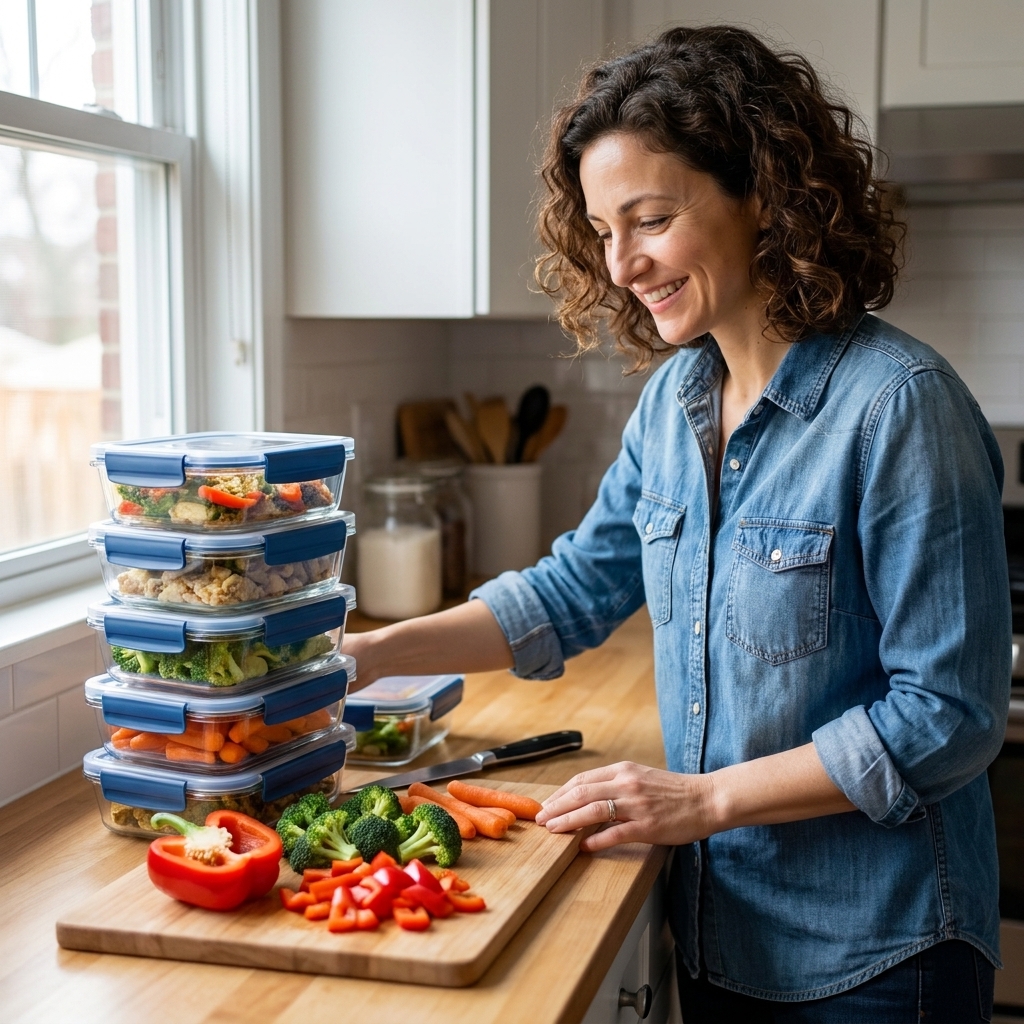
Best meal prep containers
- Glass containers: excellent for odor resistance and reheating. Great all-purpose choice.
- BPA-free plastic containers: lightweight and budget friendly. Avoid overheating and replace if scratched.
- Wide-mouth jars: perfect for overnight oats, salads, chia pudding, and soups (leave headspace if freezing).
- Silicone freezer bags: great for marinated proteins, chopped veggies, smoothie packs, and anything you want to store flat.
Freezer-friendly meal prep
How to freeze without freezer burn
- Cool first, then freeze: Freeze food once it is no longer steaming hot. Just do not let it sit out beyond the 2-hour window. Hot food can raise freezer temperature and create ice crystals.
- Portion like your future self eats: Freeze in single servings or family-size portions you will realistically use.
- Remove air: Air is what causes freezer burn. Press out extra air in bags and use tight lids.
- Freeze flat when possible: Soups, sauces, shredded meat, and cooked grains freeze quickly and stack neatly when stored flat in freezer bags.
- Label with name and date: Also add reheating notes if you are feeling extra kind.
Foods that freeze well
- Soups and stews (especially bean, lentil, and tomato-based)
- Chili
- Cooked shredded chicken or pulled pork
- Meatballs
- Cooked rice and grains (portion and freeze flat)
- Roasted vegetables (some softening is normal)
- Breakfast sandwiches and burritos
Foods that do not freeze well
- Watery raw vegetables: cucumbers, lettuce, raw tomatoes (texture gets mushy).
- Creamy sauces: some separate when thawed (you can often whisk back together, but texture may change).
- Mayonnaise-based salads: generally not great after freezing.
Safe thawing
I get it. You forgot to thaw the chicken. The countertop is tempting. It is also where bacteria can multiply fastest while the center is still frozen.
Use one of these
- Fridge thaw: Best for quality and safety. Plan 12 to 24 hours depending on portion size.
- Cold water thaw: Submerge in a leak-proof bag in cold water, change water every 30 minutes. Cook right away.
- Microwave thaw: Fine in a pinch. Cook immediately after thawing since parts can warm up into the danger zone.
Reheating without drying it out
Food safety is the priority, but enjoyment matters too. If reheated chicken is consistently rubbery in your house, meal prep will start to feel like a punishment. Let’s not do that.
The temperature rule
For a simple, safe household rule, reheat leftovers to 165°F (74°C) internal temperature, especially mixed dishes and proteins. A small food thermometer removes all the guesswork.
Microwave tips
- Add moisture: A splash of broth or water helps rice, grains, and shredded meat.
- Cover loosely: Traps steam, prevents splatters, heats more evenly.
- Stir halfway: Especially for soups, pasta, and stir-fries.
- Use shorter bursts: More even heating, less overcooked edges.
Oven or toaster oven tips
- Roasted vegetables: Reheat at 400°F (205°C) until hot to revive crisp edges.
- Casseroles: Cover with foil first, then uncover at the end for browning.
- Chicken thighs and meatballs: A little sauce on top keeps them juicy.
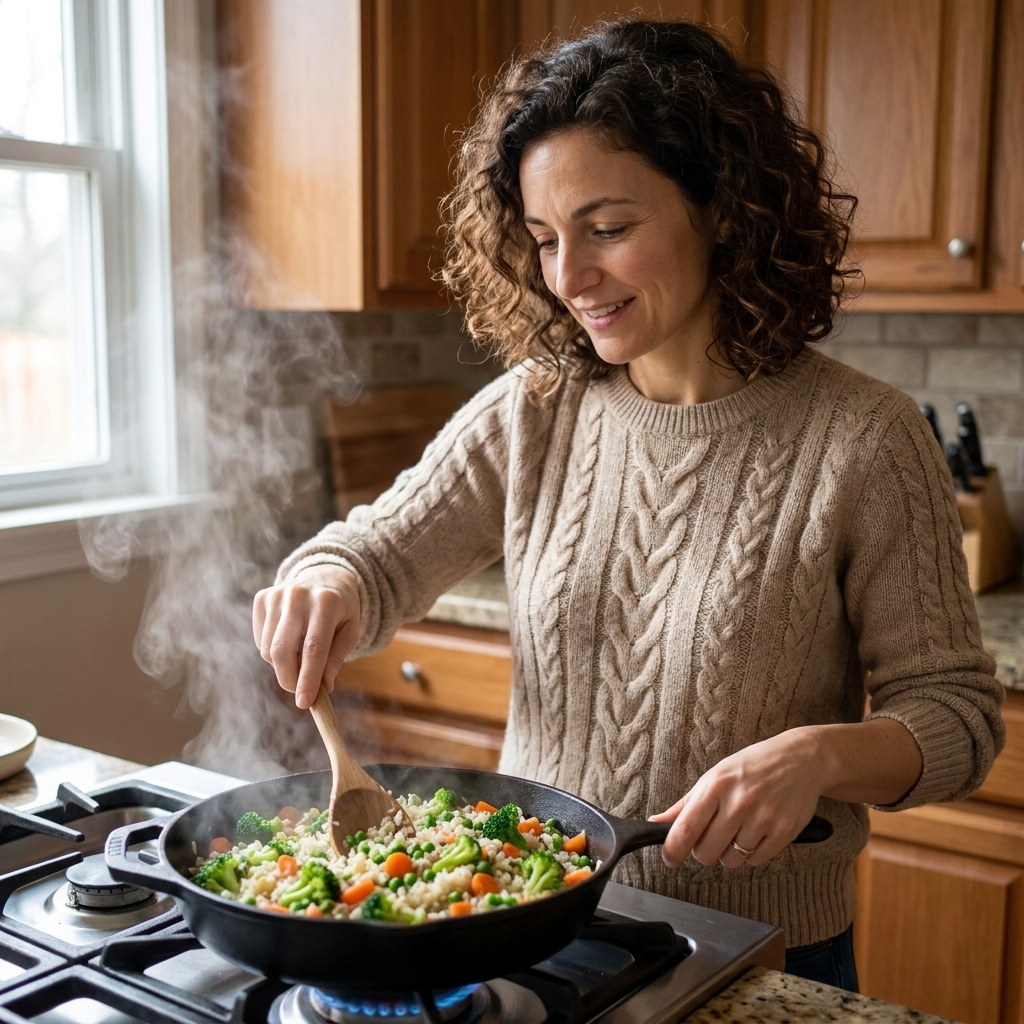
Stovetop tips
- Soups and stews: Gentle simmer, stir often.
- Rice and grains: Add a tablespoon or two of water, cover, warm on low.
- Pasta: Reheat in sauce on low with a splash of water, or dunk plain pasta briefly in simmering water.
Common worry foods
Cooked rice
Rice is totally meal-prepable, it just deserves respect. Cool it quickly, refrigerate promptly, and keep it to 3 to 4 days in the fridge. When reheating, make sure it is steaming hot throughout, and consider adding a splash of water and covering to create steam.
Chicken
Cooked chicken keeps 3 to 4 days in the fridge. If you are prepping on Sunday for a full workweek, a plate-empathy move is to freeze half right away and thaw midweek. For juicier reheating, add a spoonful of broth or sauce before microwaving.
Seafood
Cooked seafood is one of those foods that can be safe for a few days but not always enjoyable for that long. Aim to eat it within 1 to 2 days for best quality, and treat 3 to 4 days as the outer limit when it has been cooled promptly and stored cold. If you want fish in your prep rotation, consider cooking it for the first half of the week and freezing other proteins for later days.
Meal prep salads
Salads can last several days if you build them with strategy:
- Keep dressing separate.
- Put wet ingredients (tomatoes, cucumbers, pickles) away from greens or store separately.
- Add a paper towel in the container with greens to absorb moisture.
- Use hearty greens like romaine, kale, or cabbage blends for longer life.
How to tell food is bad
Some signs are obvious. Others are sneaky. If any of these are true, do not taste-test. Toss it.
- Off smells: sour, rancid, “funky,” or just wrong for the food.
- Texture changes: slimy surface on proteins or cooked vegetables.
- Visible mold: even a small patch means the food is done.
- Unexpected bubbling or fizzing: especially in sauces or cooked grains.
- Storage time is exceeded: if you are past the guideline and unsure about handling, it is not worth the risk.
Plate empathy reminder: Throwing away questionable leftovers is not wasteful if it keeps you healthy. The most “efficient” meal prep is the one you can eat confidently.
If you are pregnant, immunocompromised, or cooking for someone who is, it is reasonable to use shorter storage windows and skip anything that feels even slightly questionable.
A simple weekly plan
If you like a repeatable system, here is the one I use when I am prepping for a busy week with kids, meetings, and exactly zero interest in nightly kitchen marathons.
Sunday cook, then split
- Fridge (Days 1 to 3): 2 to 3 days of meals and proteins.
- Freezer (Days 4 to 6): Freeze remaining portions immediately.
- Midweek thaw: Move a frozen portion to the fridge on Tuesday or Wednesday to thaw for later in the week.
Keep components flexible
Instead of five identical bowls, prep mix-and-match components:
- Protein (chicken, tofu, beans)
- Grain or starch (rice, quinoa, potatoes)
- Veggie (roasted tray or quick sauté)
- Sauce or topping (pesto, salsa, yogurt sauce, lemon-tahini)
This keeps meals interesting and also helps with food safety since sauces often reheat better when added after.
FAQ
Can I meal prep for 7 days?
From a safety and quality standpoint, I do not recommend storing all 7 days in the fridge. A better approach is 3 to 4 days refrigerated, then freeze the rest and thaw midweek.
Is it safe to reheat food more than once?
It is safest to reheat only what you plan to eat and keep the rest cold. Repeated heating and cooling increases the time food spends in the temperature danger zone. Portioning helps a lot here.
Do I need to let food cool before putting it in the fridge?
You do not need to leave food out for a long time. The goal is to get it chilled within 2 hours. Portion into shallow containers so it cools quickly, then refrigerate. If it is still very hot, you can let it sit briefly on the counter while you portion, but do not forget about it.
What is the best way to keep meal prep from tasting like leftovers?
Under-seasoning and overcooking during reheating are the usual culprits. Season well when cooking, store sauces separately, and reheat gently with a little moisture. A squeeze of citrus, fresh herbs, or a crunchy topping added at the end can make a prepped meal feel freshly made.
Cheat sheet
If you only screenshot one part of this guide, make it this:
- Most cooked meal prep: 3 to 4 days in the fridge
- Cooked beans and many grains: up to 5 days in the fridge
- Freeze later-week meals: best quality within 2 to 3 months
- Reheat to: 165°F (74°C)
- Cool and chill within: 2 hours
Armed with these guidelines, you can build a storage plan that fits your routine and your fridge space, without the Thursday-night guessing game.