A practical, kind-to-yourself comparison of white vs. brown rice for meal prep: cook time, fridge life, reheating, fiber in plain language, and which is frie...
Platepathy
Why Meal-Prep Rice Turns Mushy (and How to Keep It Fluffy)
Batch-cooked rice shouldn’t turn gummy by Tuesday. Learn why it gets mushy in the fridge and a repeatable method to keep grains fluffy for bowls, stir-fries, and quick dinners.

Elena Rossi
Elena Rossi writes Platepathy's meal planning guides, translating nutrition research into approachable, delicious meal plans for real, busy lives.
Published November 16, 2026
Back in my project manager days, I used to cook a heroic Sunday pot of rice, shove it into the fridge, and feel very virtuous. Then Tuesday would roll around and my “meal prep” turned into a solid, sticky rice brick that glued itself to the pan and made my stir-fry weirdly pasty.
The good news is: mushy meal-prep rice is usually not about your skills. It is usually about a few tiny, fixable moments in the cooking and cooling process. Let’s walk through what is actually happening, and then I will give you a repeatable Sunday method that keeps grains separate for bowls and stir-fries all week.
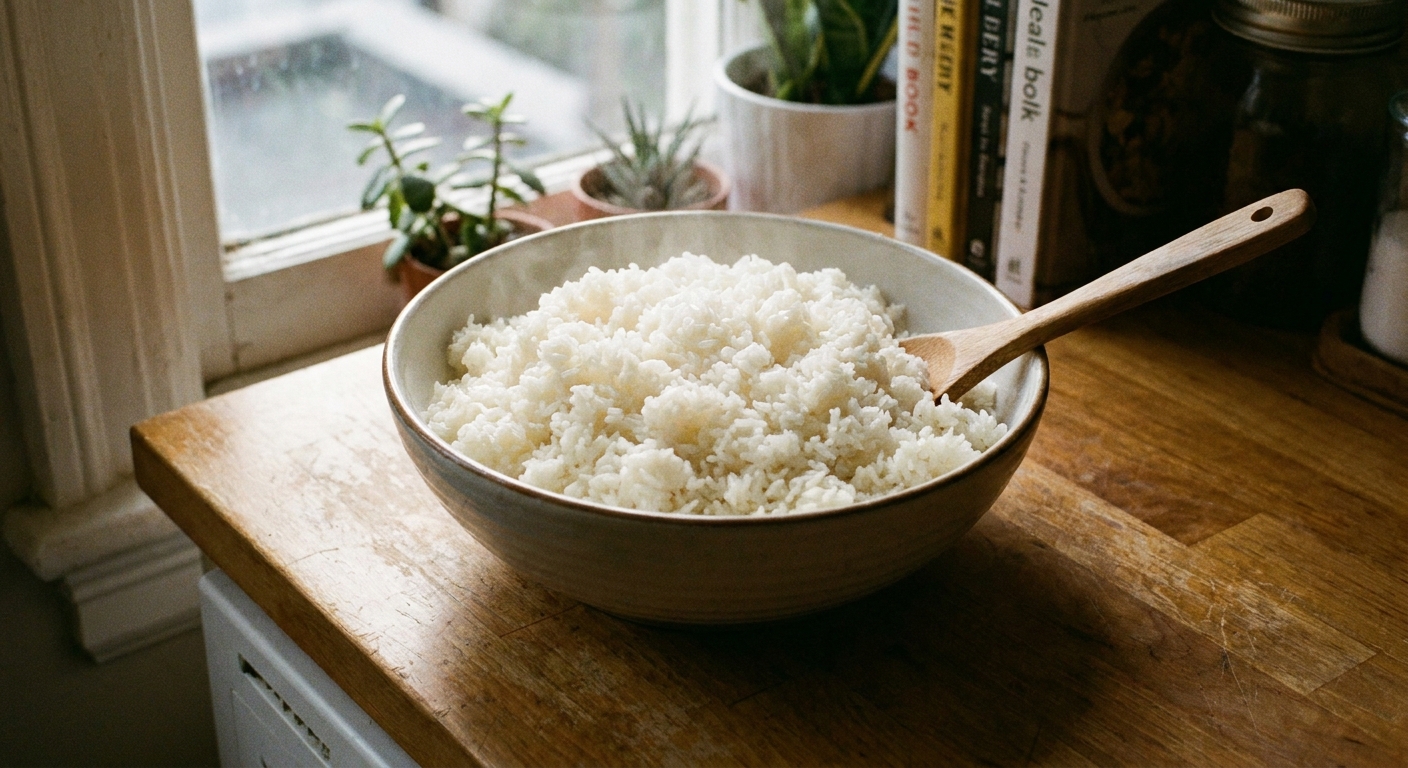
Why rice gets gummy after it sits
Rice texture changes in the fridge for two main reasons:
- Surface starch: Extra starch clings to the outside of the grains. When it hydrates and gets jostled, it acts like glue.
- Steam and condensation: If rice is stored while hot, trapped steam turns into water droplets. That added moisture gets absorbed and softens the grains, especially on the bottom and sides of the container.
Chilling also firms rice up through a normal process called starch retrogradation, which is why cold rice feels harder. But “hard” is different from “mushy.” Mushy is usually a moisture and starch management issue, sometimes helped along by overcooking.
Common causes of mushy meal-prep rice
1) Too much water for the way you cook
Rice-to-water ratios are not one-size-fits-all. The right amount depends on the type of rice, whether you rinse, how tight your lid is, and how much steam your pot loses.
If your rice looks a little wet at the end of cooking, or if the bottom layer is noticeably softer, you likely have excess water or too-low heat that never fully evaporates.
2) Overcooking (time or heat)
Even with the right ratio, rice that simmers too long can blow past tender and into soft, collapsed grains. This can happen if your burner runs hot even on “low,” your pot is thin, or you keep the lid off long enough that you compensate with extra cook time.
3) Skipping the rinse (or rinsing too lightly)
Unrinsed rice carries a coating of loose starch from milling and handling. That starch thickens the cooking water, then sets up as the rice cools, encouraging clumps and a gummy feel.
Rinsing is not diet culture. It is just texture insurance.
4) Stirring while it cooks
Once rice starts simmering, stirring scrapes starch off the grains and breaks the surface. More starch in the pot equals more stickiness, and broken grains turn creamy fast.
Think of rice like a calm meeting. Set the agenda, cover it, and do not keep interrupting.
5) Boxing it up while it is still hot
This is the biggest meal-prep culprit. Hot rice in a sealed container steams itself. The lid traps that moisture, and the rice reabsorbs it as it cools.
Even if your cooking ratio was perfect, a steamy container can undo it overnight.
A repeatable Sunday method
This method is designed for “one big pot on Sunday” people. It is simple, forgiving, and works beautifully for rice bowls and stir-fries where you want distinct grains.
Step 1: Pick the right rice
- Long-grain white rice (jasmine, basmati): Naturally less clingy and easiest to keep separate.
- Medium-grain (like sushi rice): More naturally sticky. It can still meal-prep well, but it will clump more by design.
- Short-grain and glutinous (sweet) rice: Meant to be sticky. If you want fluffy, separate grains, this is the wrong tool for the job.
- Brown rice: Often less gummy, but it can get dense if overcooked or if it sits wet in the container.
If your main use is stir-fries, I recommend jasmine or basmati for the most consistently fluffy results.
Step 2: Rinse like you mean it
Put rice in a bowl or fine-mesh sieve and rinse under cool water, swishing with your hand. Drain and repeat until the water goes from milky to mostly clear.
Why it works: You are removing the loose outer starch that turns into glue later.
Step 3: Use absorption cooking with a measured ratio
For rinsed long-grain white rice, start here:
- 1 cup rice + 1 1/2 cups water
- Big pinch of salt (optional but highly recommended for flavor)
How to cook it:
- Bring rice and water to a boil over medium-high heat.
- As soon as it boils, stir once (just once) to loosen anything that might be sticking to the bottom.
- Cover with a tight-fitting lid, reduce heat to low, and cook 12 minutes.
- Turn off heat and let it sit, covered, 10 minutes.
No peeking during the covered cooking and resting. Every peek releases steam and nudges you toward uneven texture.
Adjust next time: If it is slightly wet, reduce the water by 1 to 2 tablespoons per cup of rice. If it is a little firm, add 1 to 2 tablespoons. Tiny changes add up fast.
Step 4: Fluff, then vent the steam
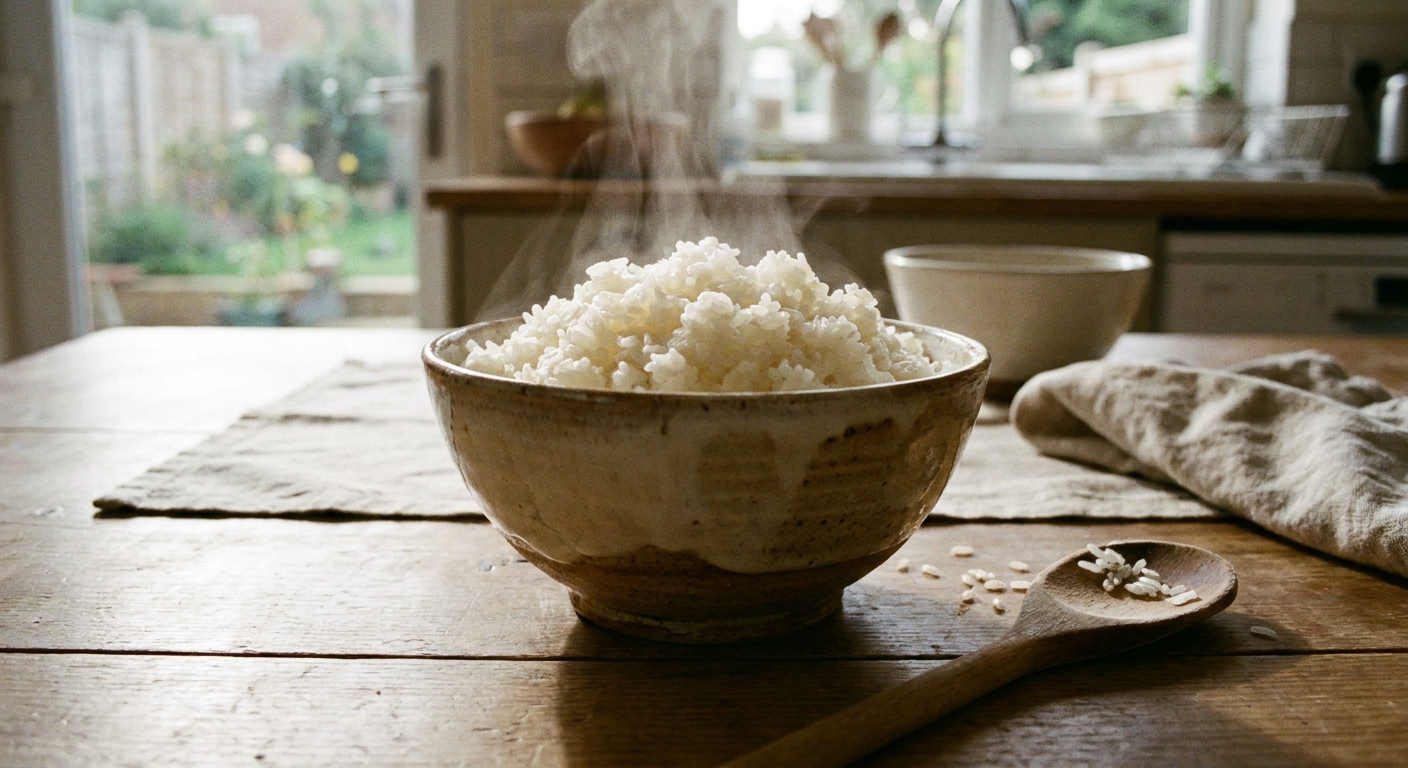
After the 10-minute rest, uncover and fluff with a fork or rice paddle. Then do something that feels small but matters a lot:
- Let it sit uncovered for 5 to 10 minutes so excess steam can escape.
Why it works: You are drying the surface slightly so grains stay separate instead of steamy-soft.
Step 5: Cool fast, store smart
For meal prep, I like to cool rice in a thin layer:
- Spread hot rice on a sheet pan or a wide shallow dish.
- Let it cool until it is no longer steaming and feels warm, not hot (usually 15 to 25 minutes).
- Portion into containers and refrigerate.
Why shallow matters: More surface area means faster cooling, which keeps rice out of the temperature “danger zone” longer than it needs to be.
Container tip: Avoid packing rice down tightly. Lightly spoon it in so it does not compress into a brick.
Fridge tip: Store rice in the coldest part of your fridge, not the door.
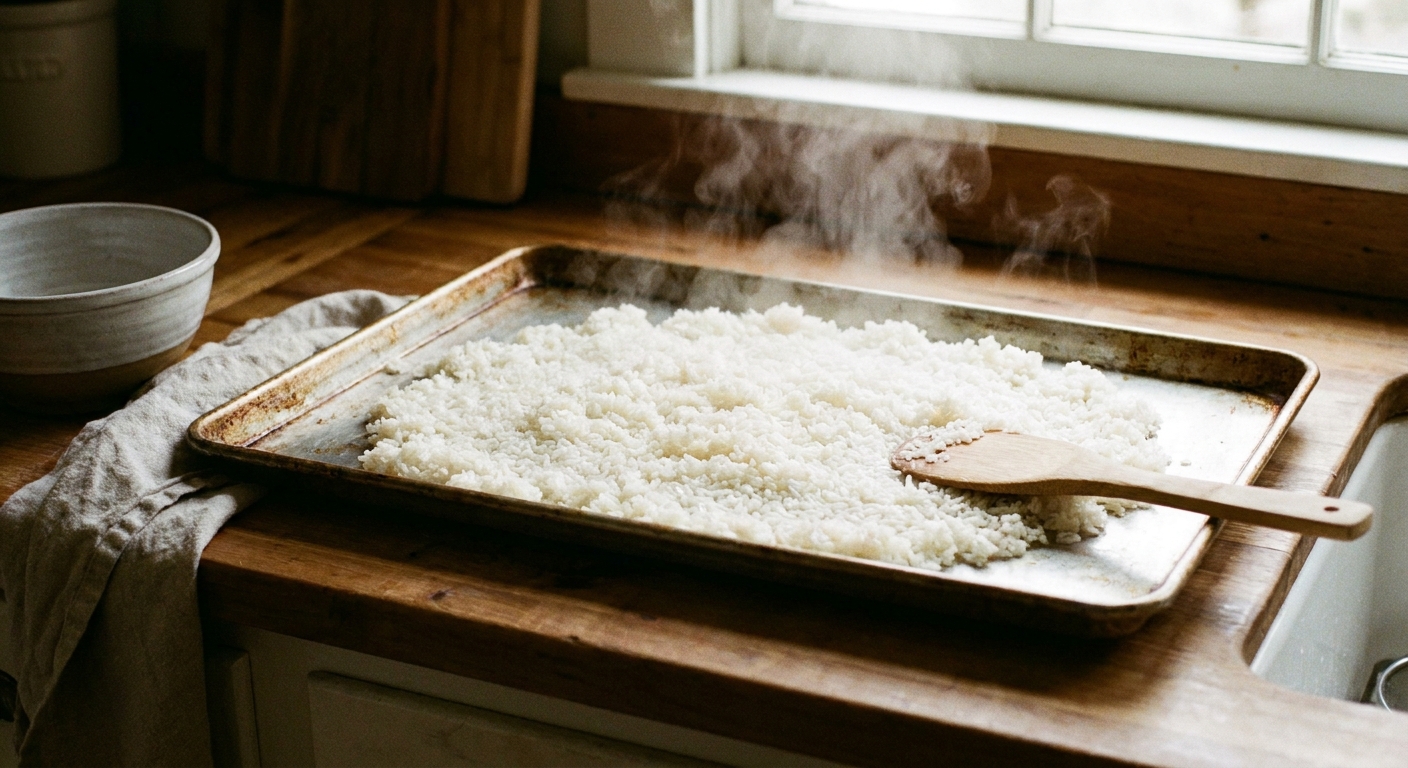
How to keep grains separate
Portioning helps
Instead of storing one huge container that gets opened, stirred, and re-steamed repeatedly, portion the rice into 3 to 5 smaller containers. Less handling means less breakage and less clumping.
Add moisture only when reheating
Rice that is stored correctly will feel firm when cold. That is normal. The mistake is adding extra water before storing. Save moisture for reheating, when you can control it portion by portion.
Plan for your use
- For bowls: You can reheat until fluffy and tender.
- For stir-fries: Slightly drier rice is actually better because it fries instead of steaming. Your well-cooled, well-rinsed meal-prep rice is ideal.
Reheating rice without drying it out
The goal is to rehydrate the starch gently without turning it soggy.
Microwave method
- Put one portion of rice in a bowl.
- Sprinkle 1 to 2 teaspoons water per cup of rice over the top.
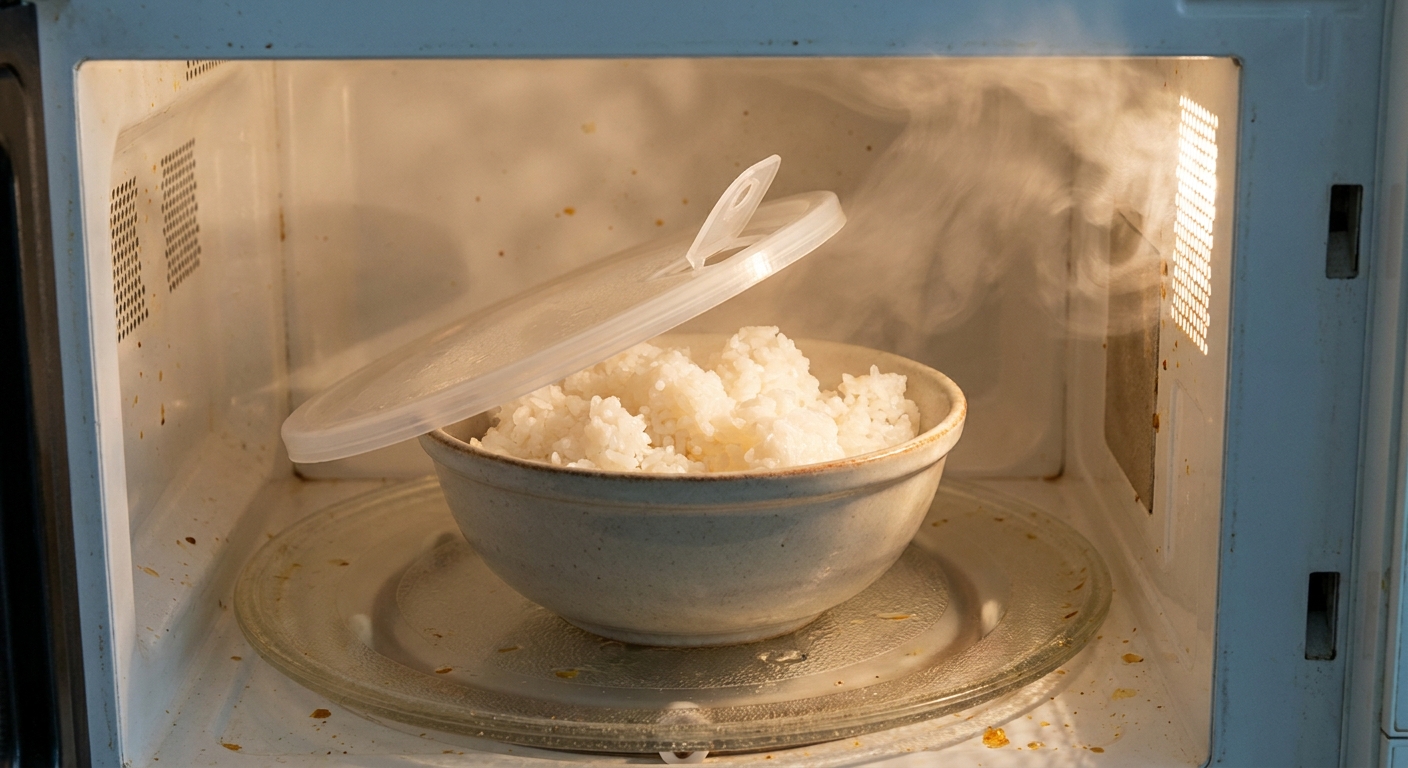
- Cover with a damp paper towel or a microwave-safe lid set slightly ajar.
- Microwave about 60 to 90 seconds in a 1000W microwave, then fluff. If needed, keep going in 15 to 20 second bursts.
Platepathy note: Plate empathy is making the best of what you have, without beating yourself up. If you hate damp paper towels, a lid that traps a little steam works just as well. You are creating a mini steam environment on purpose, but only for that portion.
Stovetop steam method
- Add rice to a small pot with 1 to 2 tablespoons water per 2 cups rice.
- Cover and warm over low heat, stirring once halfway through, until hot.
For stir-fries
If the rice is clumpy, break it up with wet fingers or a spoon before it hits the pan. Then cook over medium-high heat with enough oil and space in the pan so it fries. Crowding equals steaming, and steaming equals softness.
Quick fixes for already-mushy rice
If Sunday already happened and your rice is heading in a gummy direction, you are not doomed.
Spread and dry
Spread the rice on a sheet pan and refrigerate uncovered for 20 to 30 minutes. This helps surface moisture evaporate so it feels less wet.
Use a recipe that likes softness
- Congee-style rice porridge with broth, ginger, and a soft egg
- Rice fritters with an egg and chopped veg
- Soup thickener stirred into a brothy vegetable soup
This is plate empathy in practice. We do not waste food because it did not behave perfectly.
Food safety, calmly
Cooked rice is safe to meal prep when you cool and refrigerate it promptly.
- Cool rice in a shallow layer so it stops steaming faster.
- Refrigerate within about 1 hour if you can, and within 2 hours at the latest.
- Store cold rice in the fridge and reheat until steaming hot.
- Use within 3 to 4 days for best quality.
If rice sat out for a long time at room temperature, it is safer to toss it. Rice can harbor spores that survive cooking and can grow if cooled too slowly. Also, if rice was seriously temperature-abused, reheating may not undo the problem, so the safest move is to let it go.
Troubleshooting checklist
- My rice is wet at the end of cooking: Reduce water slightly next time (start with 1 to 2 tablespoons less per cup of rice), and make sure you are simmering on low with a tight lid.
- My rice is sticky even when freshly cooked: Rinse more thoroughly, and avoid stirring after it starts simmering.
- My rice is fluffy Sunday but mushy Monday: Cool it uncovered before sealing, portion it, and store it in the coldest part of the fridge.
- My rice is hard after chilling: Normal. Reheat with a teaspoon or two of water and a cover to steam it back to fluffy.
The bottom line
Meal-prep rice turns mushy because of extra starch and extra moisture, and sometimes plain old overcooking. Rinse to remove surface starch, use a consistent ratio, do not stir while it cooks, and cool it uncovered before you seal it up. Those steps are the difference between a Tuesday rice brick and a week of fluffy, separate grains that actually make dinner easier.