A practical, RD-written guide to storing meal prep: fridge and freezer timelines, smart container choices, cooling rules, thawing, and reheating tips that ke...
Platepathy
Why Meal-Prep Chicken Turns Out Dry (and How to Keep It Moist)
Dry meal-prep chicken is usually a doneness, sizing, salting, cooling, or reheating issue. Here’s why it happens and six practical fixes for juicy, tender chicken all week.

Elena Rossi
Elena Rossi writes Platepathy's meal planning guides, translating nutrition research into approachable, delicious meal plans for real, busy lives.
Published November 14, 2026
Sunday meal prep used to feel like my personal Groundhog Day. I would roast a family-pack of chicken breasts with the best intentions, portion them into tidy containers, and by Wednesday I was chewing through something that tasted like seasoned paper towels. If that sounds familiar, please hear this: you are not “bad at cooking.” Dry chicken is usually a systems problem, not a skill problem.
This is your Sunday troubleshooting guide: what’s actually causing meal-prep chicken to dry out, and six fixes that make a noticeable difference without adding a lot of extra work.
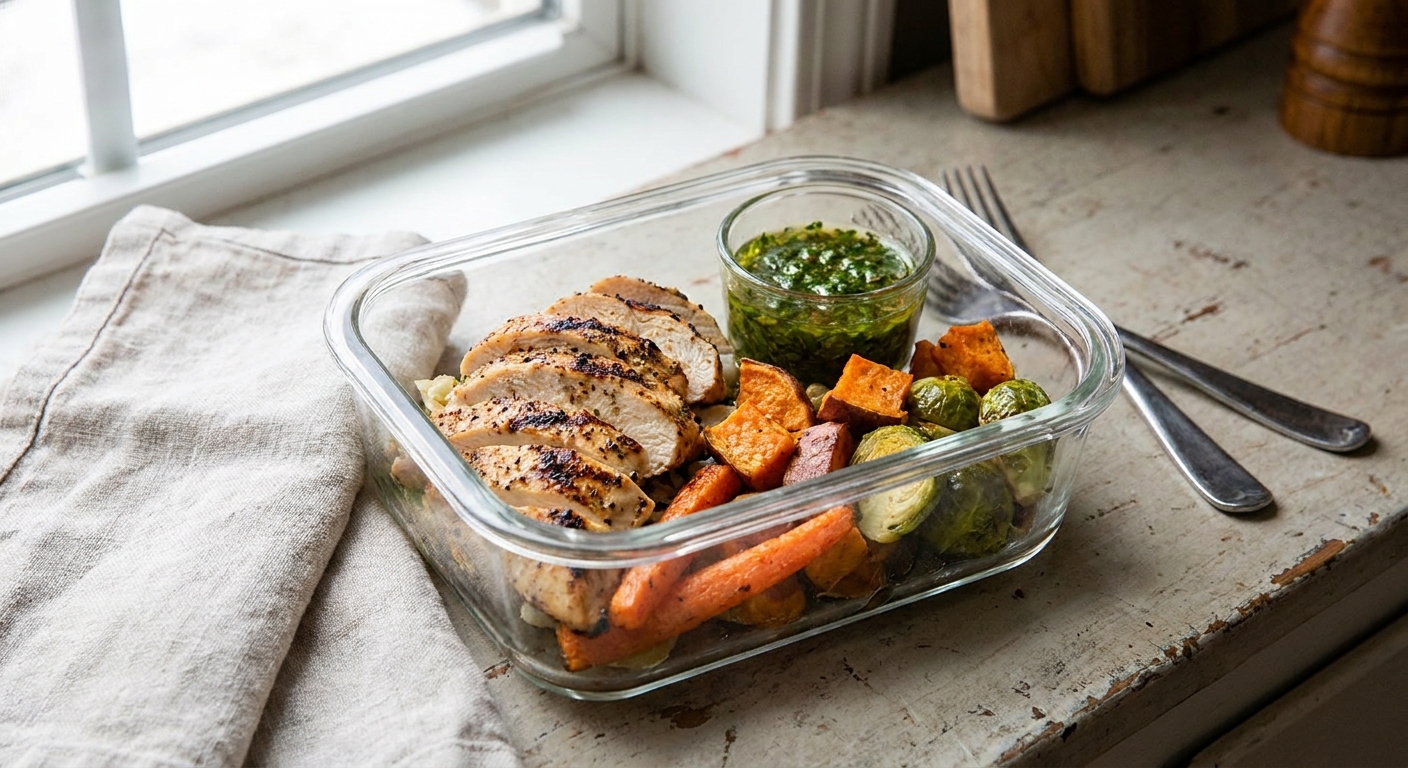
Why batch-cooked chicken dries out
Chicken dries out when heat tightens the proteins and they squeeze out moisture. That can happen from too much heat, too much time, or both. Meal prep adds two extra challenges: you often cook a lot at once (uneven pieces) and you reheat later (a second round of drying).
1) Overcooking, even by a little
Chicken breast has a narrow window between “safe and juicy” and “safe and dry.” If you routinely cook “just to be sure,” the texture will pay the price, especially after reheating.
2) Uneven pieces cook unevenly
A tray with thick, thin, and oddly shaped pieces guarantees some will be done early while others lag behind. Most of us leave the whole pan in until the thickest piece is done, and the thinner pieces overcook.
3) High heat plus long time
Two common meal-prep patterns create dryness: blasting chicken at very high heat (think 450°F) until it “looks done,” or cooking at low-ish heat (think 325°F) for a long time while you multitask. Either can push the meat past its sweet spot.
4) Skipping salt timing
Salt is not just for flavor. Given a bit of time before cooking, it helps chicken hold onto moisture. If you only salt right at the end, you miss that small but meaningful advantage.
5) Cutting too soon
If you slice hot chicken immediately, juices run out onto the cutting board. In meal prep, that can mean your containers start off with drier meat on day one.
6) Harsh reheating
Microwaving chicken until it is piping hot all the way through is a fast track to rubbery edges and a dry center. Reheating is cooking, just round two.
6 ways to keep meal-prep chicken moist
You do not need all six. Start with the two that feel easiest for your routine, then stack habits over time.
1) Make the pieces the same thickness
This is the unglamorous trick that saves the most chicken.
- Pound to an even thickness between two pieces of parchment or plastic wrap, especially for chicken breasts.
- Or slice horizontally to make cutlets. Cutlets cook fast and evenly, which makes them harder to overcook.
- Batch by size if you have a mix. Put similar-sized pieces on the same pan and pull them together.
If you only change one thing this week, make it this.
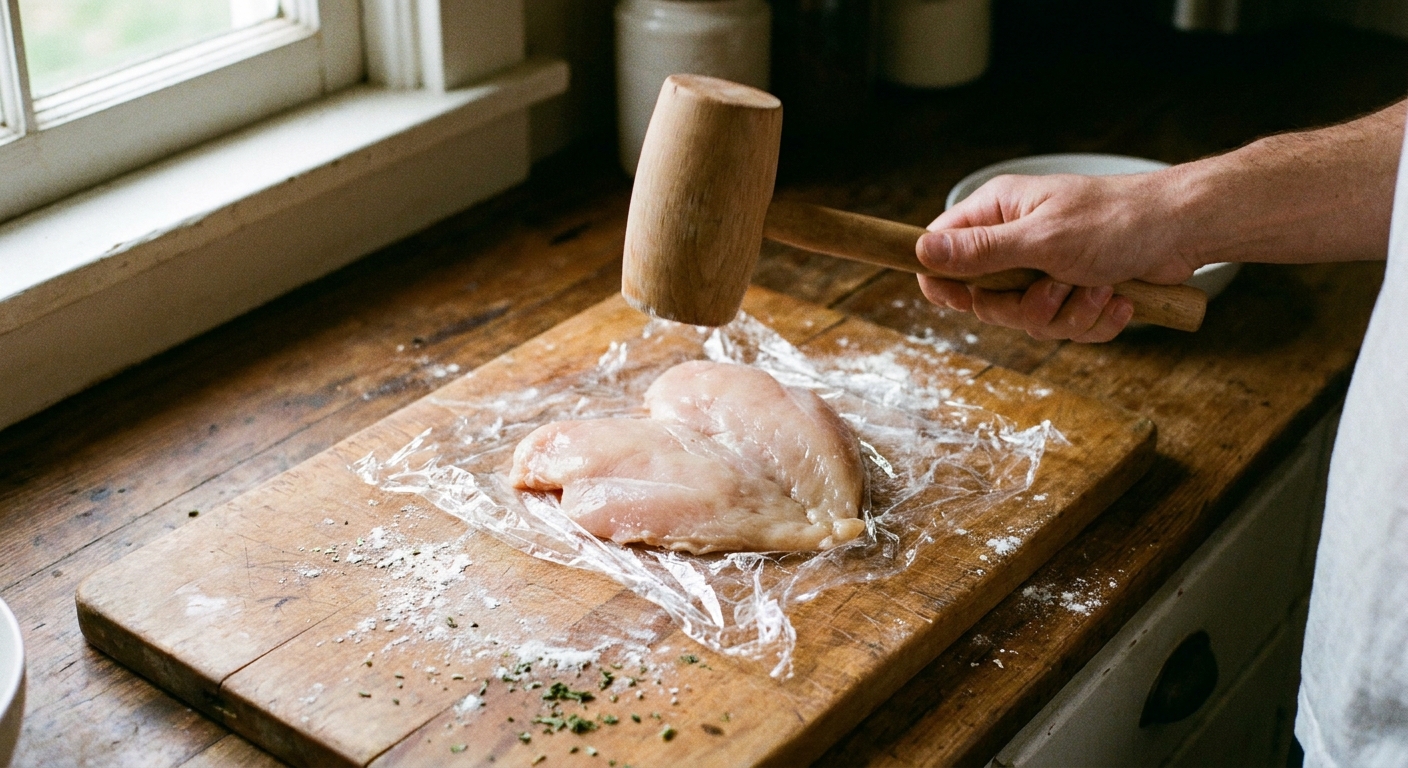
2) Use a dry brine or quick wet brine
I promise this is not fussy. Brining is just giving salt a head start.
- Dry brine (my weeknight-friendly favorite): Salt the chicken all over, then refrigerate uncovered 30 minutes to overnight. If you like numbers, aim for about 0.75% to 1% salt by weight (that is 7.5 to 10 grams salt per 1,000 grams chicken). If you measure by teaspoons, know that brands vary (Diamond Crystal vs Morton), so start lighter and adjust next time.
- Quick wet brine: Dissolve salt in water and submerge chicken 30 to 60 minutes, then pat very dry before cooking. A practical target is about 3% to 5% salt by weight (30 to 50 grams salt per 1 liter water) for a quick brine, but you can also go by taste: it should taste pleasantly salty, like soup.
Why it works: salt changes the protein structure slightly so it holds onto more water during cooking. Bonus: it seasons the inside, not just the surface.
3) Pull at the right temperature, not the right vibe
A meat thermometer is the most meal-prep-friendly tool I own because it prevents the “just in case” overcook.
- For breasts: Depending on thickness, pull in the 160°F to 165°F range and rest 5 to 10 minutes. If you pull closer to 160°F, give it the full rest and confirm it reaches 165°F before storing. (Carryover cooking is real, but it is also situational.)
- For thighs: 165°F is the safety baseline. Many people prefer thighs around 175°F to 190°F for tenderness because the extra heat softens connective tissue.
If you do not have a thermometer yet, use visual cues, but know they are less consistent in batch cooking. Thermometer beats guesswork when you are cooking ten pieces at once.
4) Choose the right cut for the job
I love chicken breast, but it is not always the best meal-prep candidate.
- Thighs stay juicy because they have a bit more fat and connective tissue. They reheat better and forgive small timing mistakes.
- Breasts shine when you cook them evenly and pull them on time, then pair them with sauces or brothy components.
Plate-empathy note: if meal prep keeps failing with breasts, it is not a moral failing. It might just be the wrong cut for your current season of life.
5) Rest, cool safely, then store with a little protection
Resting is not restaurant fussiness, it is moisture management.
- Rest 5 to 10 minutes after cooking before slicing.
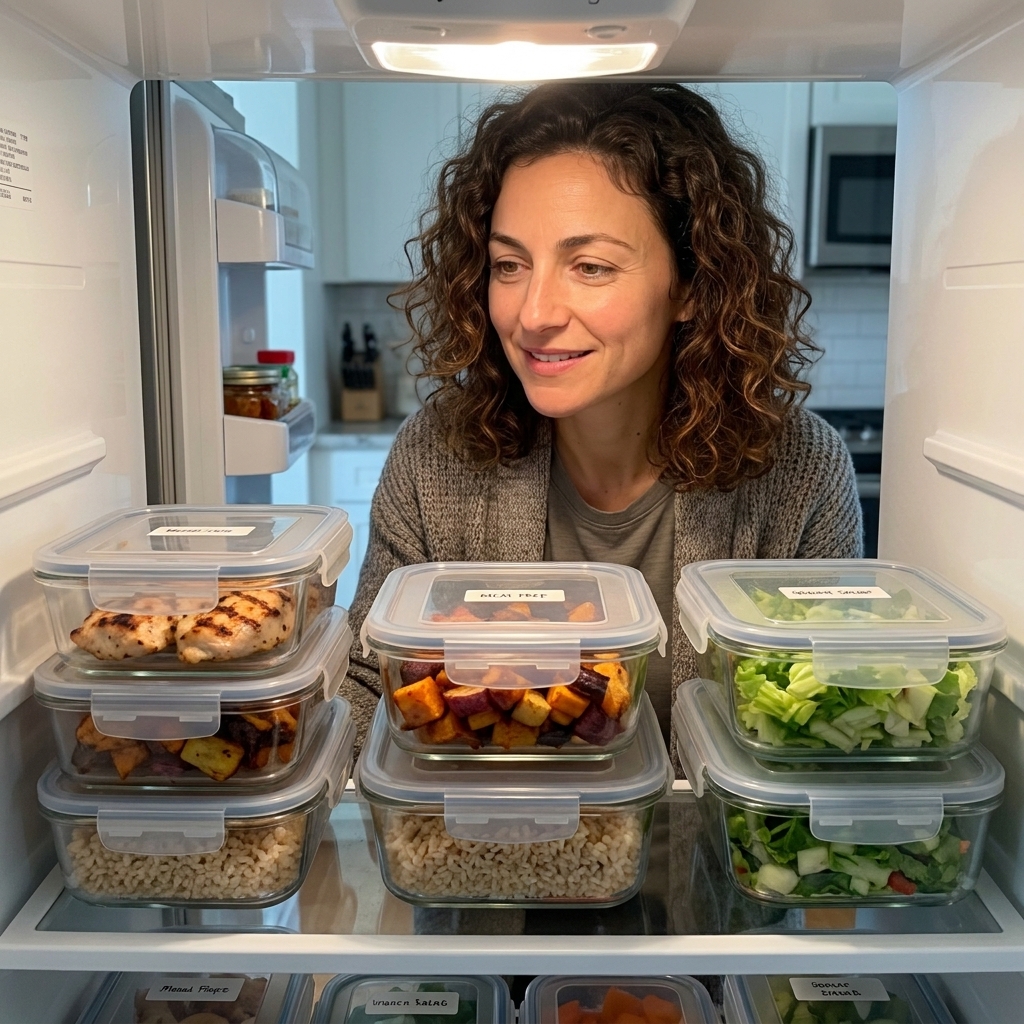
- Cool and store safely: Get cooked chicken into the fridge within 2 hours (within 1 hour if your kitchen is very hot). Use shallow containers so it cools faster. Let steam calm down first, but do not leave food sitting out for “a while” because you got distracted.
- Store smarter: If you are slicing, consider storing chicken with a bit of its cooking juices or a spoonful of sauce. If you are cubing, keep pieces a bit larger and cut smaller right before eating if possible.
Small detail that helps a lot: you can keep sauce separate if you want crispy edges, or toss chicken with sauce if dryness is your enemy. There is no wrong answer, just tradeoffs.
6) Reheat gently with a splash of moisture
This is the difference between “meal-prep chicken” and “chicken I actually want to eat.”
- Microwave method: Add 1 to 2 teaspoons water, broth, salsa, or sauce to the container. Cover loosely (lid ajar). Reheat at 50% to 70% power in short bursts, stirring or flipping pieces once.
- Skillet method: Warm a teaspoon of oil, add chicken plus a splash of broth or water, cover, and heat just until warmed through.
- Oven method: Put chicken in a small baking dish with a few spoonfuls of broth or sauce, cover with foil, and warm at 300°F to 325°F until just hot.
Aim for “hot enough to enjoy,” not “volcanic.” The hotter you reheat, the more moisture you drive out.
If you want a few low-effort sauce ideas that play well with meal prep, these are repeat offenders in my kitchen: salsa verde, pesto thinned with a little lemon and olive oil, and a quick yogurt sauce (plain yogurt, garlic, salt, lemon).
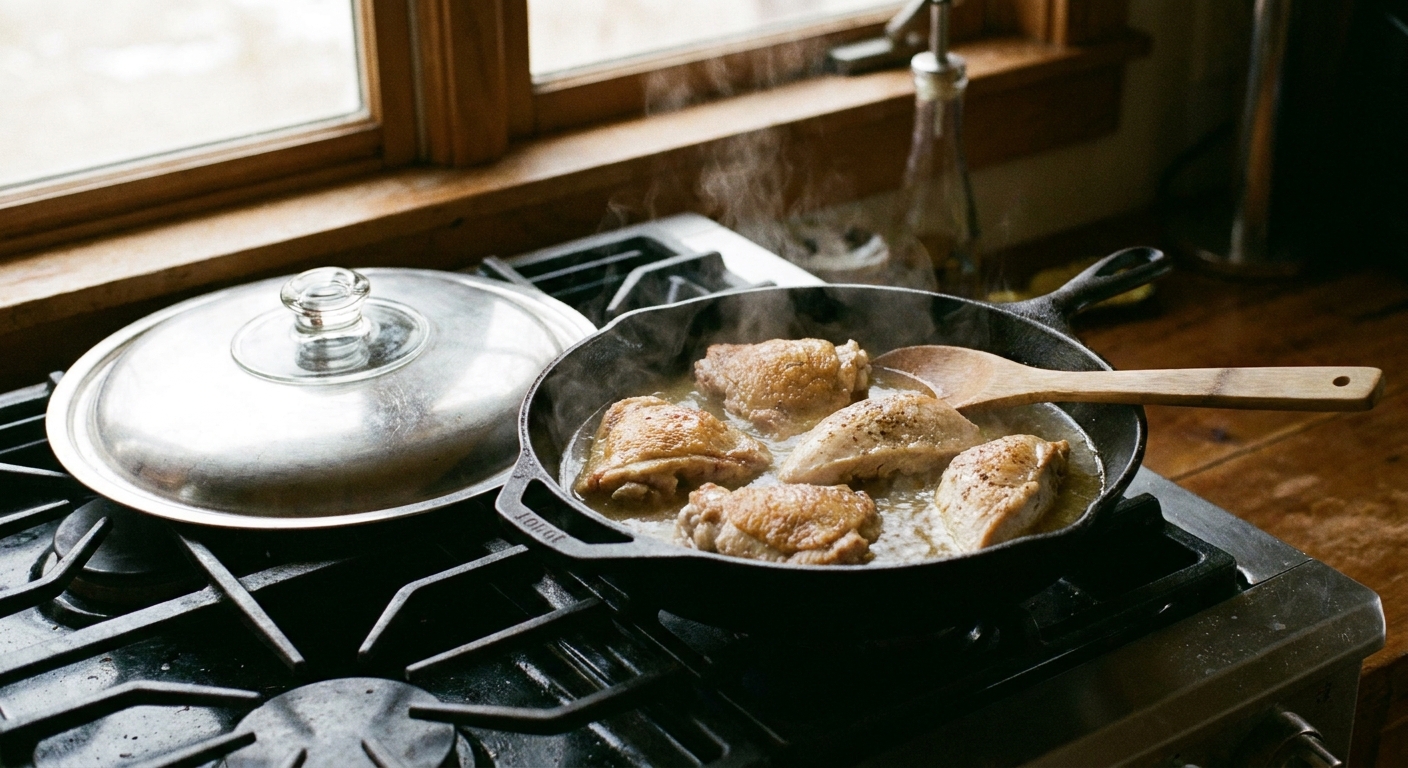
My Sunday checklist for juicy chicken all week
- Even thickness (pound or cut into cutlets)
- Salt ahead (dry brine while you prep everything else)
- Thermometer out, pull in the 160°F to 165°F range for breasts, then rest and confirm 165°F
- Rest before slicing
- Cool and refrigerate within 2 hours
- Pack with sauce or a spoonful of juices
- Reheat with moisture, lower power, shorter bursts
Quick FAQ
How long does cooked chicken stay good for meal prep?
Cooked chicken is best within 3 to 4 days in the fridge when stored promptly in a sealed container. After that, quality drops fast, and food safety gets harder to guarantee. When in doubt, throw it out. Smell and appearance are not reliable safety tests.
Is it better to meal prep chicken whole or sliced?
Whole or larger pieces tend to stay moister. If you like sliced chicken for salads or wraps, slicing is totally fine, but store it with a little sauce or cooking juices and reheat gently.
Why is my chicken juicy on Sunday but dry by Tuesday?
Two common culprits: it was slightly overcooked to begin with (dryness becomes more obvious as it chills), and reheating finished the job. Try pulling earlier with a thermometer (then resting and confirming 165°F), and reheating at lower power with a splash of moisture.
What’s the most forgiving cooking method for meal prep?
For many people, roasted thighs are the easiest path to juicy results. If you prefer breasts, cutlets plus a thermometer is the most consistent combination.
A gentle reminder
If you have been forcing yourself to choke down dry chicken because “meal prep is supposed to be healthy,” you can stop. Healthy food should still be enjoyable. Moist, tender chicken is not a luxury skill. It is a few small, repeatable choices that make your week easier and your plate kinder.