A practical, kind-to-yourself comparison of white vs. brown rice for meal prep: cook time, fridge life, reheating, fiber in plain language, and which is frie...
Platepathy
Sweet Potato vs. White Potato for Weekly Meal Prep
Sweet potato or white potato for meal prep? Compare carbs, fiber, cost, and fridge life. Plus the best uses for roasting, mashing, and bowls, storage tips, and an easy grocery rule.

Elena Rossi
Elena Rossi writes Platepathy's meal planning guides, translating nutrition research into approachable, delicious meal plans for real, busy lives.
Published November 17, 2026
When I was a burnt-out project manager, potatoes were my survival food. They were cheap, filling, and forgiving when I forgot groceries until Tuesday night. Then I fell into the very 2010s habit of labeling foods as “good” and “bad,” which is how I ended up treating sweet potatoes like a virtue and white potatoes like a vice.
Now, as a dietitian and a mom who needs dinner on the table by 6 PM, I buy both. Not because you “should,” but because they behave differently in the fridge and shine in different meal-prep jobs. Let’s make this simple, practical, and kind to your schedule.
At a glance: what really differs
Sweet potatoes and white potatoes are more alike than the internet makes them sound. They are both starchy, satisfying vegetables that bring reliable carbs for satiety, potassium, and meal-prep friendliness. The meaningful differences usually come down to fiber, micronutrients, price, and texture over a few days.
Calories, carbs, and fiber
Calories: In typical cooked portions, they are in the same ballpark. Think about 1 medium potato or roughly 1 to 1.5 cups roasted cubes. Any calorie difference is usually smaller than the difference created by what you add (butter, oil, cheese, sour cream, maple, etc.).
Carbs: Both are primarily carbohydrate foods. For most people, that is a feature, not a flaw, especially for lunches that need to keep you satisfied through the afternoon.
Fiber: They are often similar, with sweet potatoes sometimes slightly higher depending on variety and whether you eat the skin. Keeping the skin on either one is the easiest way to bump fiber and help cubes hold their shape.
Micronutrients: different strengths
- Sweet potatoes: Notably high in beta-carotene (which your body can convert to vitamin A), plus potassium. They can also contribute vitamin C, though amounts vary with cooking method and storage.
- White potatoes: Great source of potassium and they also provide B vitamins like B6. They can contribute vitamin C too, especially when freshly cooked, but it is sensitive to heat and time.
Cost: the meal-prep budget reality
In most stores, white potatoes are typically less expensive per pound, especially in larger bags. Sweet potatoes can be affordable too, but they are more likely to fluctuate in price and are often sold loose at a higher per-pound cost.
Fridge life: who holds up by day 4?
Both can last in the fridge for several days when cooked and stored properly, but their textures change differently:
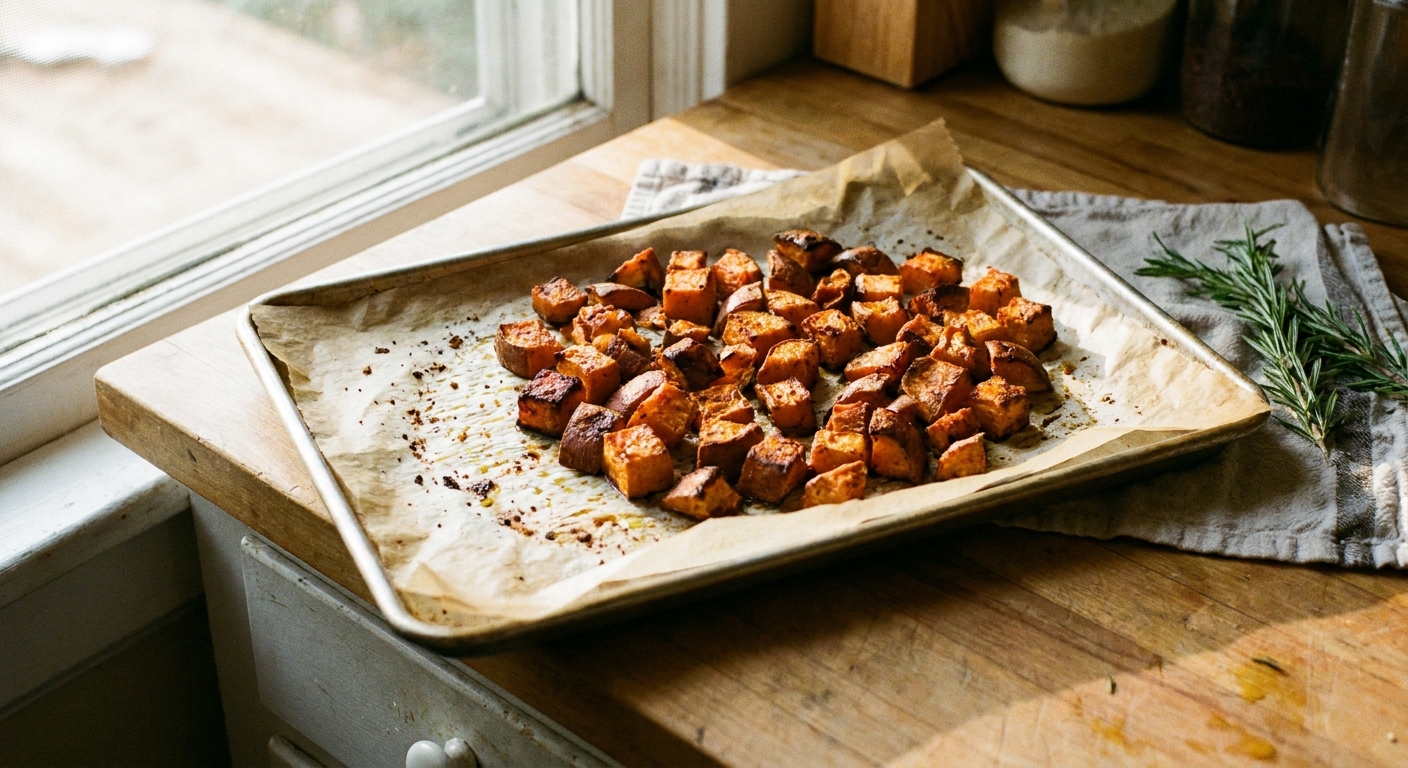
- Roasted sweet potato cubes tend to stay pleasantly tender, but can get softer and a bit jammy as the week goes on.
- Roasted white potato cubes can get a little dry or firm in the fridge, but they reheat nicely and can regain a crisp edge in an air fryer or hot skillet.
- Mashed sweet potatoes can thicken and feel dense after chilling, but loosen beautifully with a splash of milk or broth.
- Mashed white potatoes can turn gluey if overmixed initially, and can feel stiff after chilling, but reheat well with gentle stirring and added liquid.
Bottom line: neither is “bad” for meal prep. You just want to cook and store them in ways that match how you plan to eat them on day 3 or 4.
Meal prep: best methods
Roasted (wedges, rounds, or cubes)
White potatoes: Best when you want crisp edges and a neutral base that works with almost any seasoning profile. They are also the most “dinner-like” if your household expects a classic roasted potato vibe.
Sweet potatoes: Best when you want caramelized flavor fast. They brown quickly because of their natural sugars, which is delicious, but they can also go from perfect to too soft if overcooked.
- Meal-prep tip: Roast both types a shade darker than you think you need if you plan to reheat in the microwave. If you will reheat in an air fryer or skillet, you can roast them a little less.
- Texture saver: Store roasted potatoes in a container that is not packed too tightly so steam does not make everything soggy.
Mashed
White potatoes: The classic for a reason. They mash into a fluffy, savory side that pairs with almost any protein and sauce. Great for family dinners and leftovers that become lunch bowls.
Sweet potatoes: Naturally creamy and a little sweet, which can be amazing with chili, pulled chicken, black beans, or anything smoky and spicy. If you do not want a sweet note, go heavier on savory seasonings like garlic, cumin, paprika, and a squeeze of lemon.
- Meal-prep tip: Portion mashed potatoes into single-serve containers before chilling. They reheat more evenly and you avoid that frustrating cold center.
- Gentle reheating: Add a tablespoon or two of milk, broth, or plain Greek yogurt and stir gently. You are aiming for creamy, not whipped.
Cubed for bowls (grain bowls, salad bowls, taco bowls)
Sweet potatoes: My go-to for bowls when I want an easy sweet-savory contrast. They pair especially well with leafy greens, beans, tahini sauces, and citrusy dressings.
White potatoes: Underrated in bowls. They are hearty, neutral, and excellent with pesto, salsa verde, chimichurri, or any saucy protein. They are also great when you need the bowl to be kid-friendly.
Storage and reheating
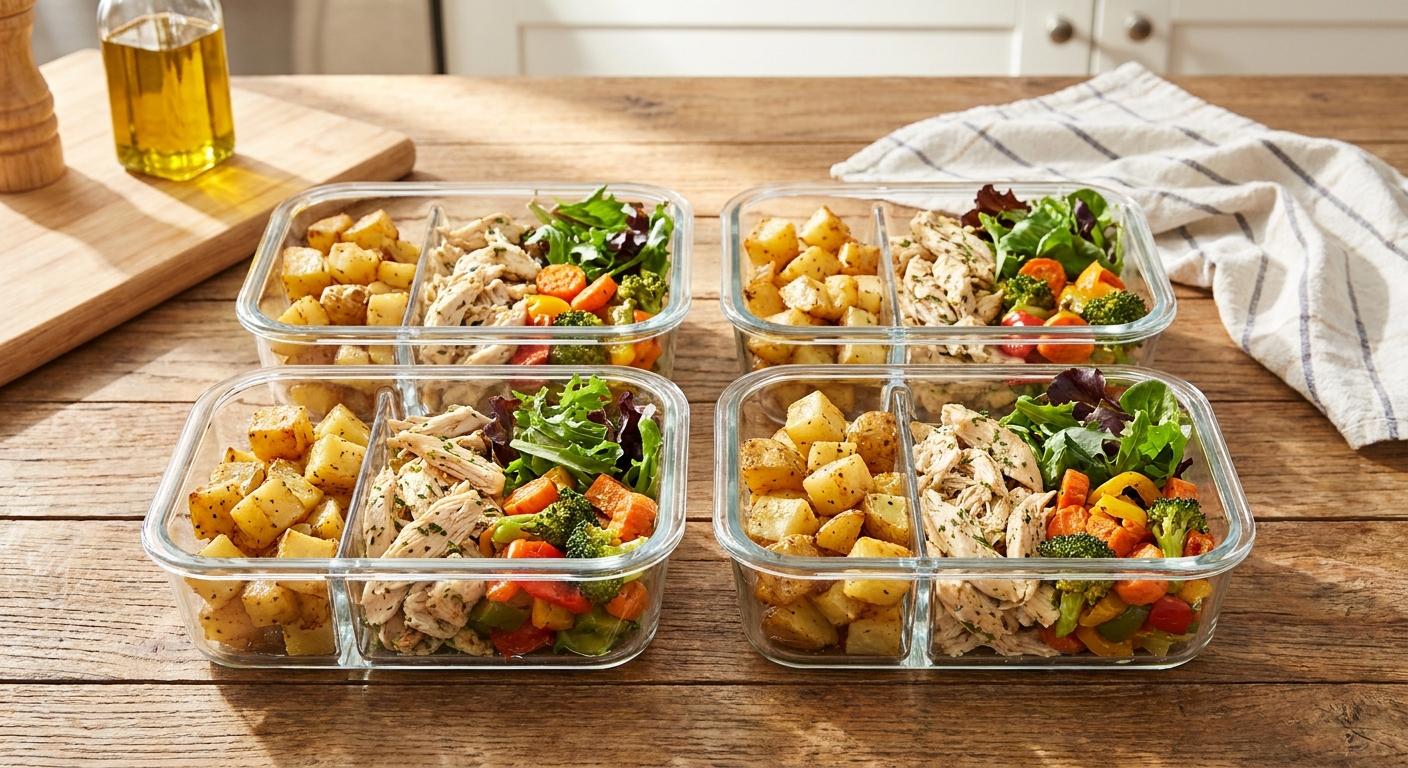
Cook once, eat for 3 to 4 days
- Cool quickly: Let cooked potatoes cool until just warm, then refrigerate. Do not leave them out for hours.
- Use shallow containers: They cool faster and reheat more evenly.
- Keep skins when you can: Skins add fiber and help the pieces hold their shape, especially for cubed potatoes.
Reheating best practices
- Microwave: Cover loosely and add a tiny splash of water or broth if they seem dry. Stir halfway for mashed potatoes.
- Skillet: Great for bringing back texture. Use a small amount of oil and let the pan get hot before adding potatoes.
- Air fryer: A quick path back to crisp edges for roasted cubes and wedges.
A quick note on food safety
Store cooked potatoes in the refrigerator and aim to eat them within 3 to 4 days. Reheat until steaming hot. If something smells off or has been left out too long, this is a when-in-doubt, throw-it-out moment.
One more nutrition detail (without the drama)
How you prepare potatoes often matters more than whether they are sweet or white. Roasted, boiled, or baked potatoes with a reasonable amount of added fat will land very differently than deep-fried potatoes, or potatoes loaded with sugary glazes and heavy toppings.
Also, cooling cooked potatoes and reheating them later can increase resistant starch a bit. It is not magic, and people respond differently, but it is a nice bonus for meal prep.
Which should you prep?
Choose sweet potatoes when you want
- Higher-fiber lunches with very little extra effort
- Flavor without extra sauce, because they bring natural sweetness and caramelization
- Bowl meals with beans, greens, and tangy dressings
- A softer texture that still feels cozy on day 3
Choose white potatoes when you want
- Bigger, lower-cost dinners for a family or a hungry week
- A neutral side that fits almost any cuisine
- Crispy roasted edges that re-crisp nicely in a skillet or air fryer
- Classic mash for comfort meals and leftovers
When prepping both is worth it
I prep both when I need variety without extra mental work. Here are the two scenarios where it pays off:
- Two different meal moods: Sweet potato cubes for lunch bowls, white potatoes mashed or wedged for dinners.
- One batch session, multiple flavors: White potatoes take on pesto, garlic, and lemon beautifully. Sweet potatoes love taco seasoning, chipotle, cumin, and lime. Same prep process, different results.
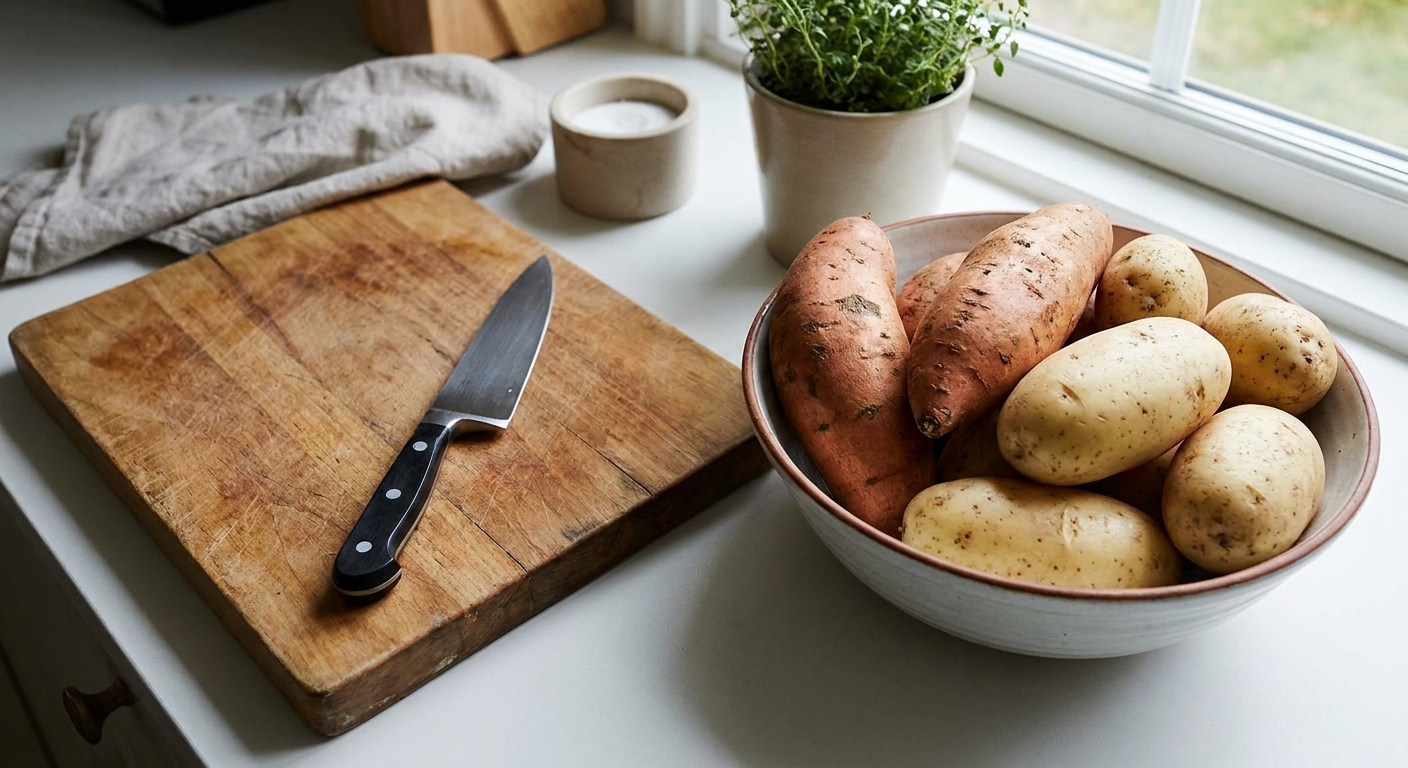
My simple grocery rule
If you want a no-overthinking rule that matches real life, here it is:
- For higher-fiber lunches: buy sweet potatoes (and keep the skins on when you can).
- For bigger, lower-cost dinners: buy a bag of white potatoes.
And if you are in a week where you can only choose one, choose the one you will actually cook. Plate empathy beats perfect planning every time.