
12 fiber-rich breakfast ideas that are actually doable on busy mornings. Think oats, yogurt bowls, eggs, smoothies, and make-ahead options designed for fulln...
Platepathy
Increase Fiber Gradually Without the Bloat
Learn how to estimate your current fiber intake, increase fiber gradually, stay hydrated, use simple prep tactics to reduce gas, and track tolerance so meal prep feels better, not uncomfortable.

Elena Rossi
Elena Rossi is a Registered Dietitian and meal prep expert who believes that healthy eating shouldn't feel like a second job. Through Platepathy, she translates complex nutrition science into approachable, delicious meal plans designed for real, busy lives.
Published October 18, 2026
Last updated October 18, 2026
If you have ever tried to “eat more fiber” and ended up feeling puffy, gassy, or like your jeans suddenly shrank, you are not alone. Fiber is fantastic for digestion, cholesterol support, blood sugar steadiness, and keeping you satisfied. But your gut needs time to adapt, especially if your current routine leans on refined grains, quick snacks, or a lot of grab-and-go meals.
At Platepathy, we do this with plate empathy: small, kind upgrades that fit into real life and real meal prep. No punishment. No sudden mountain of beans. Just a steady climb your body can actually tolerate.
Estimate your current fiber
You do not need to calculate every gram forever. You just need a realistic starting point so you can increase gradually instead of accidentally doubling overnight.
A quick reference point (for most adults)
General fiber targets are often around 25 grams per day for many women and 38 grams per day for many men. Needs vary with age, body size, and medical conditions. For example, fiber needs are often lower after age 50 (commonly cited around 21 grams for women and 30 grams for men). If you are currently at 10 to 15 grams and jump to 30+ in a day, discomfort is common.
The simplest way to estimate: build your “usual day”
Think through a normal weekday and jot down your repeat meals. Then do a quick check using a nutrition app, the Nutrition Facts label, or a reliable database (USDA FoodData Central is great). You only need rough numbers.
- Breakfast example: Bagel + cream cheese (fiber is usually low, often 1 to 3 grams depending on the bagel)
- Lunch example: Turkey sandwich on white bread + chips (often 2 to 5 grams total)
- Dinner example: Chicken + white rice + a small side salad (could be 3 to 7 grams depending on portion sizes and veggies)
- Snacks: String cheese, crackers, yogurt (often 0 to 2 grams each unless there is fruit, nuts, or whole grains)
Now compare that to a higher-fiber version of the same structure: oats instead of bagel, whole grain bread instead of white, berries or beans added in small portions. You will start to see where gentle upgrades make the biggest difference.
Fiber types (why it matters)
Not all fiber feels the same in your body. When people increase fiber and feel uncomfortable, it is often a mix of “too much too fast” and “not enough fluid,” but fiber type can matter, too.
Soluble fiber: the gel-forming helper
Soluble fiber mixes with water and forms a gel-like texture in the gut. It can support steadier blood sugars and may help lower LDL cholesterol. Many people find soluble fiber gentler when they are ramping up.
- Oats and oat bran
- Barley
- Beans and lentils (still can be gassy if increased quickly)
- Chia and ground flax
- Apples, citrus, pears
- Psyllium (often used in fiber supplements)
Insoluble fiber: the bulking fiber
Insoluble fiber adds bulk and helps move things through. It is very helpful for regularity, but if you jump up quickly, it can feel like your gut got a surprise workout.
- Wheat bran
- Many whole grains (especially wheat-based)
- Nuts and seeds (also contain soluble)
- Vegetable skins (like potatoes, cucumbers, apples with peel)
- Cruciferous veggies (like broccoli, cauliflower, cabbage)
Real foods contain both types, so you do not need to micromanage. The takeaway is simple: if you have been low-fiber for a while, start with smaller portions, and consider beginning with more soluble-fiber leaning choices (like oats, berries, chia, beans in modest amounts) before going all-in on bran cereal and giant raw salads.
One change at a time
Most fiber “fails” are not a willpower problem. They are an adjustment-speed problem. Your gut microbiome adapts, but it needs a little time. I like a pace of one change every 3 to 7 days, depending on how sensitive your digestion is.
Pick one upgrade
Choose a single change that fits your current meal prep habits. Keep everything else the same for a few days.
- Swap your grain: white rice to brown rice or quinoa (start with a half-and-half mix)
- Change your bread: white bread to whole wheat or sprouted grain (aim for at least 2 to 3 grams fiber per slice)
- Add fruit once daily: one pear, one apple, or 1 cup berries
- Add a tablespoon booster: 1 tablespoon chia seeds or ground flax mixed into yogurt or oats (often about 3 to 5 grams of fiber, depending on the ingredient)
- Add beans slowly: start with 2 to 3 tablespoons of beans or lentils in a bowl, salad, or taco filling, then work up (a 1/4 cup portion is often around 3 to 4 grams of fiber)
- Upgrade a snack: crackers to popcorn, or add a handful of nuts plus a piece of fruit
What “modest” looks like
When you batch-cook, it is tempting to overhaul everything at once. Instead, keep your prep structure and nudge one variable:
- If you prep burrito bowls every week, keep the bowls, but add 1/4 cup beans to each portion instead of 1 full cup right away.
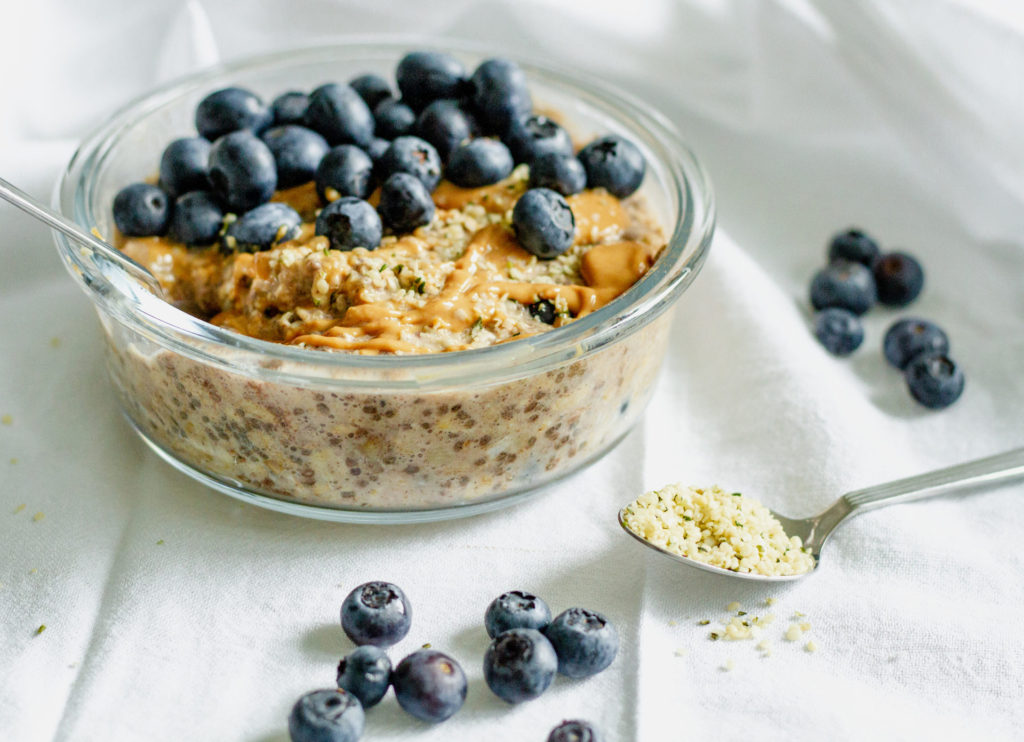
- If you prep overnight oats, keep the recipe, but add 1 tablespoon chia before you start changing toppings, fruit, and grains all at once.
- If you prep salads, keep the greens, but start with smaller portions of raw cruciferous veggies and add more cooked veggies (often easier to tolerate) while your gut adjusts.
Once that one change feels fine for several days, add the next small step.
If you have a condition where fiber is sometimes restricted (like an active IBD flare, strictures, or recent GI surgery), use this article as general education, not a personal prescription, and confirm your plan with your clinician.
Hydration matters
If fiber is the sponge, water is the liquid it needs to do its job comfortably. Without enough fluid, increasing fiber can backfire and lead to constipation or cramps.
How much water do you need?
Hydration needs vary with body size, climate, sweat losses, medications, and pregnancy or breastfeeding. A practical baseline for many people is aiming for pale yellow urine and sipping fluids consistently through the day.
As you increase fiber, consider adding an extra 1 to 2 cups of fluid per day at first. Water is great, but so are:
- Herbal tea
- Milk or fortified soy milk
- Broth-based soups
- Water-rich foods like oranges, cucumbers, and soups (these still count toward hydration)
If you are very active or in a hot climate, you may need more. If you have heart or kidney conditions that require fluid restriction, check with your clinician before increasing fluids.

Prep tactics that reduce gas
If beans or cruciferous veggies tend to hit you hard, you do not have to quit. A few prep choices can make the same foods feel easier.
- Rinse canned beans well: draining and rinsing can reduce the compounds that contribute to gas.
- Start with smaller portions: 2 to 3 tablespoons is a legitimate beginning.
- Choose lentils in small portions: some people tolerate lentils better than larger beans, but it is individual. Portion size matters.
- Cook your veggies: roasted, sautéed, or simmered vegetables are often easier early on than huge raw salads.
- Spread fiber across the day: instead of one mega-fiber meal, add smaller boosts at two meals.
Track tolerance
One of the most plate-empathy things you can do is gather information instead of judging yourself. A simple log helps you spot patterns: which fibers feel great, which need smaller portions, and what timing works best.
What to track (keep it simple)
- What changed: “Added 1/4 cup black beans at lunch”
- Portion size
- Fluids: roughly how many cups you drank that day
- Symptoms: bloating, gas, cramping, constipation, diarrhea (0 to 10 scale works well)
- Timing: did symptoms hit right after, or later in the day?
How to use the log
If symptoms are mild, give your gut a few days. If symptoms are uncomfortable, do not assume fiber “is not for you.” More often, you simply need a smaller portion, a slower pace, more fluid, or a different fiber source.
Examples of gentle troubleshooting:
- Too gassy after beans: reduce portion, rinse canned beans well, try a different bean or lentils in smaller portions, or spread the bean portion across two meals.
- Constipated after adding whole grains: add fluid, add a soluble-fiber food (oats, chia), and consider whether you are eating enough overall (including adequate dietary fat), which can support comfortable bowel movements for some people.
- Bloating after big salads: keep salads, but try smaller raw portions and add cooked veggies (roasted carrots, sautéed zucchini) more often for a week or two.
A gentle 2-week ramp
If you like having a plan, here is a simple progression that keeps meal prep predictable. Adjust the pace slower if you have a sensitive gut.
Week 1: one change
- Choose one of these: switch to a higher-fiber bread, add 1 piece of fruit daily, or add 1 tablespoon chia or ground flax.
- Keep everything else consistent.
Week 2: add a second change
- If week 1 felt good, add a second step: 1/4 cup beans at one meal, or swap half your rice or pasta to a whole-grain option.
- Continue the hydration bump.
This sounds almost too gentle, but it works because you are training your gut, not shocking it.
Fiber supplements and meds
Fiber supplements (like psyllium) can be helpful, especially if food changes feel like too much at first. They can also interfere with the absorption of some medications and supplements.
A common precaution is to take fiber supplements at a different time than medications, often with a gap of about 2 hours, but the right approach depends on what you take. If you use prescription meds, thyroid medication, iron, or other supplements, ask your pharmacist or clinician about timing.
When to pause and get help
Fiber should not make you miserable, and persistent digestive symptoms are not something to push through.
Reach out to a registered dietitian or clinician if:
- You have persistent bloating, pain, diarrhea, or constipation that does not improve with slower increases
- You notice blood in stool, black tarry stools, unexplained weight loss, fever, or vomiting
- You have a history of IBD (Crohn’s or ulcerative colitis), a diverticulitis flare, bowel obstruction, or significant GI surgery
- You are on a medically prescribed low-fiber or low-residue diet
- You have kidney disease and are managing potassium or phosphorus (many high-fiber foods are also high in potassium)
- You are following a low FODMAP plan for IBS and are unsure which high-fiber foods fit your phase
If you suspect IBS or have been told “just eat more fiber” but it keeps backfiring, a dietitian can help you choose the right types, portions, and timing for your specific gut.
Comfort first
Fiber is not a badge of honor. It is a tool. The goal is a body that feels good and meals that feel doable. If you take nothing else from this, take this: increase fiber slowly, hydrate consistently, and let your gut lead the pace.
Plate empathy tip: If a change makes you uncomfortable, it is not a failure. It is feedback. Adjust the dose, not your self-talk.
When you are ready for your next step, pick one small upgrade and give it a few days. Your future self, and your stomach, will thank you.