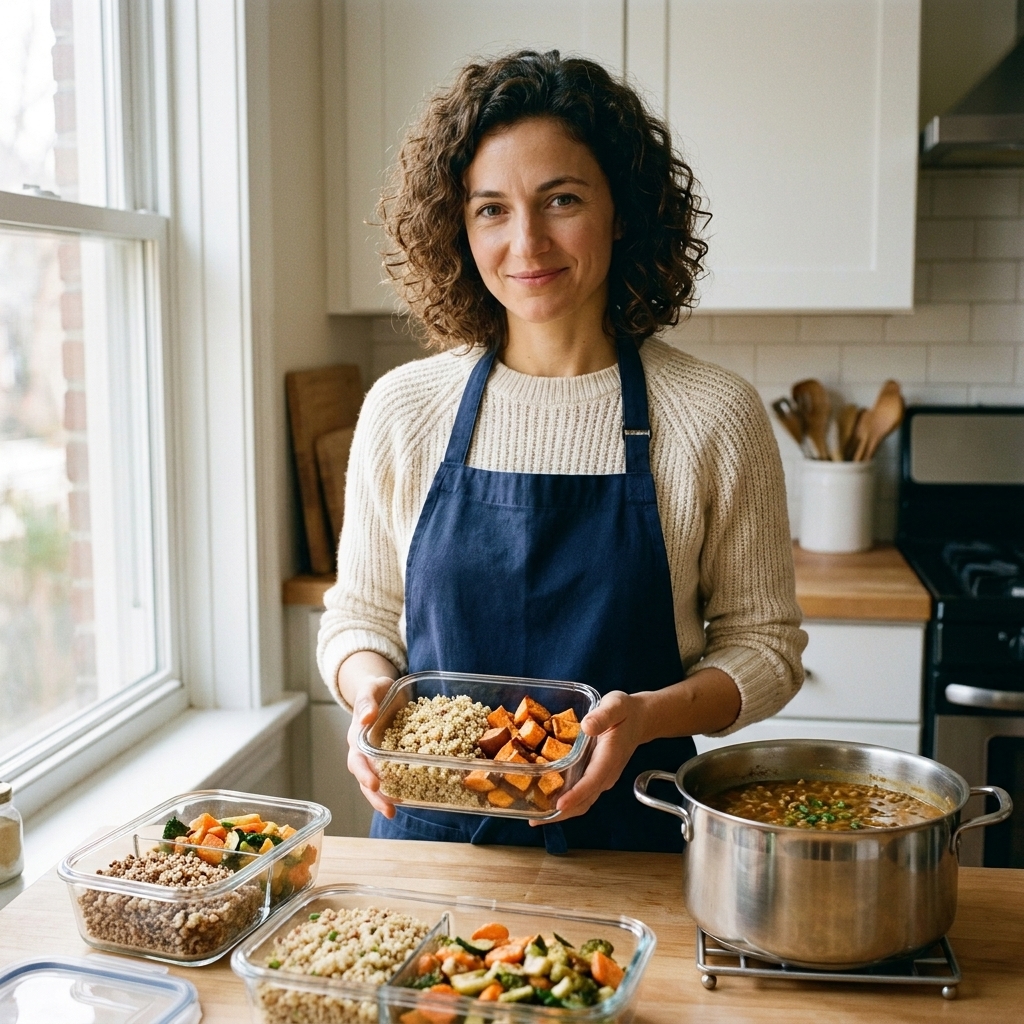
A warm, practical system for meal planning and shopping once: pick anchor meals, build your list from recipes, organize by aisles, add budget-friendly staple...
Platepathy
Healthy Meal Planning for a Family of Four
A step-by-step, low-stress system for planning and prepping family meals for four, including picky-eater strategies, a flexible weekly rhythm, a sample menu, grocery list, budget swaps, and food safety tips.

Elena Rossi
Elena Rossi is a Registered Dietitian and meal prep expert who believes that healthy eating shouldn't feel like a second job. Through Platepathy, she translates complex nutrition science into approachable, delicious meal plans designed for real, busy lives.
Published October 18, 2026
Last updated October 18, 2026
Feeding a family of four can feel like you’re running a tiny restaurant where the customers change their minds daily. I get it. I spent years white-knuckling weeknights with takeout menus and good intentions, and now as a mom of two, I have exactly zero interest in meal plans that require three pans, a sauce reduction, and perfect timing.
This is my Platepathy approach, aka plate empathy: a simple system that respects real life. It’s about building repeatable routines, keeping nutrition flexible (not perfectionistic), and making room for picky eaters, late meetings, and nights when you just need dinner to happen.
The Platepathy formula
When I plan for a family of four, I aim for three things: balanced plates, repeatable routines, and built-in choice.
- Balanced plates: Most meals include a protein, a fiber-rich carb, and at least one fruit or vegetable, plus a source of fat for satisfaction. Needs vary by age, activity level, and medical considerations, so think of this as a helpful default, not a rulebook.
- Repeatable routines: You should be able to run the plan on autopilot after a few weeks.
- Built-in choice: The easiest way to accommodate picky eaters is to offer one family meal with optional add-ons, not separate dinners.
Step 1: Pick planning and cooking days
If you only take one idea from this article, let it be this: split planning from cooking.
A schedule that sticks
- Planning: 15 to 25 minutes on Thursday night or Friday morning.
- Shopping: 30 to 60 minutes Friday night, Saturday morning, or your delivery/pickup slot.
- Prep: 60 to 120 minutes on Sunday (or two 45-minute blocks on Sunday and Tuesday).
Why it works: you’re making decisions when you have a little mental space, not at 5:42 PM when everyone’s hungry and someone’s asking for a snack.
Step 2: Set weekly goals
Before you choose meals, answer these quick questions:
- How many dinners at home? (Example: 5)
- How many leftovers nights? (Example: 1)
- How many easy fallback meals? (Example: 1)
- Any schedule landmines? Practices, late meetings, appointments, travel days.
I like to name the busiest nights “low-lift nights.” Those meals should be 20 to 30 minutes or mostly prepped.
Step 3: Choose 3 anchor dinners
A common meal planning trap is trying to cook seven completely different dinners. Instead, choose three anchor dinners and reuse components so shopping and prep stay manageable.
Anchor dinner types
- Build-your-own: taco bowls, pita pockets, rice bowls, baked potato bar.
- Sheet pan: chicken sausage and veggies, salmon and broccoli, tofu and peppers.
- One pot: chili, lentil soup, pasta with beans, curry.
Then round out the week with leftovers, breakfast-for-dinner, and one freezer or pantry “save the day” meal.
Step 4: Make room for picky eaters
Picky eating isn’t a character flaw, and it doesn’t mean you’re doing anything wrong. It’s information. In general, your job is to offer a balanced meal with at least one “safe” item. Their job is to decide what and how much to eat.
If you’re dealing with choking fears, weight loss, growth concerns, or extremely limited eating, it’s worth checking in with your pediatrician and, if needed, a feeding therapist.
Base + options
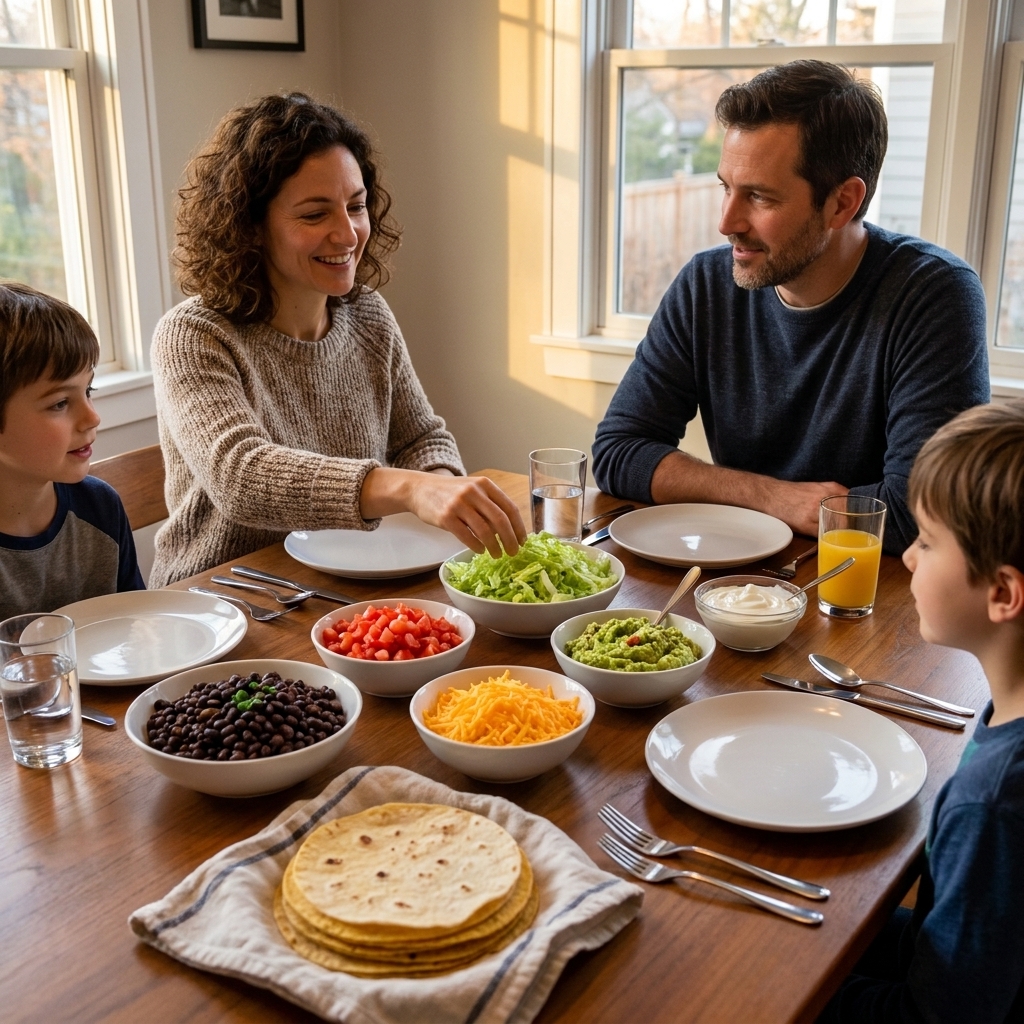
Serve one base meal for everyone, then set out a few simple options. Examples:
- Taco night: base = tortillas or rice. Options = seasoned meat or beans, shredded cheese, lettuce, salsa, avocado, plain yogurt.
- Pasta night: base = pasta. Options = marinara, turkey meatballs, sautéed spinach, parmesan.
- Rice bowls: base = rice. Options = chicken or tofu, steamed edamame, cucumbers, shredded carrots, teriyaki or peanut sauce on the side.
This keeps your kitchen from becoming a short-order line while still honoring preferences.
Step 5: Plan breakfasts and lunches
Breakfast and lunch don’t need new recipes every week. They need dependable building blocks.
Breakfast set (choose 2)
- Greek yogurt + berries + granola
- Overnight oats (two flavors in one batch)
- Egg muffins + fruit
- Peanut butter toast + banana
Lunch set (choose 2 to 3)
- Turkey and cheese wraps + baby carrots
- Leftover dinner bowls
- Hummus snack plates (pita, cucumbers, olives, chickpeas)
- “Adult lunchable” boxes for kids and grownups
Meal planning gets easier when breakfast and lunch are on rails and dinner gets your creative energy.
Step 6: Use a weekly rhythm
Here’s a default weekly rhythm I love for families because it bakes in sanity:
- Mon: 20-minute meal
- Tue: anchor dinner
- Wed: leftovers
- Thu: anchor dinner
- Fri: freezer or takeout night (planned, not guilt-filled)
- Sat: anchor dinner or grill night
- Sun: soup or sheet pan + prep
Notice what’s missing: pressure to cook something impressive every single night.
Step 7: Scale without waste
For a family of four, the goal is usually 4 dinner portions plus 1 to 2 leftover portions (future lunch or a quick reheat night). I typically plan recipes that yield about 6 servings.
Portion starting points
- Protein: For meat or fish, a typical starting point is 1 to 1.5 pounds raw per dinner, depending on appetites and whether you want leftovers. For plant proteins, think in equivalents: a 14 to 16 ounce block of tofu is often a good start, and 1 cup dry lentils yields about 2 to 2.5 cups cooked.
- Grains or starches: 1 to 1.5 cups dry rice or quinoa, or 12 to 16 ounces pasta. If you want guaranteed leftovers, bump the grain up a bit.
- Vegetables: 6 to 10 cups raw vegetables. They shrink when cooked, and leftovers are gold.
If you’ve got younger kids, you’ll probably land on the lower end. If you’ve got teens or very active adults, you’ll bump up.
Step 8: Prep that helps
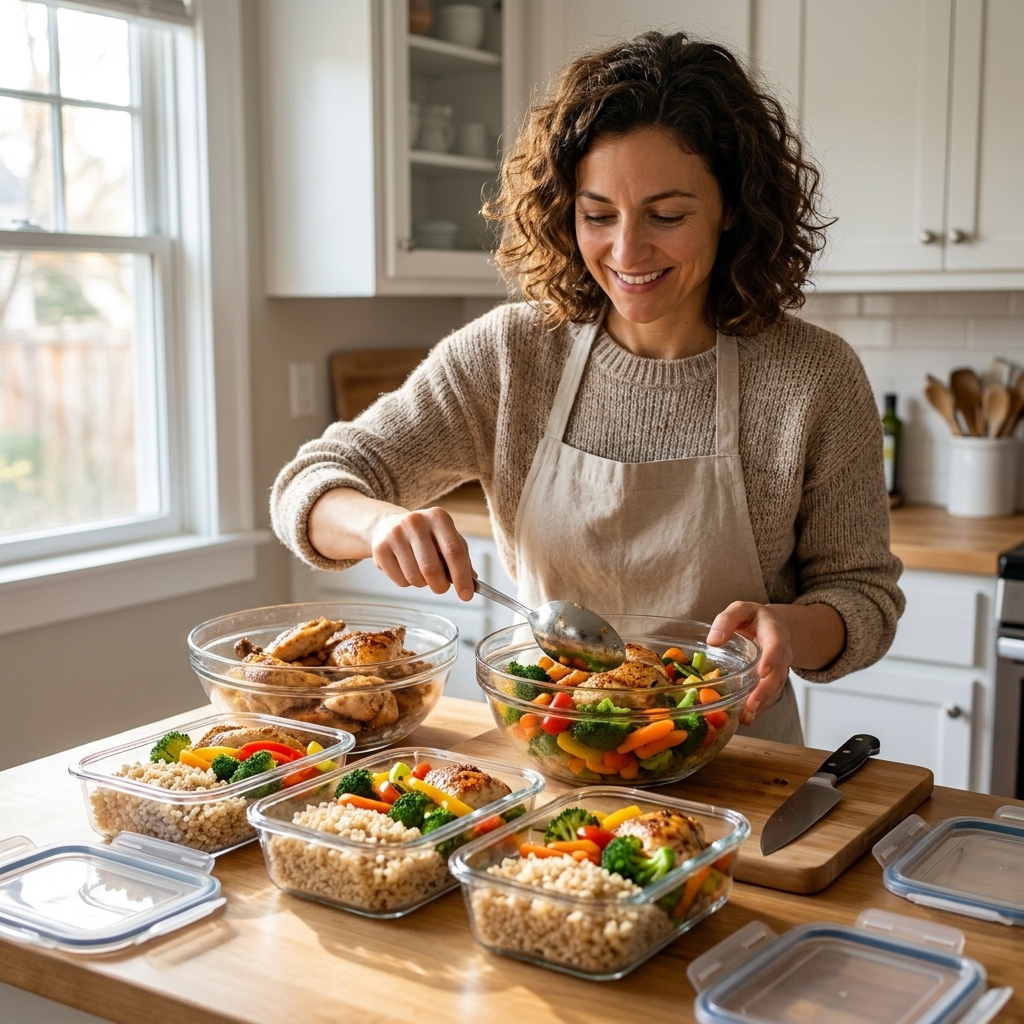
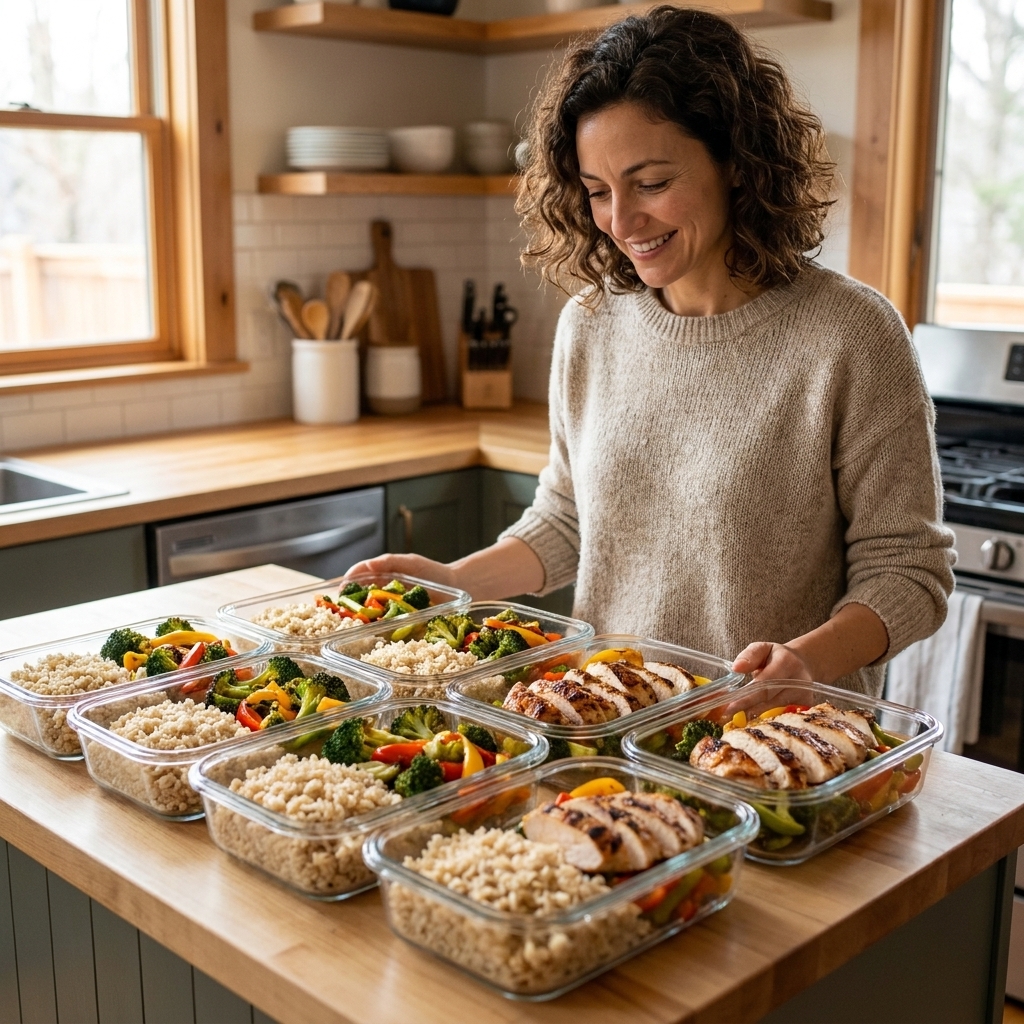
Meal prep for a family isn’t about making seven identical containers. It’s about preparing the parts that slow you down.
High-ROI prep list
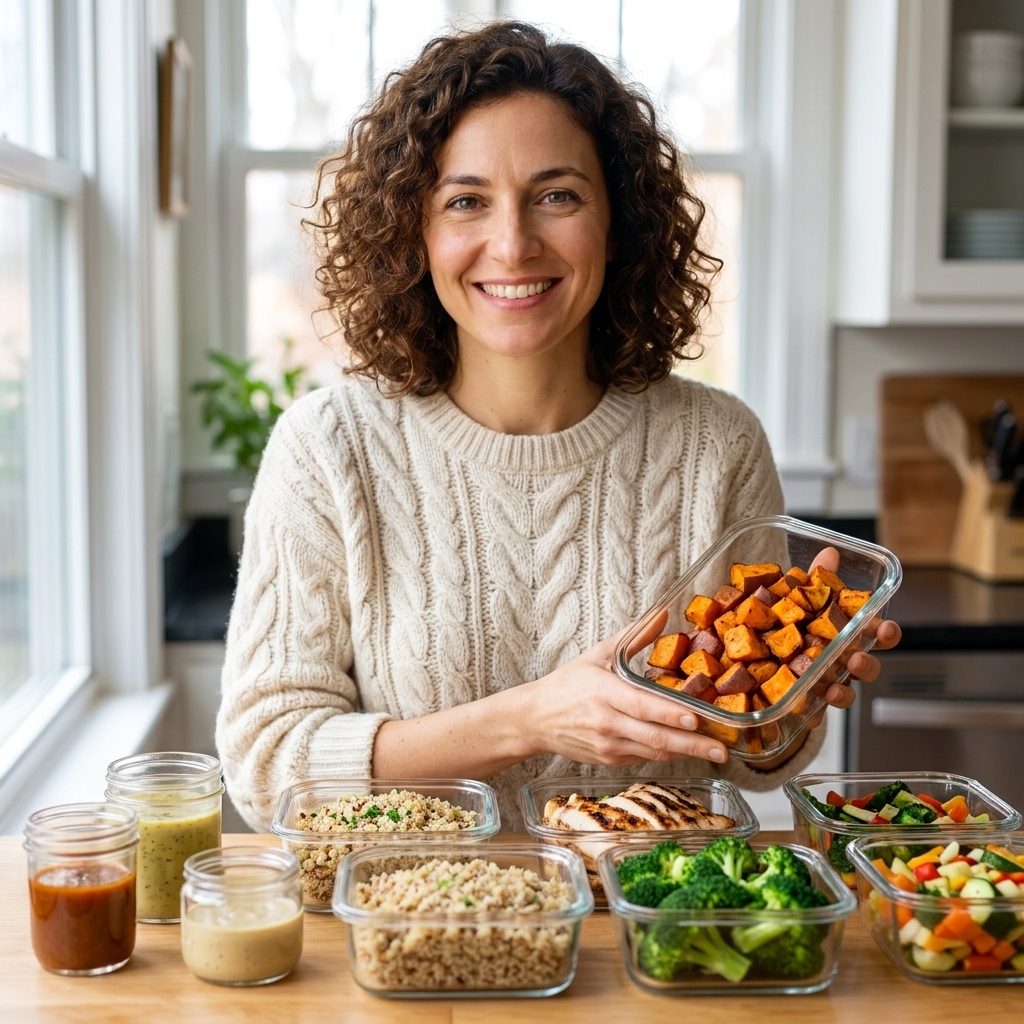
- Cook 1 grain: brown rice or quinoa.
- Prep 2 proteins: roast chicken thighs, cook turkey taco meat, bake tofu, or slow-cooker shredded chicken.
- Prep 2 vegetables: roast a sheet pan of broccoli and carrots, wash and chop salad greens, slice cucumbers and bell peppers.
- Make 1 sauce: simple vinaigrette, yogurt ranch, peanut sauce, or salsa.
With those pieces ready, weeknight dinners become assembly plus a quick reheat.
A sample week for four
Use this as a plug-and-play starting point. Swap proteins and veggies based on what your family likes, what’s on sale, and what you’ve realistically got time for.
Dinners
- Monday (20 minutes): Rotisserie chicken + bagged salad + microwavable brown rice
- Tuesday (anchor): Turkey taco bowls (rice, turkey, beans, toppings)
- Wednesday (leftovers): Taco bowl leftovers or quesadillas with leftover turkey
- Thursday (anchor): Sheet pan salmon (or chicken) + broccoli + potatoes
- Friday (planned easy): Frozen veggie pizza + side salad (add chickpeas or chicken if you want more protein)
- Saturday (anchor): Pasta night with marinara + turkey meatballs + spinach
- Sunday (prep-friendly): Lentil soup + bread + fruit
Breakfasts
- Greek yogurt + berries + granola
- Overnight oats (peanut butter banana and apple cinnamon)
Lunches
- Wraps with turkey or hummus + veggies
- Leftover bowls (rice + protein + roasted vegetables + sauce)
Grocery list for the sample week
Adjust quantities based on ages and appetites. This list assumes you’ve got basics like oil, salt, pepper, and common spices. It also assumes the Friday protein add-on is optional.
Proteins
- 1 rotisserie chicken
- 2 pounds ground turkey (taco bowls + meatballs)
- 1.5 to 2 pounds salmon or chicken (use 2 pounds if you want leftovers)
- 1 to 2 cans chickpeas (salads, pizza night add-on, snacks)
- 1 bag dried lentils or 2 to 3 cans lentils
- Greek yogurt (large tub)
Produce
- 2 bags salad greens or 1 large clamshell
- 2 to 3 heads broccoli
- 1 to 2 pounds potatoes
- Bell peppers (3 to 4)
- Onions (2 to 3)
- Garlic
- Spinach (fresh bag)
- Berries (fresh or frozen)
- Bananas
- Apples
- Lemons (for salmon and flavor)
Carbs and grains
- Brown rice (or microwave packets for Monday)
- Pasta (12 to 16 ounces)
- Tortillas
- Bread for soup night
- Granola
- Rolled oats
Canned and jarred
- Marinara sauce (1 to 2 jars)
- Salsa
- Black beans (2 cans)
Dairy and extras
- Shredded cheese (tacos, quesadillas)
- Parmesan (optional)
- Frozen veggie pizza
Make it healthier, not harder
Healthy meal planning isn’t about stripping meals down. It’s about adding what your plate needs for energy, fullness, and satisfaction.
- Add a produce rule: fruit or veggie at breakfast and dinner, most days.
- Use half-and-half swaps: half white rice and half brown, or half regular pasta and half chickpea pasta if your family likes it.
- Choose sauces strategically: keep sauces on the side so everyone can adjust flavor intensity.
- Prioritize fiber: beans, lentils, berries, oats, whole grains, and vegetables do a lot of heavy lifting for gut health and fullness.
Budget-friendly swaps
If your grocery bill makes you want to cry, you’re not alone. You can keep the same meal plan structure and swap the ingredients.
- Swap salmon: use frozen white fish, canned salmon for salmon patties, eggs, or tofu.
- Swap rotisserie chicken: buy a value pack of thighs and roast them, or use beans and rice plus a bagged salad kit.
- Stretch ground meat: mix turkey with lentils or black beans in taco filling.
- Lean on frozen: frozen broccoli, peppers, and berries are often cheaper and waste less.
Time-saving shortcuts
When life’s busy, convenience foods can be part of a very nutritious plan. No guilt required.
- Rotisserie chicken
- Frozen vegetables and fruit
- Bagged salad kits (boost with extra veggies or chickpeas)
- Microwave rice or quinoa packets
- Jarred marinara and salsa
- Pre-cut veggie trays when you’re in a season of survival
Food safety basics
If you’re batch cooking, a little food safety goes a long way. Cool hot foods quickly (get them into the fridge within about 2 hours), store leftovers in shallow containers, and reheat until steaming hot.
- Fridge timeline: Most cooked leftovers are best used within 3 to 4 days.
- Freezer timeline: Soups, cooked grains, and cooked proteins freeze well for 2 to 3 months.
- When in doubt: If it smells off, looks off, or you can’t remember when you made it, toss it.
Troubleshooting
“My kids refuse mixed foods like casseroles.”
Deconstruct the meal. Serve components separately: plain rice, plain chicken, veggies on the side, sauce optional. Over time, many kids tolerate more mixing once trust is built.
“We waste produce every week.”
Buy fewer varieties, in slightly larger quantities. Use one workhorse veggie (like broccoli or carrots) in 2 to 3 meals. Keep frozen veggies as your backup.
“I plan, but we still order takeout.”
Plan one intentional takeout night or freezer night. When it’s part of the plan, it stops feeling like failure and starts feeling like strategy.
“My partner and I have different nutrition goals.”
Use the same base meal and adjust portions or add-ons. Example: everyone eats taco bowls, one person adds extra beans and avocado, another adds extra rice, another doubles the veggies.
FAQ
How far ahead should I meal plan?
One week is the sweet spot for most families. It’s long enough to reduce stress, but short enough that preferences and schedules can flex.
How do I keep meals balanced if my kids only eat a few foods?
Keep serving a familiar safe food alongside the family meal, and aim for balance across the day, not perfection at one dinner. If dinner is mostly pasta, you can lean on fruit, yogurt, and veggies at snacks and breakfast.
What’s the simplest meal prep for beginners?
Cook one protein, one grain, and prep one vegetable, then plan dinners that reuse them. Example: cooked chicken becomes tacos, salads, and rice bowls.
Your next step
Pick three anchor dinners your family already likes, choose one leftovers night, and decide your low-lift night. That’s a complete plan.
And if your week goes off the rails, you didn’t fail. You’re human. Platepathy means you adjust, feed everyone, and try again next week with a little more information than you had before.