A practical list of antioxidant-rich whole foods and realistic prep tips to help you plan balanced, satisfying meals without the stress.
Platepathy
Anti-Inflammatory Meal Planning
Build an anti-inflammatory meal plan without the overwhelm. Learn what to eat more often, what to limit, plus a printable food matrix and batch-cooking tips for busy weeks.

Elena Rossi
Elena Rossi is a Registered Dietitian and meal prep expert who believes that healthy eating shouldn't feel like a second job. Through Platepathy, she translates complex nutrition science into approachable, delicious meal plans designed for real, busy lives.
Published October 18, 2026
Last updated October 18, 2026
“Anti-inflammatory” can sound like one more food rule you are supposed to follow perfectly. That is not the Platepathy way. Think of this as a gentle, science-informed pattern of eating that nudges your meals toward more fiber, healthy fats, and colorful plants, while dialing down the usual suspects that tend to crowd those foods out.
Quick clarity before we go further: anti-inflammatory eating is not a detox, a 30-day protocol, or a promise to “cure” anything. It is a supportive baseline that, over time, can help shift cardiometabolic risk factors and inflammation-related markers for many people, especially when paired with sleep, movement, and stress support.
As a Registered Dietitian and a working mom who has absolutely stared into the fridge at 5:42 PM, my goal here is to make this feel doable. You will find a simple food matrix you can save or print, plus batch-cooking strategies that turn “healthy in theory” into “dinner on the table.”
What inflammation means
Inflammation is your body’s natural defense system. Acute inflammation, like a swollen ankle after a twist, is part of healing. The issue is chronic, low-grade inflammation that can simmer for months or years and is associated with a higher risk of conditions like cardiovascular disease, type 2 diabetes, fatty liver disease, and some autoimmune issues.
Food is not the only driver. Sleep, stress, movement, smoking status, alcohol intake, and gut health matter a lot. But food is also something you get multiple chances to support each day, which is empowering.
Platepathy mindset: We are not trying to “eat perfectly.” We are trying to make the next meal a little more supportive than the last, most of the time.
The anti-inflammatory plate
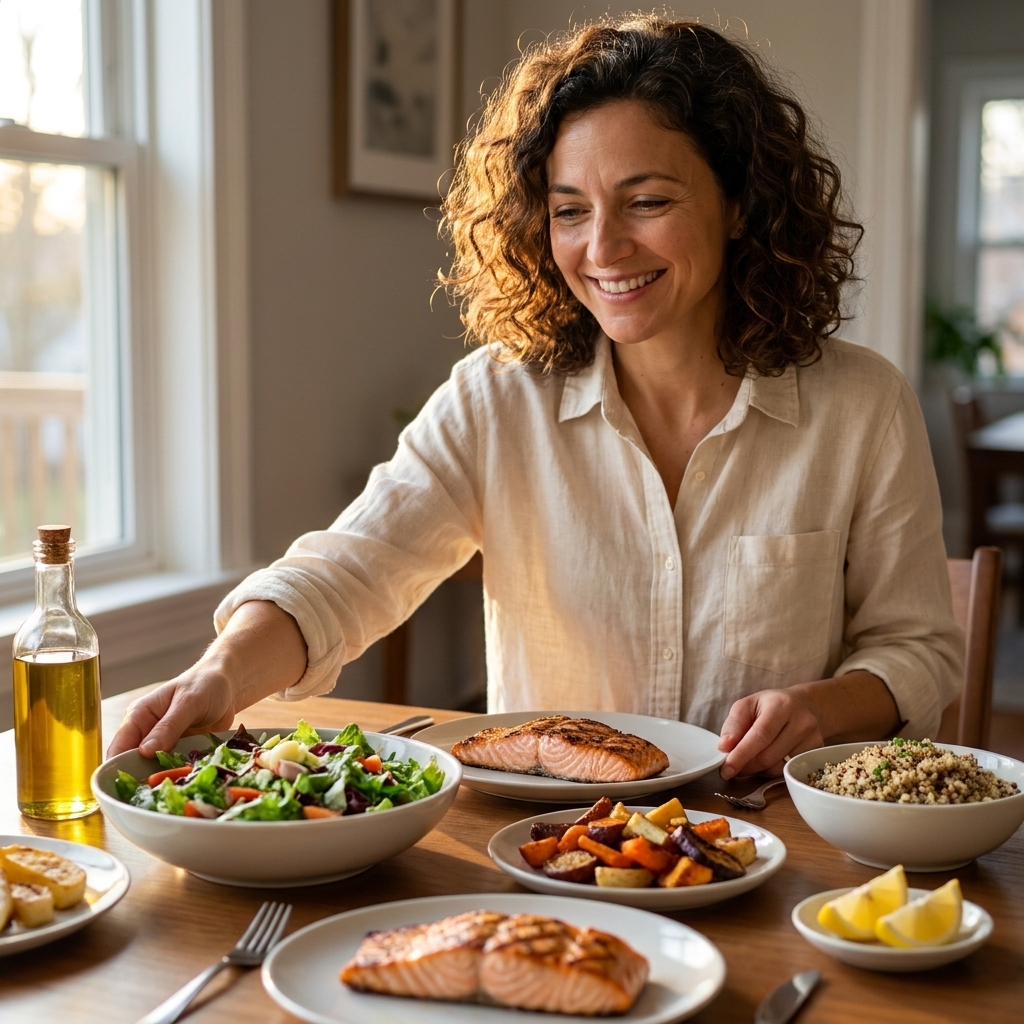
If you remember nothing else, remember this plate structure. It works whether you eat omnivore, vegetarian, or mostly plant-based.
- Half the plate: non-starchy vegetables (and fruit as part of the meal or on the side)
- One quarter: protein (fish, beans, lentils, tofu, chicken, eggs, Greek yogurt)
- One quarter: high-fiber carbs (oats, quinoa, brown rice, barley, farro, sweet potato)
- Add: healthy fats (extra-virgin olive oil, avocado, nuts, seeds)
This pattern tends to increase fiber, antioxidants, and omega-3 fats while naturally crowding out ultra-processed extras. If you manage diabetes or insulin resistance, you may do best with a smaller carb portion and a bigger non-starchy vegetable portion. Your plate can flex.
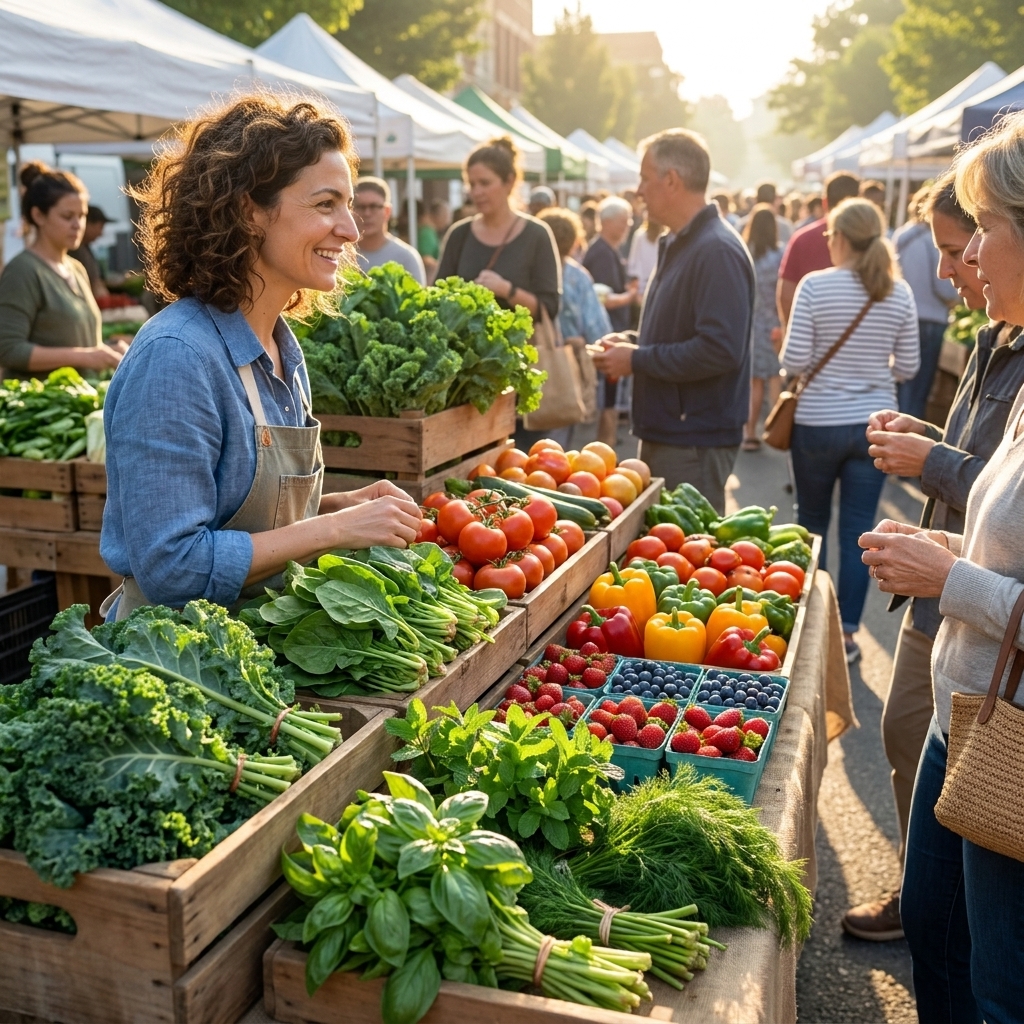
Foods to add more often
1) Colorful plants
Plants deliver fiber and phytonutrients like polyphenols and carotenoids that support a healthier inflammatory balance. More variety usually beats obsessing over any single “superfood.”
- Easy wins: bagged salad greens, frozen mixed vegetables, frozen berries, baby carrots, cherry tomatoes
- Polyphenol favorites: berries, cherries, citrus, grapes, pomegranate, leafy greens, red cabbage
2) Fatty fish and omega-3 sources
Omega-3 fats (EPA and DHA) are well studied for their role in supporting heart health and modulating inflammatory pathways.
- Aim: fatty fish about 2 times per week if you eat seafood
- Great choices: salmon, sardines, trout, herring
- Plant omega-3s: chia, ground flax, walnuts (these provide ALA, which the body partially converts)
3) Fiber-rich whole grains and starchy plants
Fiber feeds beneficial gut bacteria. In return, those microbes produce compounds (like short-chain fatty acids) that support the gut barrier and immune signaling.
- Staples: oats, quinoa, brown rice, farro, barley, whole wheat pasta, sweet potatoes
- Shortcut: microwavable brown rice or quinoa for busy nights
4) Beans, lentils, and soy foods
Legumes are an anti-inflammatory all-star because they combine fiber, plant protein, minerals, and polyphenols. Soy foods like tofu and edamame also fit beautifully here.
- Low-lift options: canned chickpeas, canned black beans, frozen edamame
- Tip: rinse canned beans to reduce sodium while keeping the convenience
5) Nuts, seeds, and extra-virgin olive oil
These provide unsaturated fats plus antioxidant compounds. Extra-virgin olive oil in particular has been associated with cardiometabolic benefits when it replaces saturated fats.
- Keep on hand: walnuts, almonds, pistachios, pumpkin seeds, chia, ground flax
- Use olive oil for: salad dressings, roasting, finishing soups and grains
6) Herbs, spices, and flavor boosters
Many herbs and spices contain antioxidant compounds. The bigger win, though, is practical: they help you make vegetables, beans, and fish taste like something you actually want to eat.
- Go-tos: turmeric, ginger, cinnamon, garlic, oregano, rosemary, cumin
- Flavor helpers: lemon, lime, vinegars, mustard, salsa, pesto
7) Fermented foods (if they work for you)
Fermented foods may support gut microbial diversity for some people. If you enjoy them and they sit well with your digestion, include them regularly.
- Examples: yogurt or kefir with live cultures, kimchi, sauerkraut, miso, tempeh
Foods to limit (gently)
In anti-inflammatory meal planning, we focus less on moralizing food and more on patterns. The items below are often associated with higher inflammation markers in large population studies, but the evidence is largely associative and the impact depends on the overall pattern, sleep, activity, body weight changes over time, and what these foods are replacing.
Ultra-processed foods as daily defaults
Think packaged snacks and meals that are heavy on refined starches, added sugars, and sodium, and light on fiber. You do not have to swear them off. The goal is to make them the exception, not the backbone.
Sugary drinks
Soda, sweet tea, energy drinks, and many coffee shop drinks can spike added sugar quickly without much satiety. If you want sweetness, try sparkling water with citrus, unsweetened iced tea, or a smaller portion of the sweet drink you love.
Refined grains most of the time
White bread, pastries, and many crackers are fine sometimes. For everyday meals, prioritize whole grains for the fiber and micronutrients.
Processed meats
Bacon, sausage, deli meats, and hot dogs are linked with poorer cardiometabolic outcomes in many studies. If they show up often, consider scaling back and swapping in roasted chicken, canned salmon, beans, or eggs.
Excess saturated fat
Saturated fat is not a villain, but most of us get plenty. When saturated fat crowds out unsaturated fats (olive oil, nuts, seeds, fish), the overall pattern is less supportive for heart health.
Trans fats and deep-fried foods
If you see “partially hydrogenated oils” on an ingredient list, that is a clear red flag for trans fats. Deep-fried foods also tend to come with a lot of refined starch, sodium, and added fat in one package. You can absolutely enjoy them sometimes, but they do not need to be your daily default.
Alcohol (especially in higher amounts)
Alcohol affects sleep, gut health, and inflammation in dose-dependent ways. If you drink, consider aiming for fewer days per week, smaller pours, or alcohol-free swaps.
Gentle reframe: Instead of “avoid,” think “turn the volume down.” You are allowed to be a human at birthdays, holidays, and on very long Tuesdays.
Printable food matrix
Save this section as a quick reference when you are building a grocery list or staring at your pantry. The left column is “more often,” the right column is “less often.” No category is about perfection.
More often
- Vegetables: leafy greens, broccoli, cauliflower, peppers, tomatoes, mushrooms, onions, cruciferous mixes (fresh or frozen)
- Fruit: berries, citrus, cherries, apples, grapes, pomegranate (fresh or frozen)
- Proteins: salmon, sardines, trout, beans, lentils, tofu, tempeh, eggs, plain Greek yogurt, chicken, turkey
- Carbs: oats, quinoa, brown rice, farro, barley, whole wheat pasta, sweet potato, corn, whole grain bread
- Fats: extra-virgin olive oil, avocado, walnuts, almonds, pistachios, chia, ground flax, tahini
- Flavor: garlic, ginger, turmeric, cinnamon, herbs, citrus, vinegar, salsa
- Drinks: water, sparkling water, unsweetened tea, coffee (watch add-ins)
Less often
- Vegetables: breaded fried veggies as the default
- Fruit: fruit snacks, fruit-flavored candies, juice as the main “fruit” source
- Proteins: bacon, sausage, hot dogs, frequent deli meats
- Carbs: pastries, cookies, refined crackers and chips as the main carb source
- Fats: frequent deep-fried foods, heavy use of butter or cream in most meals
- Flavor: sugary sauces as the main seasoning (some is fine, just not the only tool)
- Drinks: soda, sweetened coffees, energy drinks, frequent alcoholic drinks
Make it printable: On desktop, highlight the matrix text and print selection. Or copy it into a note and keep it in your phone for grocery runs.
Meal planning
The best anti-inflammatory plan is the one you can repeat on a chaotic week. Here is my low-stress formula.
Step 1: Pick 2 proteins
- Example: salmon and chickpeas
- Example: shredded chicken and lentils
- Example: tofu and eggs
Step 2: Pick 2 vegetables you will eat
- One “easy” veg: frozen broccoli, bagged slaw, salad kit
- One “roast” veg: carrots, Brussels sprouts, cauliflower, peppers
Step 3: Pick 1 high-fiber carb base
- Quinoa, brown rice, farro, oats, or sweet potatoes
Step 4: Choose 1 flavor theme
- Lemon-garlic and herbs
- Tahini-lime
- Tomato-basil
- Ginger-soy (go easy on added sugar)
Step 5: Build 3 mix-and-match meals
- Grain bowl: quinoa + roasted veg + salmon + olive oil and lemon
- Salad meal: greens + chickpeas + chopped veggies + seeds + vinaigrette
- Soup or skillet: lentils + frozen veg + spices + side of whole grain bread
Batch cooking tips
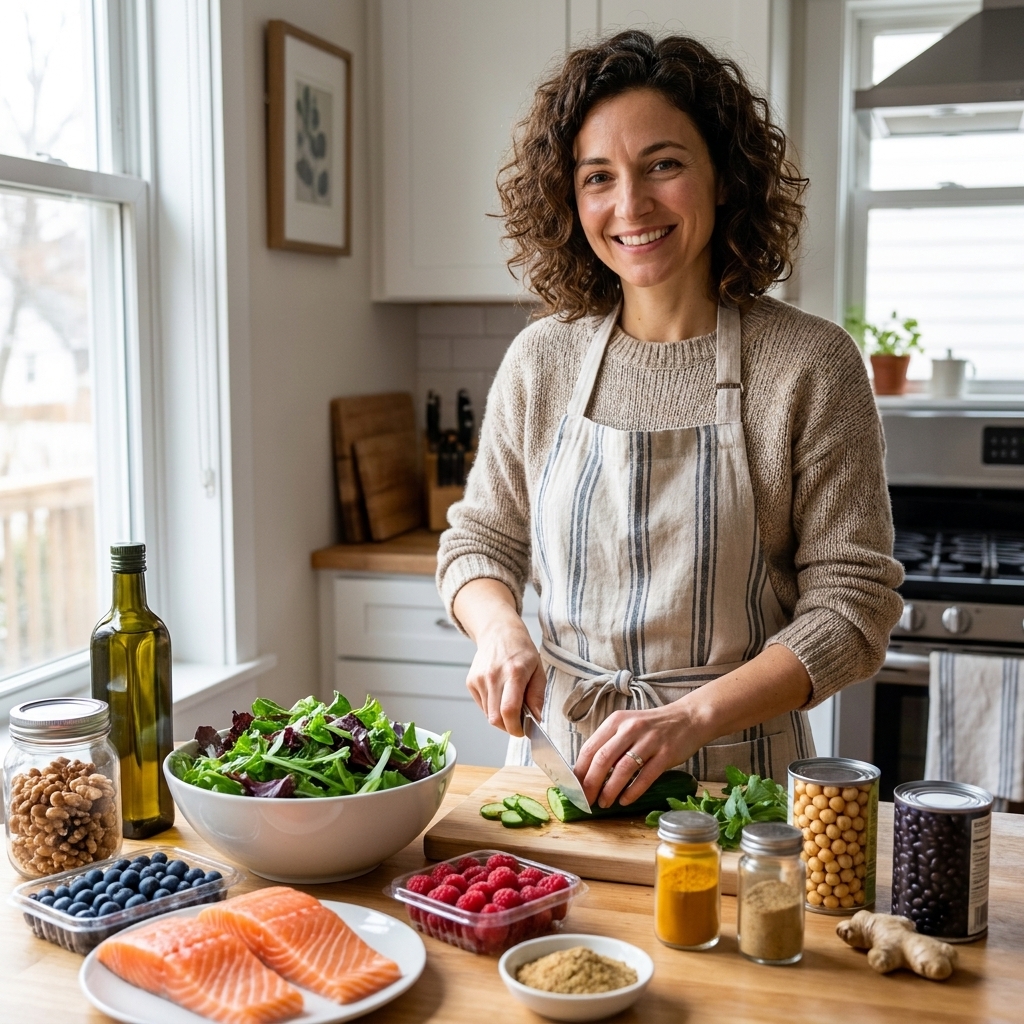
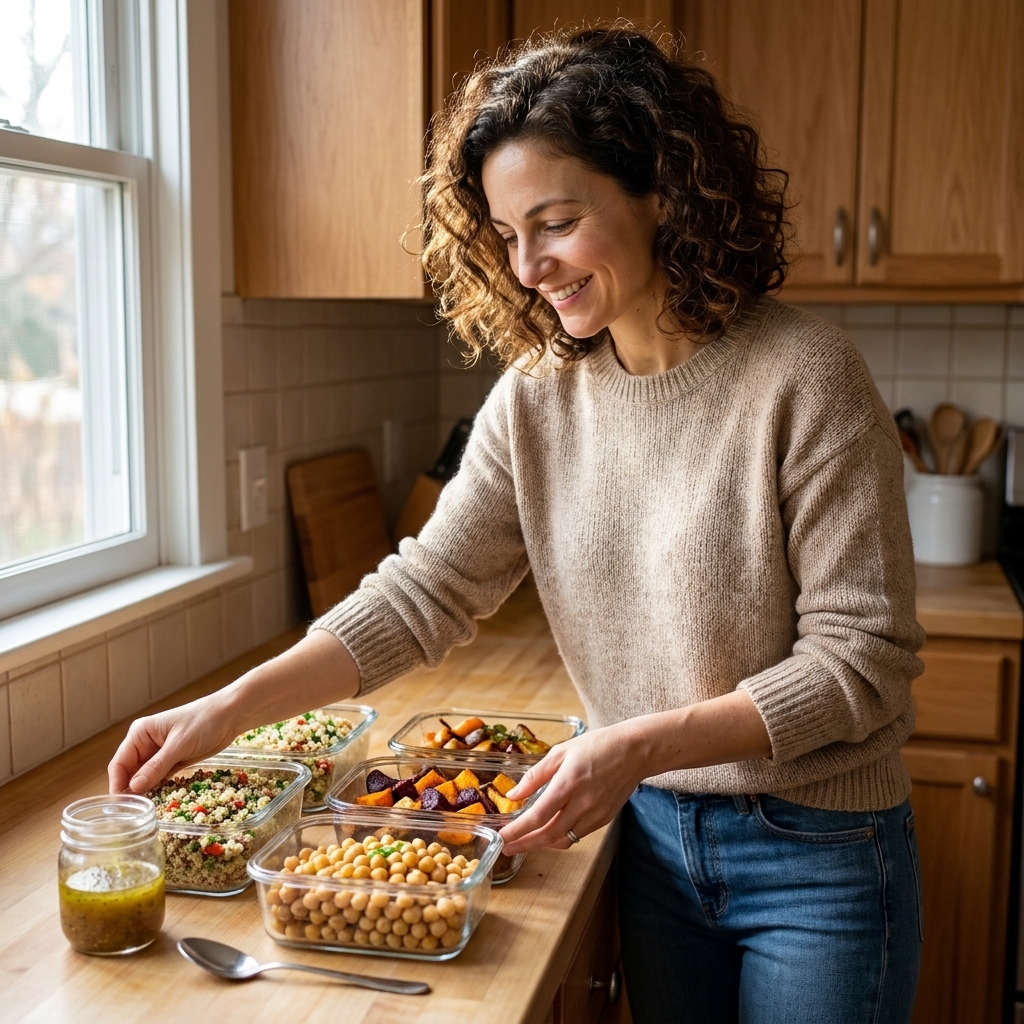
Batch cooking is not about spending your whole Sunday in the kitchen. It is about doing a few high-impact steps once, so the rest of the week is mostly assembly.
My 75-minute Sunday reset
- Start the carb base: cook a pot of quinoa, brown rice, or farro
- Roast two sheet pans of vegetables: olive oil, salt, pepper, garlic powder. Roast at 425°F until browned
- Protein prep: bake salmon or chicken, or simmer lentils. If you are extra tired, stock up on canned beans and call it a win
- Make one sauce: lemon-tahini, pesto, or a simple vinaigrette
- Wash and prep snack produce: berries, grapes, cucumbers, bell pepper strips
Storage that prevents mystery container syndrome
- Store sauces separately so greens and grains do not get soggy
- Keep roasted veggies in a clear container at eye level
- Label proteins with the day you cooked them
- Freeze extra grains and soups in single portions
Quick food safety basics
- Refrigerate cooked foods within 2 hours
- Most cooked leftovers keep well in the fridge for about 3 to 4 days
- Reheat leftovers until steaming hot
Easy meal ideas
Breakfast
- Overnight oats: oats + chia + Greek yogurt + berries + cinnamon
- Savory toast: whole grain toast + avocado + egg + tomato + olive oil
- Quick smoothie: frozen berries + spinach + kefir + ground flax
Lunch
- Lentil soup + salad: soup batch + bagged greens + olive oil vinaigrette
- Chickpea salad wrap: mashed chickpeas + yogurt or tahini + celery + herbs in a whole grain wrap
- Leftover bowl: grain + roasted veg + protein + sauce
Dinner
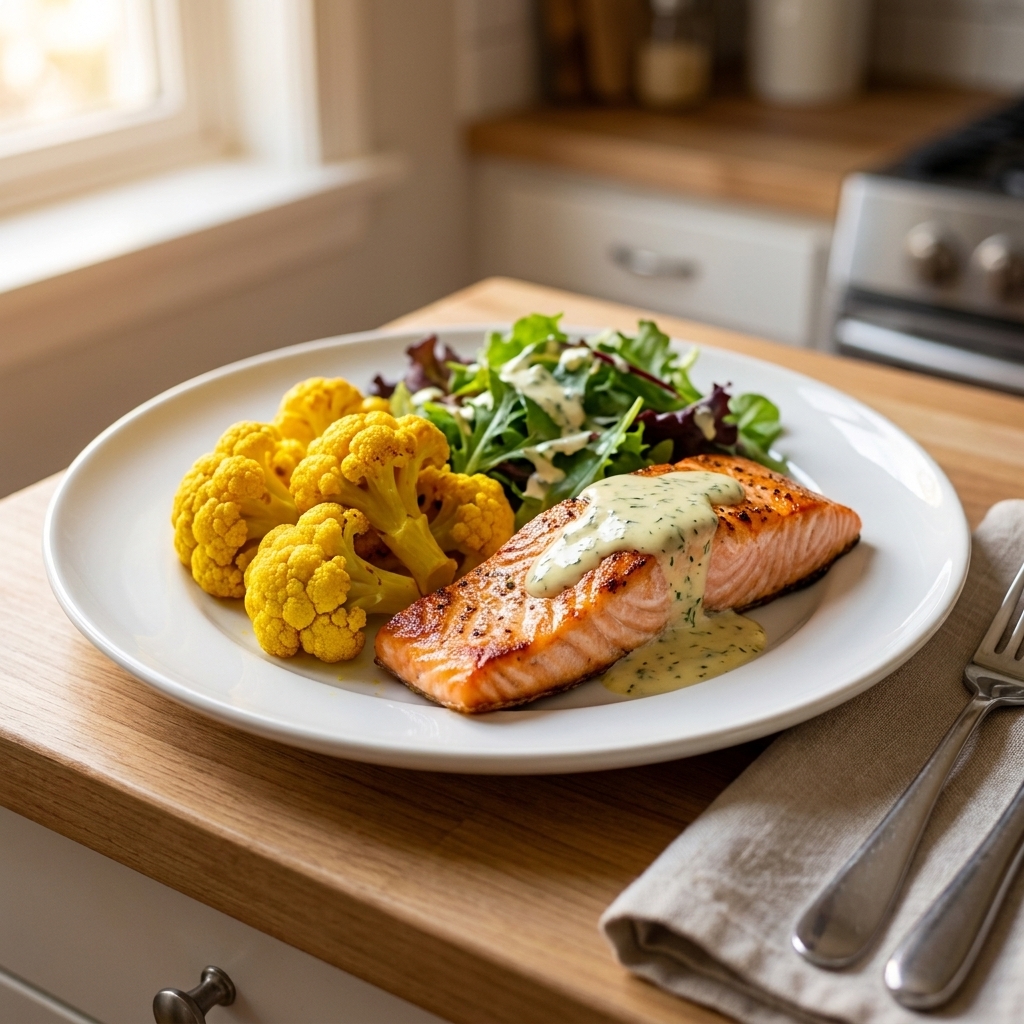
- Sheet pan salmon: salmon + broccoli + sweet potato, finish with lemon
- Tofu stir-fry: tofu + frozen stir-fry veg + ginger-garlic sauce over brown rice
- Bean chili: black beans + tomatoes + peppers + spices, top with avocado
Snacks
- Apple + peanut butter
- Greek yogurt + walnuts
- Hummus + veggies
- Trail mix with nuts and seeds (watch portions, they are energy-dense)
Comfort food swaps
- Craving pasta: use whole wheat pasta, add sautéed greens, finish with olive oil and parmesan
- Craving crunchy snacks: roasted chickpeas, nuts, or popcorn with olive oil and spices
- Craving dessert: berries with whipped Greek yogurt, or a couple squares of dark chocolate with fruit
- Craving takeout: do a shortcut bowl at home using frozen rice, bagged slaw, and a protein
Notice the pattern: we are adding fiber and healthy fats, not pretending cravings do not exist.
When to be cautious
“Anti-inflammatory” is often marketed as one-size-fits-all. Real bodies are not that simple. If any of these apply, consider individualized guidance from a Registered Dietitian or your medical team.
- You have inflammatory bowel disease, significant reflux, or a history of disordered eating
- You are on blood thinners and suddenly want to drastically increase certain foods or supplements
- You are pregnant, breastfeeding, managing chronic kidney disease, or have complex autoimmune needs
If you are managing high blood pressure or heart failure, sodium may also matter. Convenience foods can still fit, just choose “no salt added” canned beans and tomatoes when you can, rinse canned foods, and lean on herbs, citrus, vinegar, and salt-free spice blends for flavor.
Also, a quick safety note: food can support your health, but it does not replace medical care. Be wary of anyone promising that one food, detox, or supplement will “cure inflammation.”
FAQ
How fast will I feel a difference?
Some people notice better energy, digestion, or less heavy feeling within a week or two, especially if they increase fiber and reduce sugary drinks. For cholesterol, blood pressure, or A1C changes, think more in the range of weeks to months, plus consistency.
Do I need to cut out gluten or dairy?
Not automatically. If you have celiac disease, gluten must be avoided. If you are lactose intolerant, lactose-free dairy or yogurt may work better. Otherwise, many people can include whole grains with gluten and cultured dairy like yogurt in an anti-inflammatory pattern.
Is coffee inflammatory?
For most adults, coffee in moderate amounts can fit well, and coffee contains polyphenols. What often changes the health impact is what gets added, like lots of sugar and cream. If coffee triggers anxiety or reflux for you, that matters too. If you are pregnant, ask your clinician about a caffeine limit that fits your situation.
What is the most important food to add first?
If I had to pick one starter move: add a fruit or vegetable to a meal you already eat. For many busy households, that means berries at breakfast, a side salad at lunch, or a frozen veggie added to dinner.
Evidence anchors
If you like knowing what this is based on, here are a few widely accepted, evidence-based guideposts behind the recommendations above.
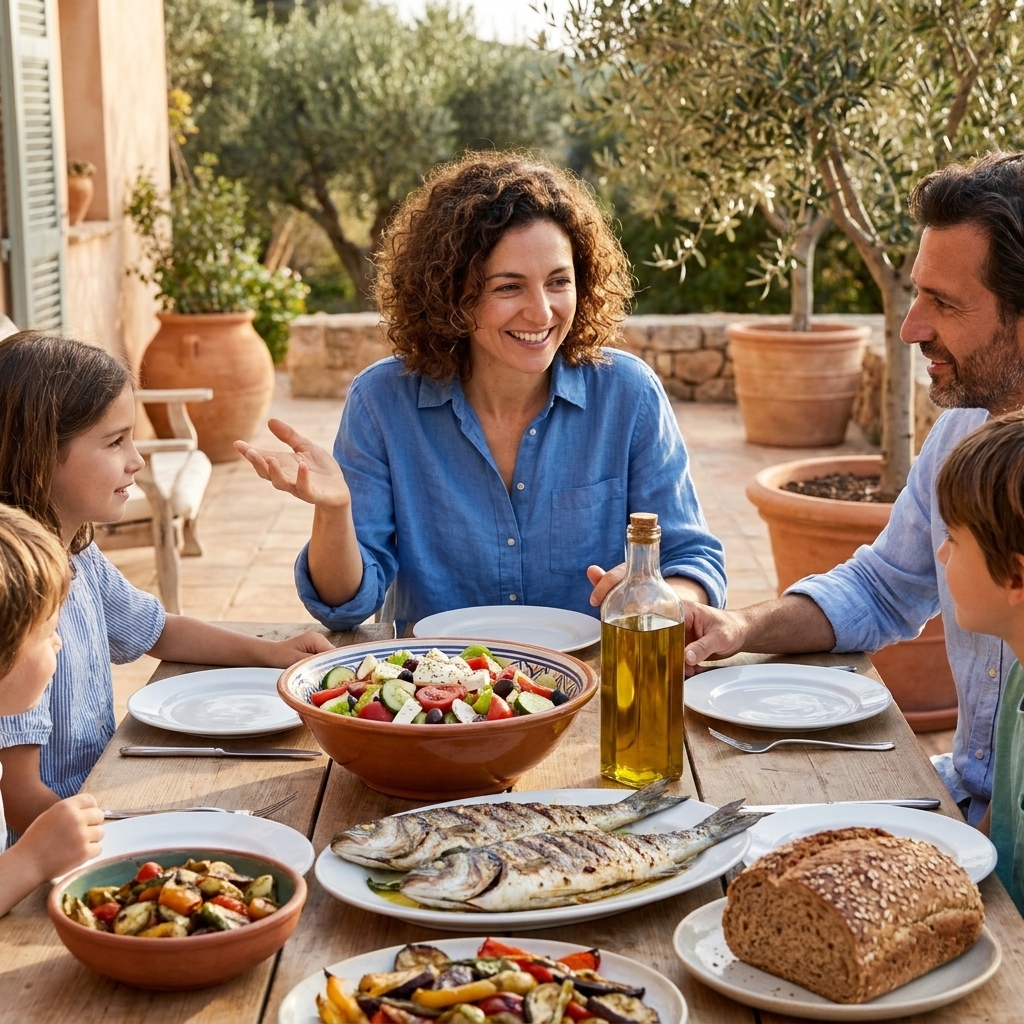
- Mediterranean-style eating patterns are consistently associated with better cardiometabolic outcomes in large studies and clinical trials
- Major heart health guidelines commonly encourage fish intake, replacing saturated fats with unsaturated fats, and limiting processed meats and sugary beverages
- Higher fiber intake is linked with better gut and metabolic health, and most adults fall short of daily fiber goals
A gentle next step
If you want a simple place to start this week, pick one of these.
- Add berries and chia to breakfast 3 days this week
- Make one sheet pan dinner with salmon (or chickpeas) and two vegetables
- Swap one sugary drink per day for sparkling water with citrus
That is it. Small shifts, repeated, are how anti-inflammatory eating becomes a lifestyle instead of another short-lived project.